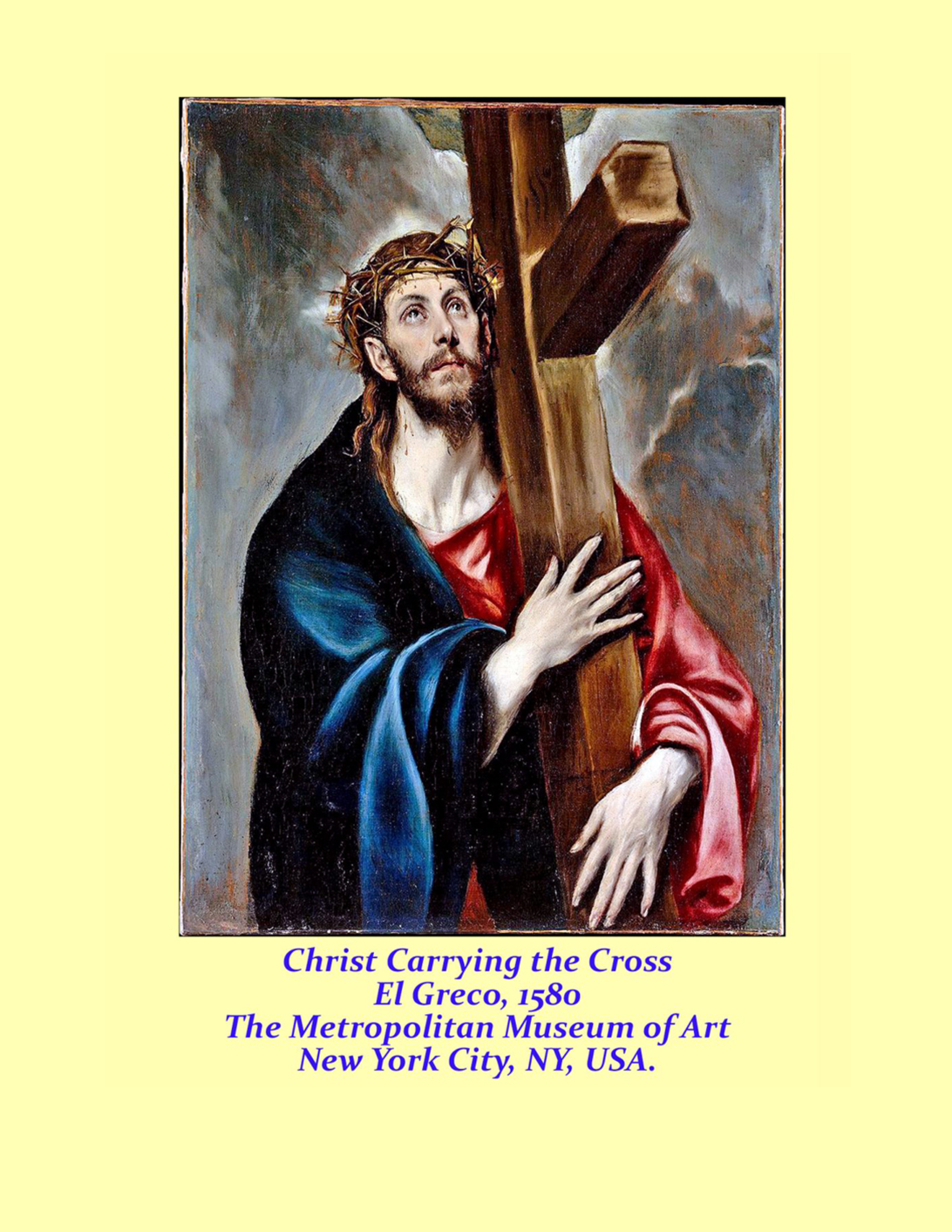
SUNDAY 21 DECEMBER: THE FOURTH SUNDAY OF ADVENT AND THURSDAY 25 DECEMBER: THE SOLEMNITY OF THE NATIVITY OF OUR LORD JESUS CHRIST (CHRISTMAS).

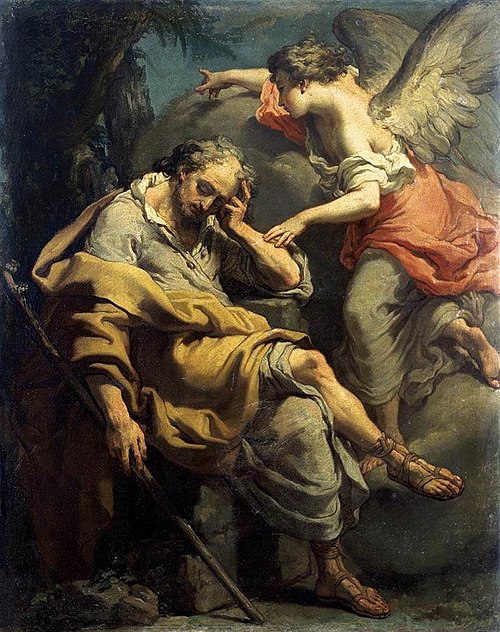
Joseph’s Dream, Gandolphi c.1790, Private Collection.

…the angel of the Lord appeared to him in a dream and said, “Joseph, son of David, do not be afraid to take Mary your wife into your home. For it is through the Holy Spirit that this child has been conceived in her. She will bear a son and you are to name him Jesus because he will save his people from their sins.”   Matthew 1:20-21.

Click here to read today’s Sunday Mass Readings.

Click on words highlighted in red for further information.

This is the first mention of our Savior’s name in the gospel, and it was a frequent and  acceptable name for a boy. In the original Hebrew/Aramaic that Jesus spoke, his name is יֵשׁוּעַ transliterated to Yeshua (Ioshua or Joshua in English). Our name Jesus comes through the Greek, in which the entire New Testament is written. Yeshua becomes Ἰησοῦς or Iēsous, as the “sh” sound is unknown in Greek. The nearest equivalent was “s”, from which we get Iēsus in English. I and J are historically close in English; the first edition King James version of the Bible called him Iesus and even Shakespeare originally called his play Romeo and Iuliet. However, the consonant I became J at that time, hence Jesus. The name means God Saves. In today’s gospel, Joseph had discovered that Mary was pregnant and was about to separate from her quietly, hence the heavenly messenger. That changed everything, as Joseph was prepared to accept the unique situation he found himself in and act accordingly. He possibly thought that this had been prefigured in the 7th chapter of the Book of Isaiah, read at today’s Mass: “Therefore the Lord himself will give you this sign: the virgin shall conceive, and bear a son, and shall name him Emmanuel”. Hence he accepted his role in the fulfillment of this prophecy, and responded to God’s call fully and without hesitation. It is interesting that biblical scholars note that prophecies might have had at least two meanings, one dealing with the immediate time and place it was proclaimed, and then another, such as here, centuries later. 

So this 4th Sunday in Advent would seem to be an occasion of prophetic fulfillment. Isaiah talks of the maiden giving birth to a son, Paul talking about the Son of God descended from David long promised by the holy prophets, and the gospel emphasizing the Isaiah prophecy once more, as if to underline the fulfillment of those words in Mary, to be protected and supported by Joseph. In other words, the birth to be celebrated this week is the culmination of centuries of waiting and centuries of prophetic utterance at last to be realized. 
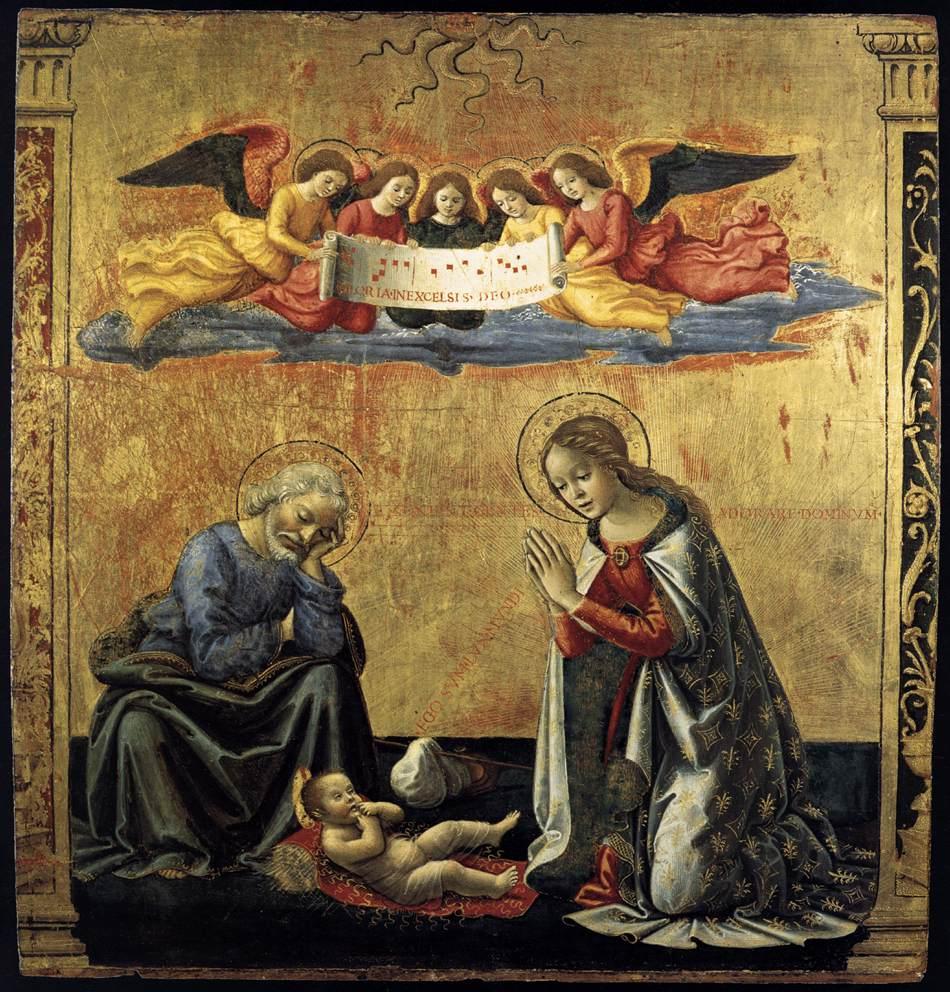
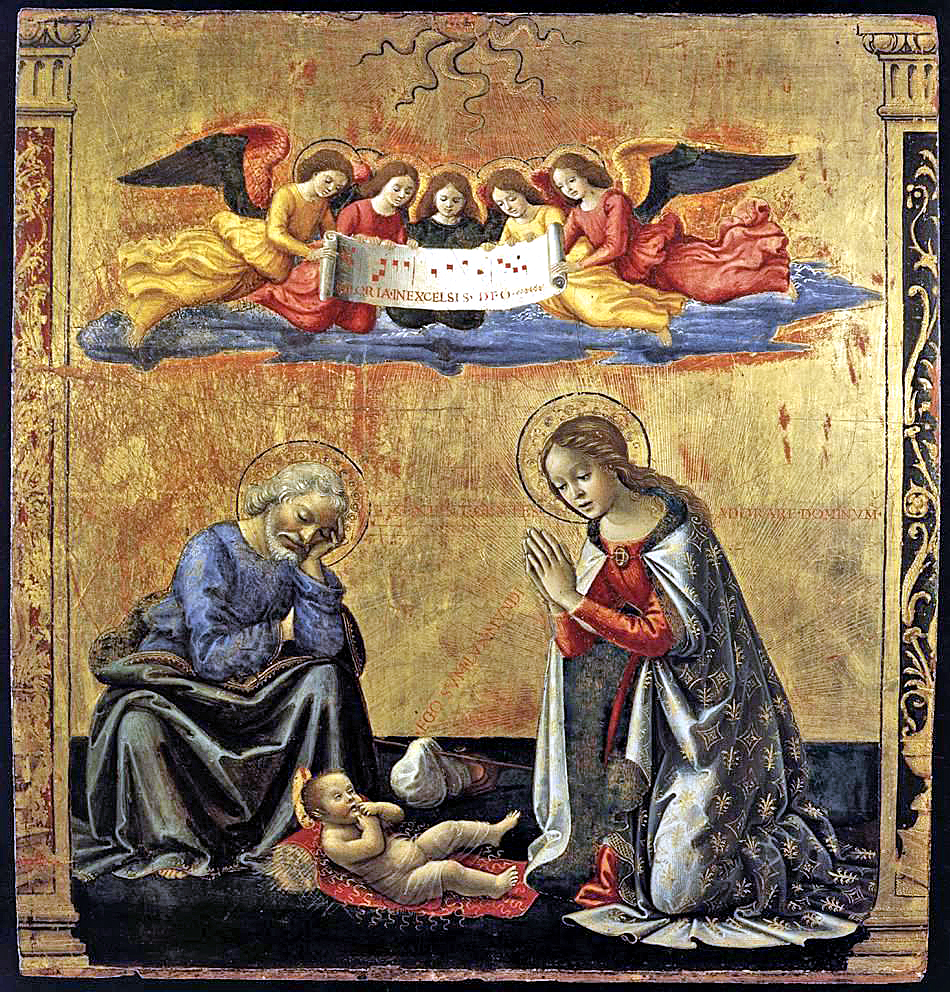
The Nativity, Domenico Ghirlandaio c.1492, Vatican Museums, Vatican City State.

THURSDAY 25TH DECEMBER 2025: THE NATIVITY OF THE LORD (CHRISTMAS).


CLICK HERE TO READ TODAY’S CHRISTMAS DAY MASS READINGS.

And the Word became flesh and made his dwelling among us, and we saw his glory, the glory as of the Father’s only Son, full of grace and truth.   John 1:14.

Click on words highlighted in red for further information.

And so, on this wondrous night, the heavenly angels sang, the shepherds were overwhelmed, and the unbelievable happened: the Son of God became flesh. After 2000 years of preparation, the Hebrew people found in their midst the Son of God, born of a Virgin, yet in poverty. His cradle was a feeding trough, the witnesses humble shepherds of the fields and beasts stabled in a barn. Yet here was the baby whose birth was to transform the world, give it hope, inspire countless millions to aim for perfection and adopt a lifestyle of care for others. From the time of Abraham, the Hebrew people, who originally had no idea who and what God was like,  had become aware of a God who was powerful, from the very beginning seen in a very old Sarah giving birth to Isaac at the age of 90. God was revealed to be loyal, even to Hagar after she was expelled from Abraham’s camp (Genesis 21:9-21) ; forgiving even to Jacob who cheated his way to getting his father’s blessing meant for Esau; a listener who heard the cries of the Hebrew people enslaved in Egypt arranged for their release. God revealed mercy, seen when the Hebrews, wandering in the wilderness for 40 years and complaining and moaning about their lot (they had been released from slavery in Egypt, hence revealing that God was also a lover of freedom) were still protected by God, and eventually arriving in the Promised Land which was to be their home. And above all, something which separated Israel’s God from all others, the God of the Hebrews was open to relationship, seen in the mutual pact between God and Moses at the Burning Bush. So by the time of the birth of Jesus, the Jewish people knew a great deal about God, but in the ups and downs of their history needed to know how to live the life which reflected all those qualities. Indeed they might have thought it was impossible to live such a life! And hence the arrival of the Lord, who did exactly that. He showed us all how to incorporate all of God’s qualities in our own life, and gave us the Holy Spirit as the ultimate source of strength to accomplish that. And this day saw the start of the final story, with Jesus, the Son of God preparing the way for the Spirit of God to guide us down to today. Alleluia! May God bless us, every one. Have a very merry and blessed Christmas.
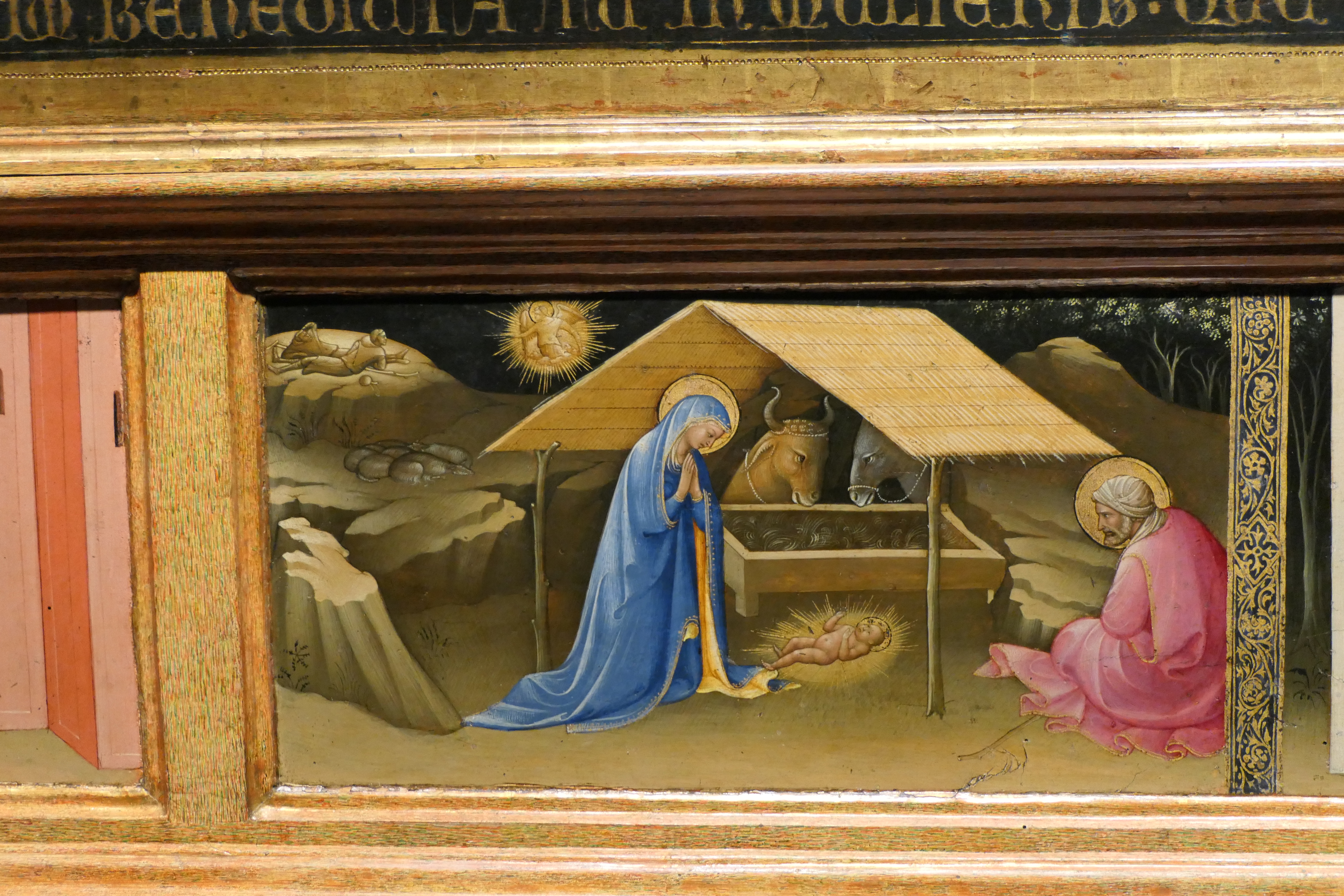
 

The Nativity, Bartolini Salimbeni, Church of the Holy Trinity, Florence, Italy.

IF YOU KNOW SOMEONE WHO WOULD APPRECIATE A CHRISTMAS THOUGHT, PLEASE SEND THIS TO THEM

THANK YOU.

©SundayMassReadings.com
 

SUNDAY 14 DECEMBER: THE THIRD SUNDAY OF ADVEnt: GAUDETE SUNDAY.

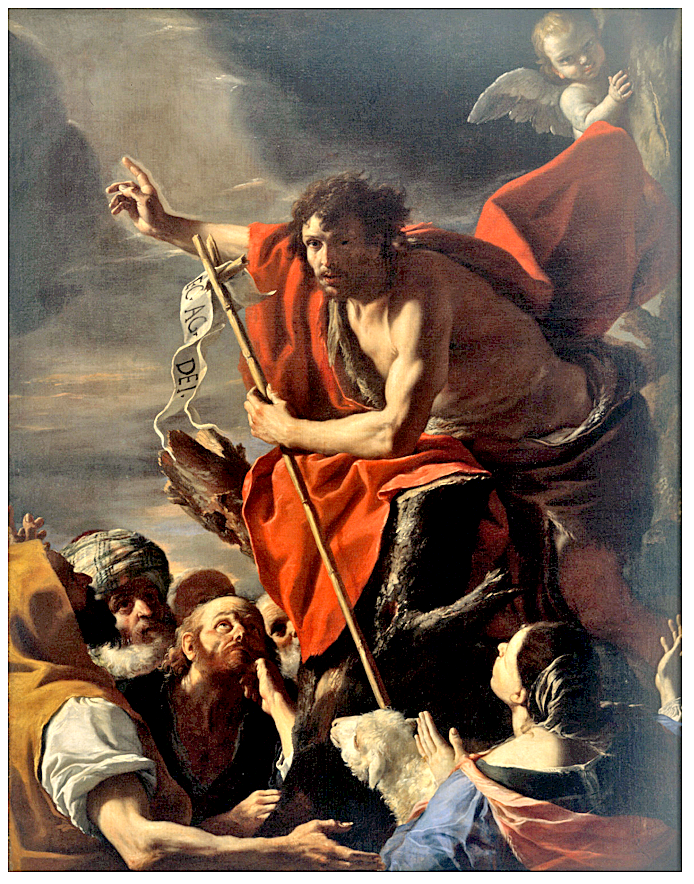
St. John the Baptist, Matia Preti c.1665, de Young and Legion of Honor Fine Arts Museums of San Francisco, USA.

Jesus began to speak to the crowds about John…. “Amen, I say to you, among those born of women there has been none greater than John the Baptist; yet the least in the kingdom of heaven is greater than he.”   Matthew 11:7, 11.

Click here to read today’s Sunday Mass Readings.

Click on words highlighted in red for further information.

First, a word about today’s special designation. “Gaudete” is the Latin word for “Rejoice”, and it is in the imperative: we must rejoice! There is even a song  which was recorded in the 1970s in Latin which became very popular. Incredible as it might seem, it comes from the Middle Ages and is based on that same word: Gaudete, gaudete, Christus est natus ex Maria Virgine, gaudete! (Rejoice, rejoice, Christ is born of the Virgin Mary, rejoice!). There is much more here. Even the priest at Mass today has the option of wearing rose vestments to emphasize the joyful feeling, that Christmas is near! This is today’s opening antiphon at Mass (which is usually not said if there is an opening hymn):

“Rejoice in the Lord always; again I say, rejoice! Indeed, the Lord is near”. 

So clearly the theme here is to be excited at the approach of Christmas, that moment when the Savior of the World entered into that world as a helpless babe, utterly dependent on those around him. And yet, looking at today’s gospel, this was the one who would enable wonders to be performed that the world had never seen before, and have the good news proclaimed. In a nutshell, this was Jesus’ vocation laid out before him, fulfilling the prophecy of Isaiah 35:5–6, today’s first reading: Then will the eyes of the blind be opened and the ears of the deaf cleared. Then will the lame leap like a stag, and the mute tongue will sing”. Jesus sent this message to John the Baptist who was, at that time, in prison for criticizing King Herod, but had heard that it seemed these prophecies were being fulfilled there and then. And John had been preaching that this would be the sign that the Messiah had arrived. Indeed he had. So John, in the eyes of us Christians, was the last prophet of the Old Testament, announcing the arrival of the Messiah, the Anointed One (Χριστός – Christos – in Greek) when he actually had arrived. That explains why Jesus said that John, of all those born of women, none was greater than John the Baptist. But as he could not benefit from becoming Christian (he was executed shortly after), “the least in the kingdom of heaven (that is, Christian) is greater than he” as he was not present at the Descent of God’s Holy Spirit at Pentecost, inaugurating the age of Christianity. We are  therefore more fortunate than John! We are God’s adopted children, taught by the Son of God and guided by God’s Holy Spirit and powered by God’s love of us: what could possibly be better than that? Hence our joy today. But, as ever, we have to be just a little patient. Just as our ancestors were waiting for the Messiah, we await the Second Coming, but we wait in the presence of the Lord. We do not walk into that night alone; we have a guide who is strong, one whose foot is sure, who can lead us directly into heaven if we follow him. In the meantime, however, we have an intermediate goal – commemorating the arrival of that child in swaddling clothes, warmed by a beloved mother. It is almost time…. And here is a sample of one glorious Christmas Hymn composed by the Ukrainian composer Mykola Leontovych.

The Nativity, Ghirlandaio c.1492, Vatican Museums, Vatican City State.

PLEASE SEND THIS WEBPAGE TO SOMEONE YOU THINK WOULD APPRECIATE IT.

THANK YOU.

©SundayMassReadings.com
SUNDAY 7 DECEMBER 2025: THE SECOND SUNDAY OF ADVENT.

Spur Pruning Pinot Noir Vineyards Without Losing Crop Yield, American Vineyard, October 2019.

Click here to read today’s Sunday Mass Readings.

“John the Baptist appeared, preaching in the desert of Judea and saying, ‘Repent, for the kingdom of heaven is at hand!’        Matthew 3:1-2.

Click on words highlighted in red for further information.

In 2023 I was in the Sonoma Valley visiting a friend. It was in April, and as I looked out at the many vineyards in that part of the world, I saw a very similar sight to the one above. Those poor vines looked like they had been trimmed down – pruned – to almost nothing! I thought it would be miraculous for any of them to produce anything! That shows how much I know about vines: nothing! Had I returned to Sonoma later that year, before the grapes are harvested, this is what I would have found:

St. Francis Vineyards 2025, Sonoma Valley, California, USA.

Why this sudden interest in vineyard husbandry, or viticulture? Advent! What if we did all that pruning to our own life during this holy season, cutting our lives down to bare essentials to look like the pictures above? That would give us the chance to grow once more into the children that God wants all of us to be. The pictures above show the difference over perhaps three seasons of one year. We have four weeks. 

Alright – where to begin? Today’s first reading could be the start: “…a shoot shall sprout from the stump of Jesse, and from his roots a bud shall blossom. The spirit of the LORD shall rest upon him: a spirit of wisdom and of understanding, a spirit of counsel and of strength, a spirit of knowledge and of fear of the LORD, and his delight shall be the fear of the LORD.” It could almost have been written with viticulture in mind! The “stump of Jesse” ties in well with the pruned vines above: it suggests an absolute start. We could begin with a simple goal, to clear one’s mind, to concentrate for a moment on what is essential to our lives, and what isn’t. People are essential! How have I treated those nearest and dearest? Could it be better? And we are off and running. Let us all hope we can trim our lives down the absolute essentials, and grow from there.

It might help to remember that tomorrow, December 8, is the Solemnity of the Immaculate Conception and is a holyday of obligation, despite being a Monday. This feast is in recognition that Our Lady was conceived without stain of original sin, the only person so blest. Pope Pius IX declared this to be dogmatically true in 1854, meaning that all Catholics must accept this teaching as true. Hence Mary was prepared perfectly to receive God’s Holy Spirit and bear the Son of God. It is a teaching that goes back even to the 2nd century. Early writers compared Mary to Eve, one obedient to the will of God, the other disobedient. Remember that the angel greeted her as one “full of grace” which we say with every Hail Mary, meaning that Mary was full of the presence of God. The Eastern Church was the first to acknowledge this as a feast in the 7th century. Many years later Pope Pius formally declared this to be a true teaching of the church in 1854. Something intriguing happened just a few years later in 1858. In that year Our Lady appeared to Bernadette Soubirous in Lourdes in the French Pyrenees. This young girl had difficulties learning, was often sickly, and yet claimed a beautiful lady had appeared to her several times. Bernadette was asked time and again to find out the Lady’s name. Eventually the Lady said “I am the Immaculate Conception”, which Bernadette did not understand, but insisted that was the Lady’s answer. It went a very long way in convincing the church authorities that Bernadette was telling the  truth. There was no way this peasant girl would have been aware of the Pope’s declaration four years earlier or even understood it if she had! The resulting miracles which the church has recognized in Lourdes could be considered confirmation of all that. Although we all have not been perfect in the eyes of God, we can ask for guidance and strength in this Advent season to return to the beginning and like those pruned vines, start again. So – can we conceive of a life better, purer, more attuned to God’s will than our own, and in so doing become a stronger, better Child of God?

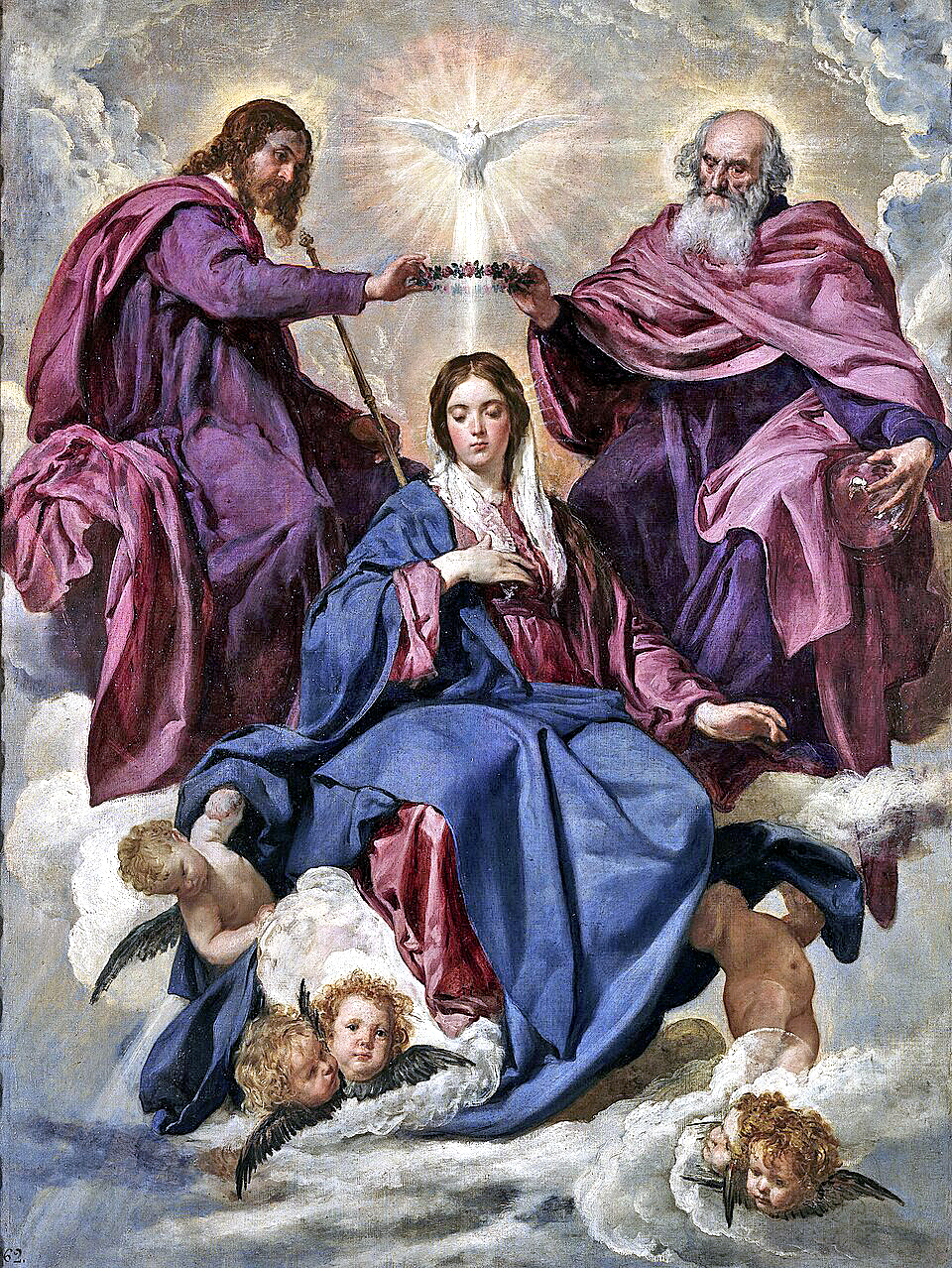
The Coronation of the Virgin, Velazquez 1635, Museo del Prado, Madrid, Spain.

PLEASE FORWARD THIS WEBPAGE TO SOMEONE YOU THINK WOULD LIKE IT.

THANK YOU.

©SundayMassReadings.com

SUNDAY 30 NOVEMBER 2025: THE FIRST SUNDAY OF ADVENT.

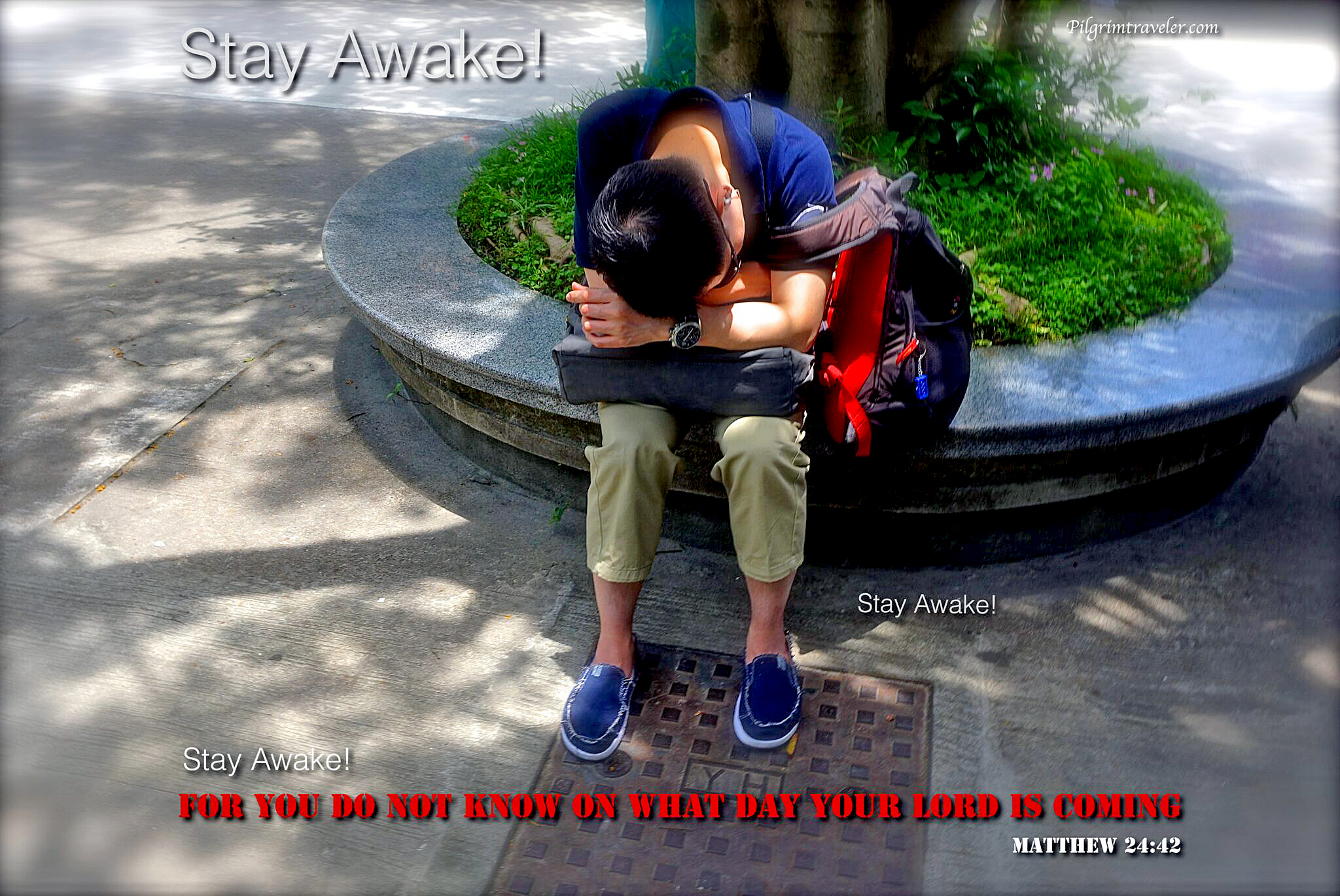
Pilgrim Traveler, Matthew 24, “Stay Awake!”

(Jesus said to his disciples) Therefore, stay awake! For you do not know on which day your Lord will come.     Matthew 24:42.

Click here to read today’s Sunday Mass Readings.

Click on words highlighted in red for further information.

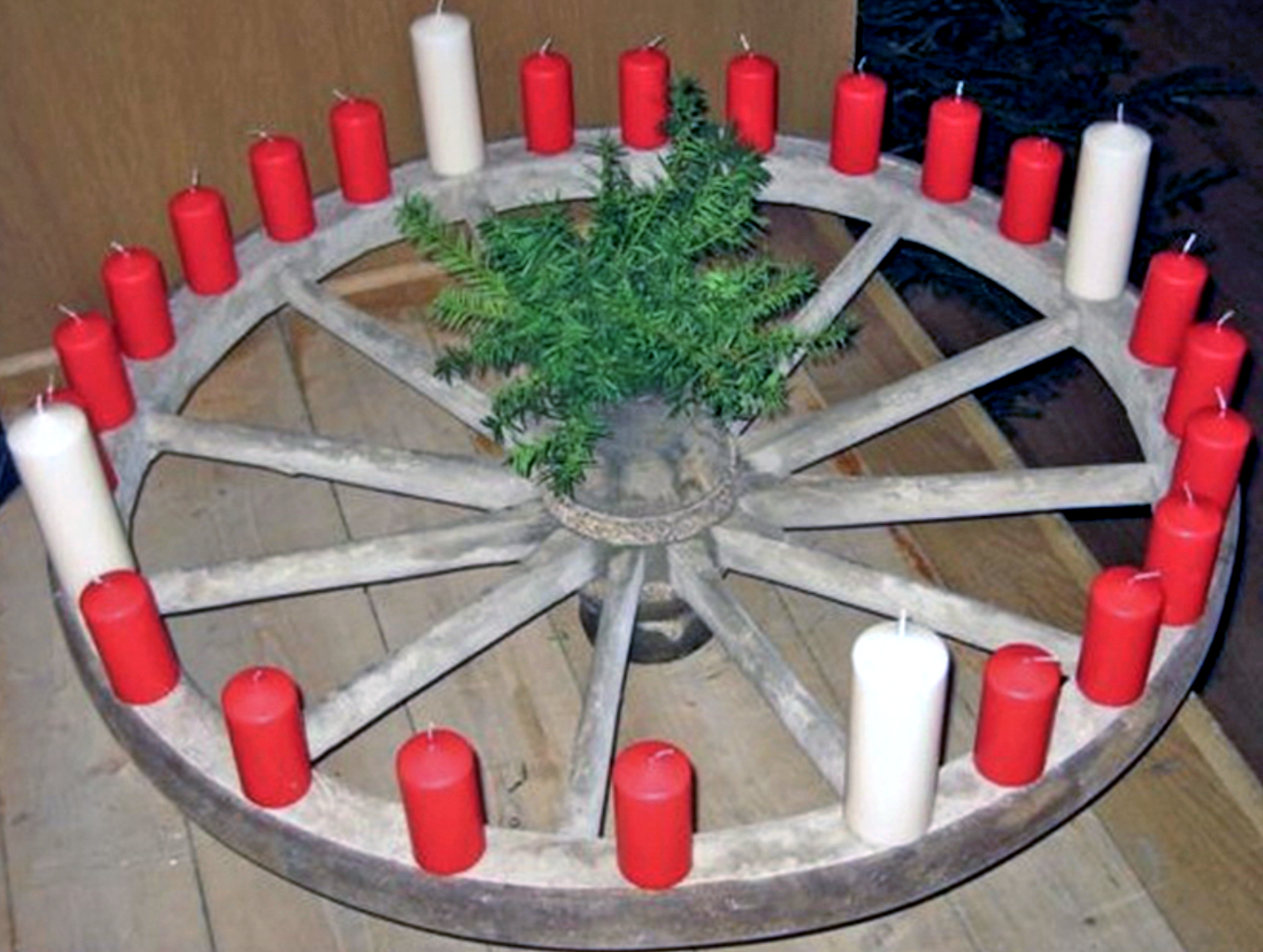
The presence of the Advent wreath up at the altar today and the lighting of one candle of the four tells us immediately that Christmas is around the corner, and that we have four weeks or so to prepare for it. The tradition of the Advent wreath started with our Lutheran brothers and sisters in northern Germany in the first half of the 19th century. Pastor Johann Hinrich Wichern had the inspiration when working with poor children in Hamberg. He must have become so fed up by the children constantly asking “Is it Christmas yet?” (the 19th century version of “Are we there yet?”) that he created this:

Recollections, Advent and Johann Hinrich Wichern, November 2017.

Not quite what we see today. The original wreath, with a base in an old cartwheel, shows all the days of Advent leading up to Christmas, with white candles indicating the Sundays. Quite elaborate compared to the present-day version! It’s a sort of 3D version of the Advent calendar!

This Sunday begins a new church year and with it our hopes and prayers for a year of peace and justice, of happiness and rejoicing, of goodwill among all people. Isn’t that what Christmas is supposed to be? Isn’t that what the angels themselves sang to the shepherds in the fields abiding? But as ever, we mustn’t get too carried away, with today’s gospel telling us to stay awake in a season when excess and collapse are more likely to be found than quiet reflection and attention. But we do have this season of Advent when we can do exactly that! Now is the time when we can reflect on the wonder of this season, when the almighty majesty of the Eternal Godhead took frail flesh and was born not into fame and glory but into a stable sheltering ox and ass! What a wonder, what an example; what a lesson. That we commemorate such a humble event 2000 years later is itself a wonder. It was, I believe, the culmination of God’s plan for us the human race and with whom, Genesis tells, God was “very pleased”. How so?

The greatest gift we have is free will. Unlike the beasts of the field, locked into the basics of getting through the day, we have choices. For whatever reason, we might forgo having a meal for some reason greater than responding to hunger. We might go and climb Mount Everest simply because “it is there”. We can create artwork to strengthen the beauty around us. Animals seem to have no idea or ability to do such. Only we can. But (as always) this greatest gift began to be used for the wrong purpose. We can cause grief, hatred, evil simply because we can. That was why, I believe, God entered human life. Ancient Canaan, the land promised to Abraham by God, practiced child sacrifice at that time. Even worse, the Canaanites thought they were doing the right thing. If they needed something tremendous, such as relief from famine, or the threat of invasion, such big requests of the gods (Moloch in particular), demanded a big price (which reflects normal human experience). But in this case it was child sacrifice. And I believe it was this that caused our God to intervene in human history. Abram/Abraham heard a tiny voice, believed it to be holy and obeyed it (Genesis 12). In that way, God found a believer, sent him into the heartland of this abomination, and so began the history of God’s people, beginning with the elimination of that terrible practice  (which took a long time). For about 2000 years God slowly revealed the divine nature: God was found to be  loyal, powerful, forgiving, a listener, merciful, a lover of freedom and open to relationship. With that finally established, God’s Son arrived and displayed those identical qualities in his lifework. Being fully human, Jesus showed us how to be fully human, acting and behaving in the way God has always wanted us to behave. And everything Jesus did in his ministry we can too, given the gifts which God has provided for all of us, without exception. And Christmas marked the arrival of this man who showed us the true meaning of being human utterly and completely. We can all be like him, he using his gifts, we using ours. 

And so how about an Advent resolution? To be as truly and completely human as Jesus was. So we can never excuse ourselves with the plaintive “I was only human” to explain a fault. No – had I been truly human I would never have done/said/thought the thing I should not have. It is to betray our humanity if we excuse ourselves in that way. To be completely human is to get as close to the Lord as we can, the One who made us human, and to ask guidance or forgiveness when we have failed, that is, become less than human. In this way we will be in great shape when the Great Day arrives, when Pastor Wichern gave a sigh of relief, and we sing Adeste Fidelis!

St. Mary’s Catholic Church, Navan, County Meath, Republic of Ireland.

THERE IS AN IMPORTANT MESSAGE HERE WHICH MIGHT BE GOOD NEWS TO SOMEONE YOU KNOW.

IF SO, PLEASE FORWARD IT TO THEM. 

THANK YOU.

©SundayMassReadings.com
SUNDAY 23 NOVEMBER 2025: The Solemnity of Our Lord Jesus Christ, King of the Universe.

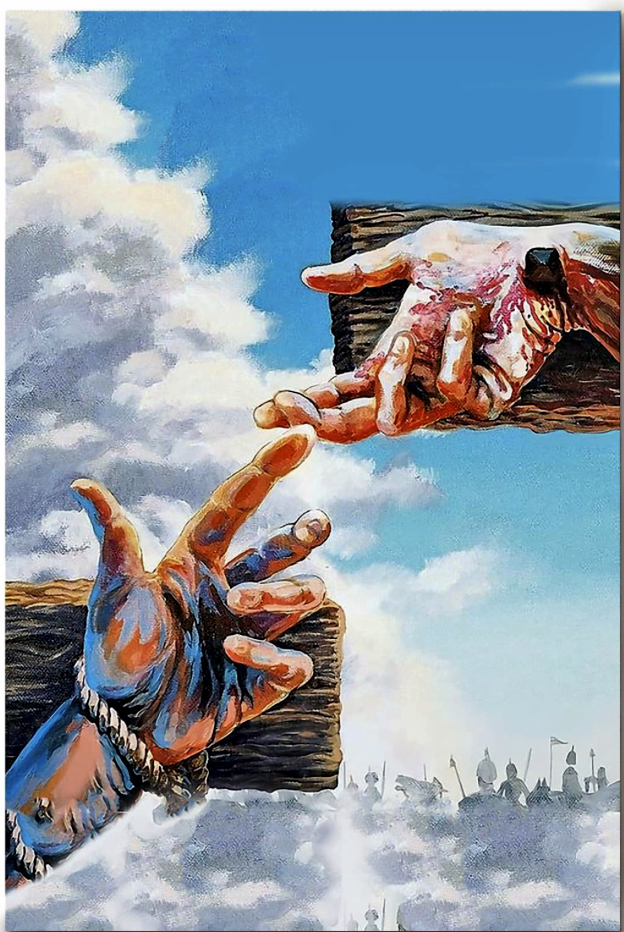
Aeticon, The Thief on the Cross.

Then (the crucified thief) said, “Jesus, remember me when you come into your kingdom.” He replied to him, “Amen, I say to you, today you will be with me in Paradise.”   Luke 23:42-43.

Click here to read today’s Sunday Mass Readings.

Click on words highlighted in red for further information.

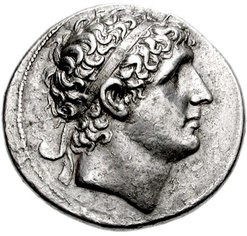
The name of today’s feast puts everything into perspective, don’t you think? When you are styled “King of the Universe” there isn’t much left to be king of! Yet quite a few ancient monarchs styled themselves exactly that, the first being Sargon of Akkad about 4200 years ago, and the last was Antiochus I Soter, about 270 years  before the birth of Christ:


                                          Sargon                                  Antiochus

But apart from scholars of the distant past, who would know? Those remarkable titles seem to have died with them. So we celebrate the true King of the Universe today and bow before his majesty knowing that this title depicts the actual truth.

However, the King we celebrate is radically different from Sargon and Antiochus. They no doubt had their jewels and crowns and armies of servants catering to their whims. And there our King is radically different. When King Charles was crowned in 2023, the regalia was prominently displayed for all to see. The throne, the crowns (two of them), the magnificent robes, the congregation crying “God save King Charles” and so on. Now take a look at our King, suggested in the picture above. His crucifixion was his coronation. His robe was stolen by the soldiers. His greeting that day from the crowd, standing next to Roman governor, was “Crucify him!” And then afterwards they shouted “If you’re the Son of God, come down from that cross”. His crown was made of thorns, and his throne was the cross itself. This was not a King of pretension or apparent power; this was a King of stupendous suffering, who took all our sins on his bruised and bleeding shoulders that we might be free of sin and guilt and be made worthy of heaven. This was the ultimate sacrifice made solely for our salvation that we might be able to follow him through who-knows-what and still gain eternal happiness. So the goal is worth anything that fate, luck, circumstances, accidents, health etc., can throw at us. With our eyes fixed on the ultimate destination, we should be able to tolerate just about anything. Remember that Jesus went through what could be described as hell to ensure we received his message down to today. Also recall that he was utterly human, hence terrified of the fate which awaited him (he sweated blood in his terror, a rare condition called hematidrosis). He was also aware that he could repudiate everything he stood for by simply denying he had claimed he was the Christ, the Anointed One, and the Son of God, and gone back to Nazareth and act as though nothing had happened. But he didn’t. He considered his message to be critically important to us all, to be universally significant, eternally relevant and completely human, meaning anyone could adopt his teachings (and challenges), live happily and be accepted into the Kingdom of Heaven. He had made sense of the human condition and given an identity of what it means to be a human being in the world in ways pleasing to God our Creator. In a nutshell, he demonstrated that to be utterly human is to be completely acceptable to God our Creator. One step away from being human is a step in the wrong direction requiring correction. We are here to serve God, to serve each other, and develop our gifts in order to be able to do exactly that to the best of our ability. If we succeed in that, we can expect to be invited into paradise to live in joy and peace forever. It is in our power to do that. And so we should. Therefore when we are called from this life, we may justifiably expect to be invited to share in the happiness of Our Lord Jesus Christ, King of the Universe forever. 

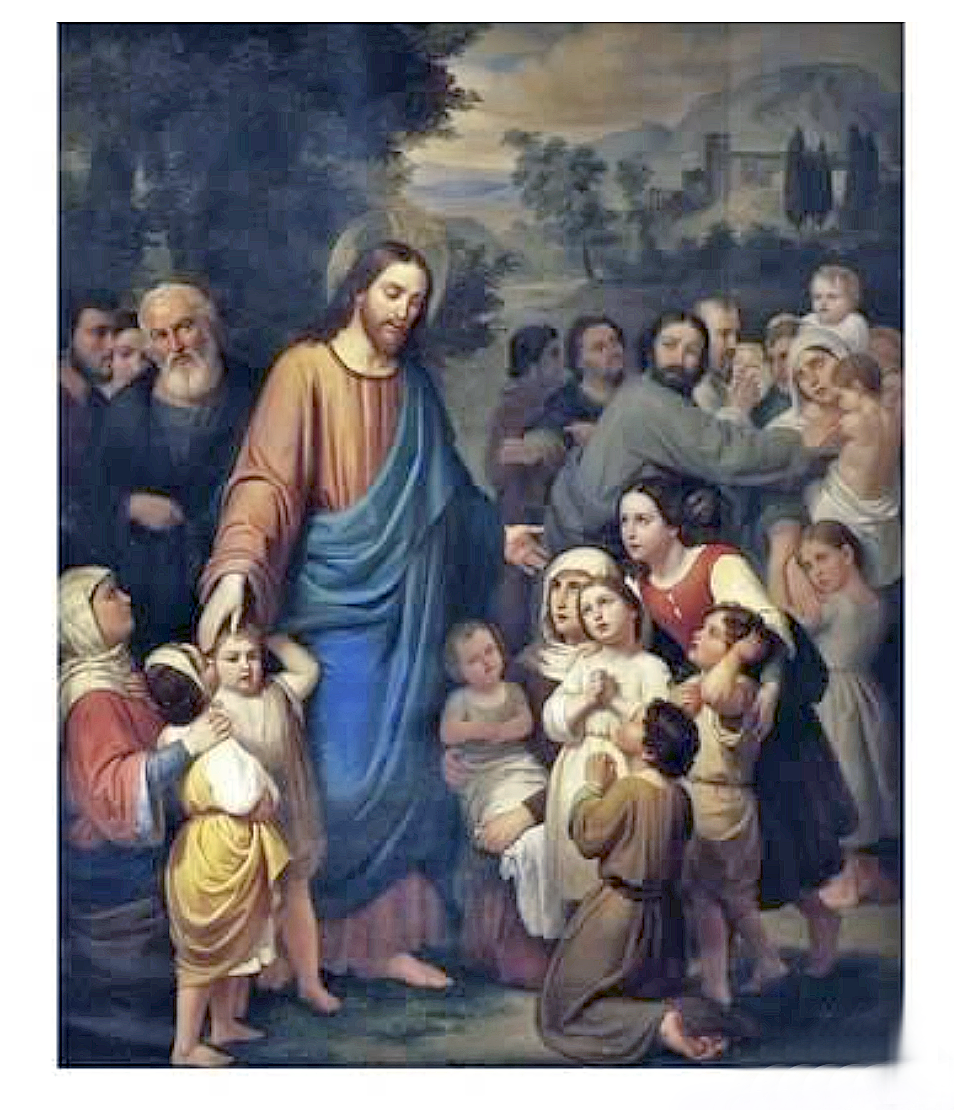
Suffer Little Children to Come Unto Me, Juan Urruchi 1854, Museo de Arte de Querétaro, Querétaro, Mexico.

IF YOU KNOW SOMEONE WHO MIGHT BE APPRECIATIVE OF THIS WEBPAGE, PEASE FORWARD IT TO THEM. 

THANK YOU.

©SundayMassReadings.com

SUNDAY 16 NOVEMBER 2025: THE THIRTY-THIRD SUNDAY IN ORDINARY TIME.

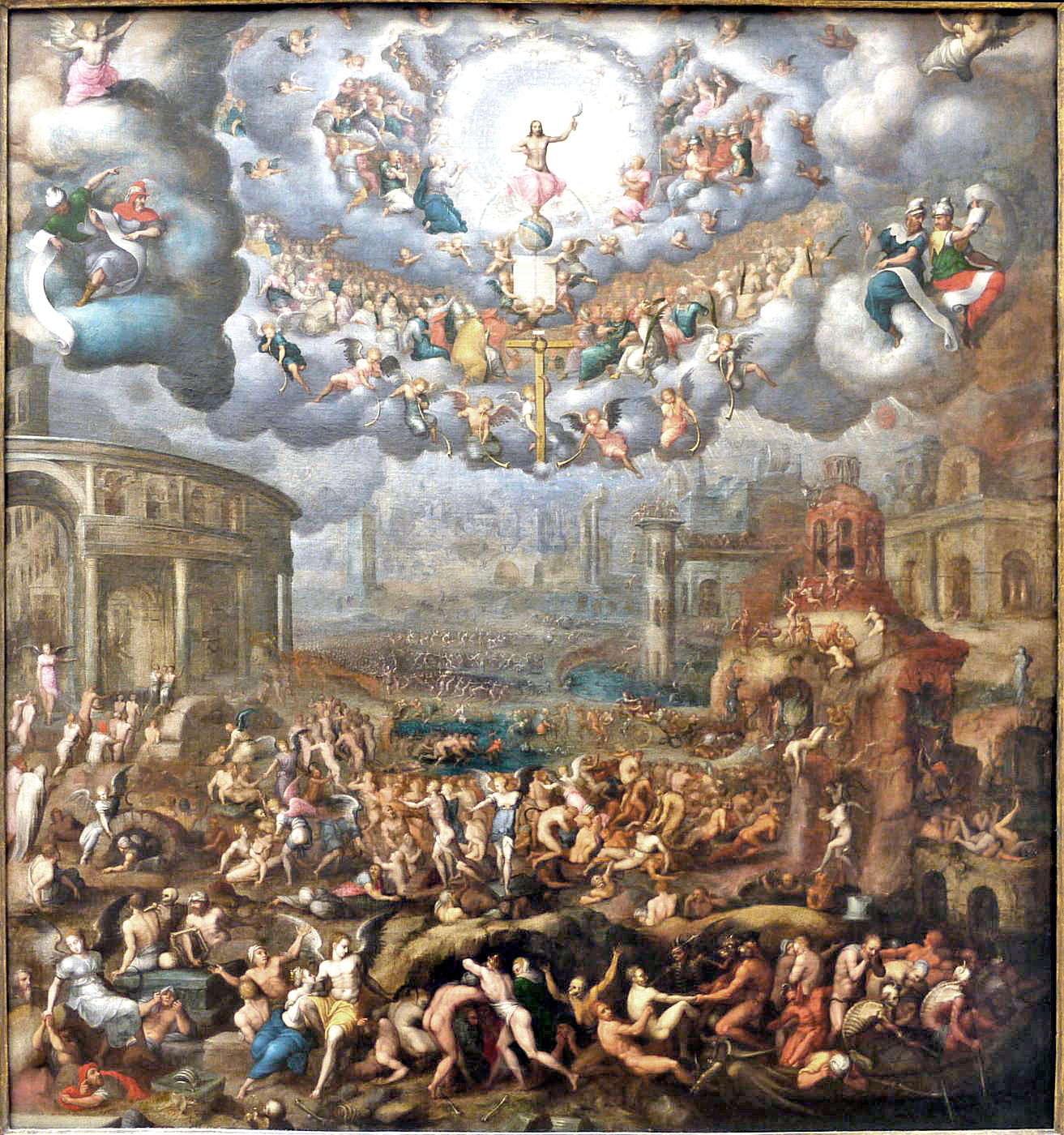
The Last Judgement, Jean Cousin the Younger 1585, Musée du Louvre, Paris, France.

Click here to read today’s Sunday Mass Readings.

You will be hated by all because of my name, but not a hair on your head will be destroyed.    Luke 21:17-18

Click on words highlighted in red for further information.

Have you heard of Pyotr Kuznetsov? This gentleman is the leader of the True Russian Orthodox Church. There are no reliable membership figures for this church. It is not a part of the Russian Orthodox Church. Anyway, he predicted the end of the world would come in May, 2025. Because of that, 35 members of his church hid themselves in a cave 400 miles southeast of Moscow last November waiting for the day. He promised them that on that day, they would be the ones to decide who would get into heaven and who would end up in hell. When the event did not happen, many of his followers refused to come out of the cave, and threatened to blow themselves up if the authorities tried to get them out. There is also the danger that water from melting snow will result in the cave collapsing. Their leader, who had been held in a psychiatric hospital, was allowed to try and convince the remainers to come out. This was partially successful, but the majority remained inside. The authorities seem to have left it up to them to decide what to do. And none of this would not have happened if they had simply read – and believed – Jesus’ words in today’s gospel: “See that you not be deceived, for many will come in my name, saying, ‘I am he,’ and ‘The time has come.Do not follow them!” And note this, there seems to have been over 20 predictions of the end of the world since the year 2000. It seems there is something irresistible in predicting this Last Day despite Jesus’ prohibition on trying to do so. And note also that those “in the know” are always counted with the righteous, the saved, a judgement, you would think, is reserved for God alone…..

Today’s gospel does exactly that. It is typical at this time of the church’s year as it comes to an end that the readings begin to talk of the end time, but absolutely do not even suggest when that might be because nobody knows! But, that being the case, we are all still cautioned that we should at least be ready for that moment. And today’s gospel seems to be an inauguration of such thinking. Things will become harsh, wicked and intolerable, Jesus says, and many will be persecuted because of his name, but he promises “not a hair on your head will be destroyed”, a strange thing to say of those martyrs who will be tortured, maimed and executed in the most brutal ways possible. But having lived through such degrading and humiliating punishment, a pure and glorified, undamaged soul will be welcomed into heaven. And then there is this fact: over 14,000 named individuals have been declared martyrs for the Faith over the centuries up to today. One of the latest martyrs, St. Edith Stein, canonized in 1998, died in the Nazi death camp of Auschwitz in 1942. Even more recently canonized martyrs (October 2025) were St. Peter To Rot, the first saint from Papua-New Guinea who died at the hands of the occupying Japanese troops in 1945, and St. Ignatius Maloyan who died in the persecution of the Christian Armenian people during the First World War in the Ottoman Empire. And there is, of course, St. Carlo Acutis, who died age 15 of leukemia but lived a life, extremely short as it was, of dedication to God. And even though he did not die a martyr, he died in the faith and love of God even though his life was cut horribly short due to leukemia. Who knows who is dying today for the faith with so many wars and so much hatred in so many places? Our saints displayed so great patience, tolerance and even love for their persecutors that they can stand beside the Lord as faithful followers to the end. Most of us, of course, will never face such hatred, so we can only guess how we would react, but we can hope that it would be worthy of a disciple of Jesus. But we can pray for those who are faced with impossible situations wherever in the world. Christians have been confronted with hatred for centuries, and one wonders why, as we pray for everyone, wish everyone good health and happiness and trust they will be happy and perhaps open to seeing the good in us Christians and wondering on what it is based. 

And also remember that each one of us will have to face a more intimate judgement when we are called from this vale of tears. There might not be trumpets braying or cymbals crashing, but we will certainly know that the time of reckoning for us, individually and alone, has come. We will stand before God and made to answer for our actions throughout our life. And today, unlike then, we can do something about those times when we failed the Lord, failed ourselves and ended up in a mess. Now is the precious time when we can make amends, show our true Christian identity and act accordingly. As the year ends, perhaps now is the time to make resolutions and strengthen our identity as a child of God and our vocation as Christ to the world. 

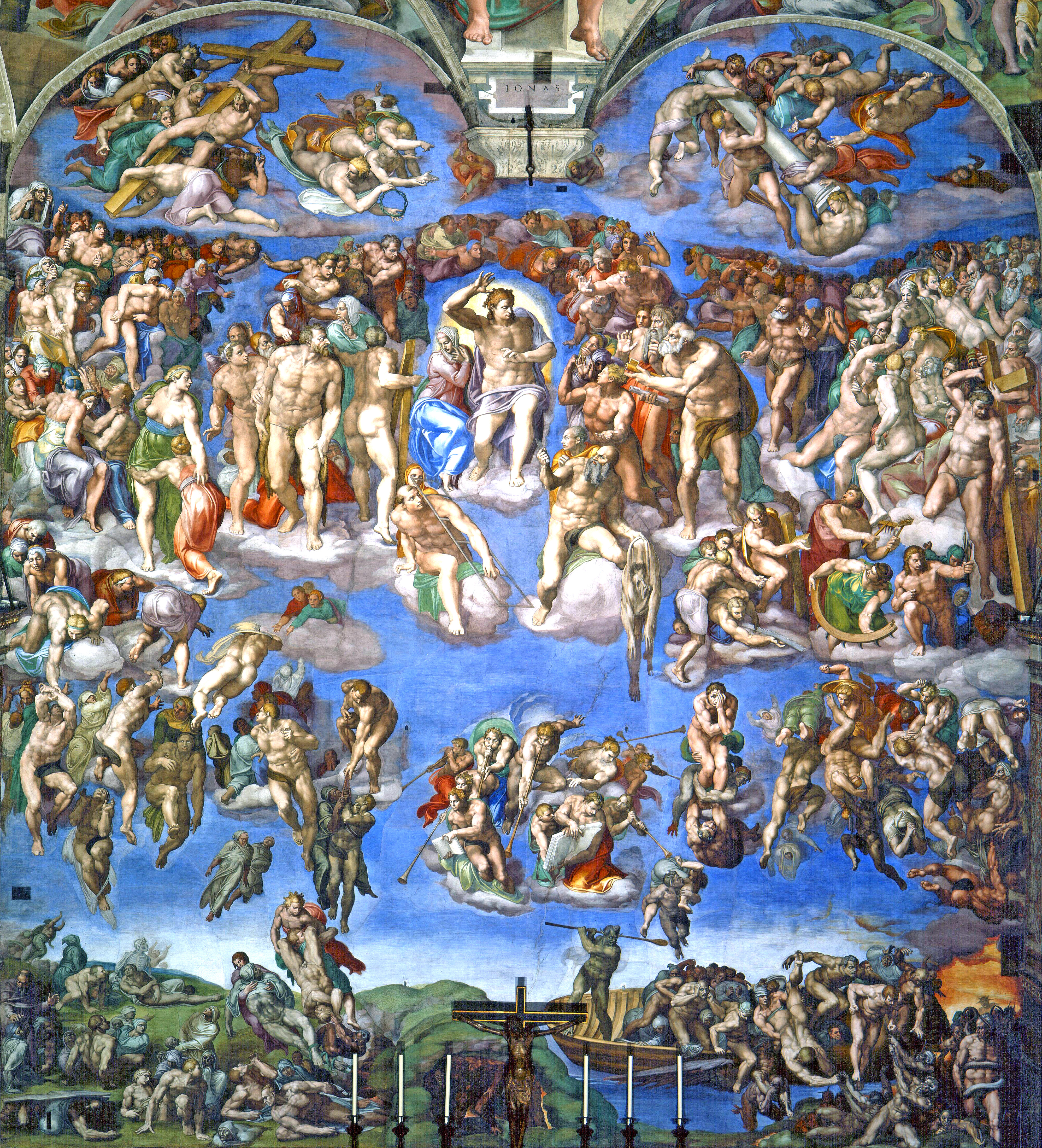
The Last Judgement, Michelangelo 1541, Sistine Chapel, Vatican City State.

(Note, by tradition, the bottom right hand corner of most depictions of the Last Judgement shows those who have not been faithful being thrown into Hell)

DO YOU KNOW SOMEONE WHO MIGHT BE OPEN TO THIS MESSAGE? IF SO, PLEASE FORWARD IT TO THEM. 

THANK YOU.

©SundayMassReadings.com

SUNDAY 9 NOVEMBER 2025: THE FEAST OF THE DEDICATION OF THE LATERAN BASILICA IN ROME.

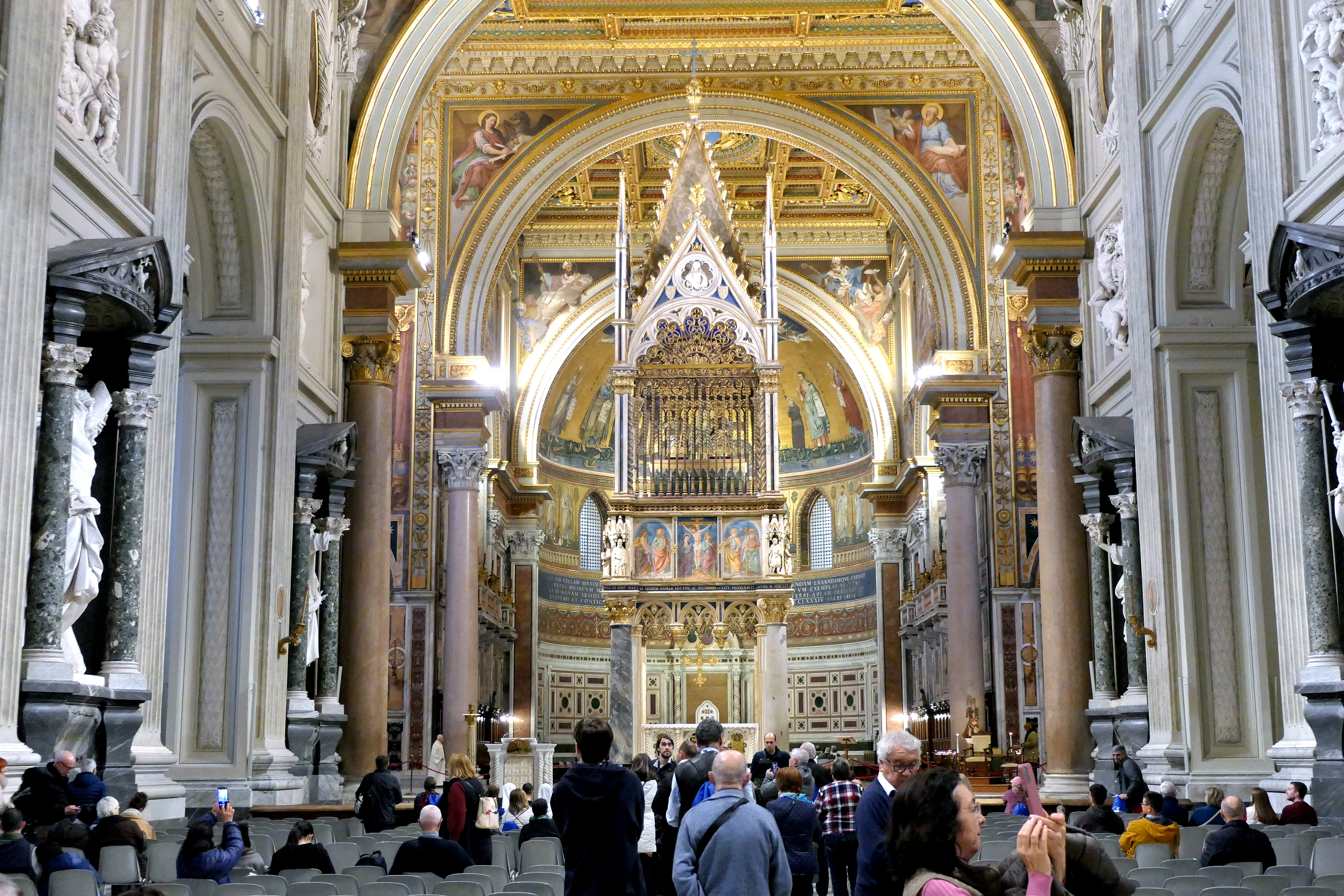
The Church of St. John Lateran, March 2025, Rome, Italy.

Click here to read today’s Sunday Mass Readings.

Do you not know that you are the temple of God, and that the Spirit of God dwells in you?  1 Corinthians 3:16.

Click on words highlighted in red for further information.

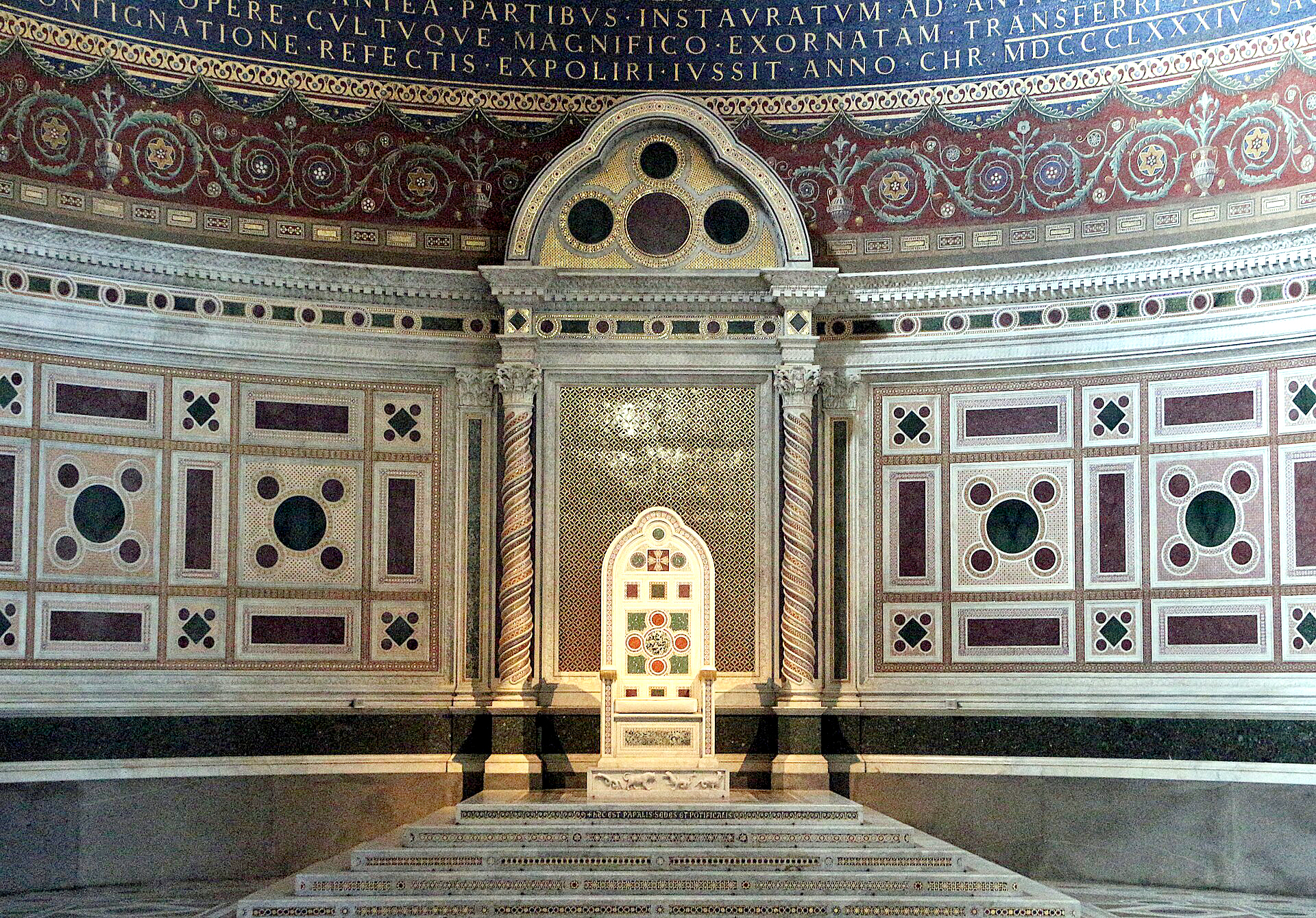
Well, first things first. The full, correct name of the church pictured above is “The Major Papal, Patriarchal and Roman Archbasilica, Metropolitan and Primatial Cathedral of the Most Holy Savior and Saints John the Baptist and the Evangelist in Lateran, Mother and Head of All Churches in Rome and in the World”. So, given that, perhaps there is less amazement at this church being the center of attention for today’s Sunday Mass! It is, in fact, the most important Catholic church in the world, even more so than St. Peter’s Basilica in the Vatican City State. If you look closely at the picture above, you can glimpse the papal chair, or cathedra, behind the altar at the very back. Every cathedral in the world gets its name from the cathedra, or seat of the local bishop, that word coming from the Greek word for a chair, 𝜅𝛼𝜃𝛿𝜌𝛼 (kathdra); so every cathedral in the world will have that special chair, the cathedra, reserved exclusively for the bishop of that place alone. Hence the Bishop of Rome has a cathedra, and you will find it in the Church of St. John Lateran in Rome:

The Cathedra of the Bishop of Rome, Wikipedia, Church of St. John Lateran, Rome, Italy.

And, as you know, the Bishop of Rome is the Pope. And one little note: “Lateran” is the name of the land on which the church was built, once belonging to the Laterani, a Roman family whose palace once stood there. That has also given its name to several treaties and councils. The Lateran Treaty, for example, was the founding document of the Vatican City State, creating the smallest independent country in the world in 1929. Additionally, there are certain Catholic churches in Italy which are “extraterritorial”, meaning they are exempt from Italian taxes and other restraints. St. John Lateran is one of those sites. And note that the church’s title of “Most Holy Savior” allows this day to be considered a feast of the Lord, hence taking precedence over the 32nd Sunday in Ordinary Time. 

So what is this all about? All very interesting (perhaps) but why is this considered so important that we will be thinking and remembering a church today, even if it is beautiful and uplifting? But if you are intrigued by a building which stands on the ground of the first legal Christian church in the western world on land donated by the Roman Emperor Constantine shortly after his victory in AD 312 at the Milvian Bridge, click here. Meanwhile, let us ponder on the symbolism and significance that St. John Lateran should have for us today. Note that the term “Archbasilica” is used only for this church, indicating its importance and uniqueness. It is also the “Mother” church as it was the first legal, openly recognized Christian church in the western world, consecrated by Pope Sylvester I in AD 324, and all Catholic churches were born of this first “mother”. 

The first idea which occurs about this church and the world is the link it represents between all Catholic churches in the world and the essential bond they all have in recognizing the pope as the head of the church in his capacity as Bishop of Rome. The pope claims to be the successor of St. Peter whom Christ himself called the “rock” on which he was to build his church (Matthew 16:18). So, in a sense, this church is the first western legal “rock” which spread throughout the world down to today, when on this day we acknowledge that it all began, once it was open to the world, with St. John Lateran. And note there are many moments in Scripture which equate human experience with the surroundings in which we live.  For example, Jesus is called the “corner stone”, the essential element in a building upon which everything rests, especially in an arch. Or we ourselves are described as the “living stones”. Or Christ and the apostles as the “foundation” of the church, and so on. And remember that we hardly ever see foundations; they are usually buried from sight, but woe betide the building that does not have a solid foundation, as seen in Matthew 7:24-27. And the history of the church of St. John Lateran certainly has had its major ups and downs, including fires in 1309 and 1361, an earthquake in 897 which nearly destroyed it, the neglect it suffered during the  period of the Avignon exile 1309-1377, and in the the notorious Sack of Rome in 1527 by the troops of the Catholic Emperor Charles V (not to mention the earlier two sackings by Vandals in the 5th century). And in July 1993 it even suffered a Mafia bombing which damaged part of the church. Yes, this old church has shared in good times and bad, just as we have, both through the centuries and the parallels in our own lives. Yet it has survived and still carries out its obligations as our church’s foundational building, the mother church of the Catholic world. And so do we, through good times and bad, confident that the Lord stands beside us, as he has done with his Church, symbolized above all by the first church of the Catholic world, St. John Lateran.

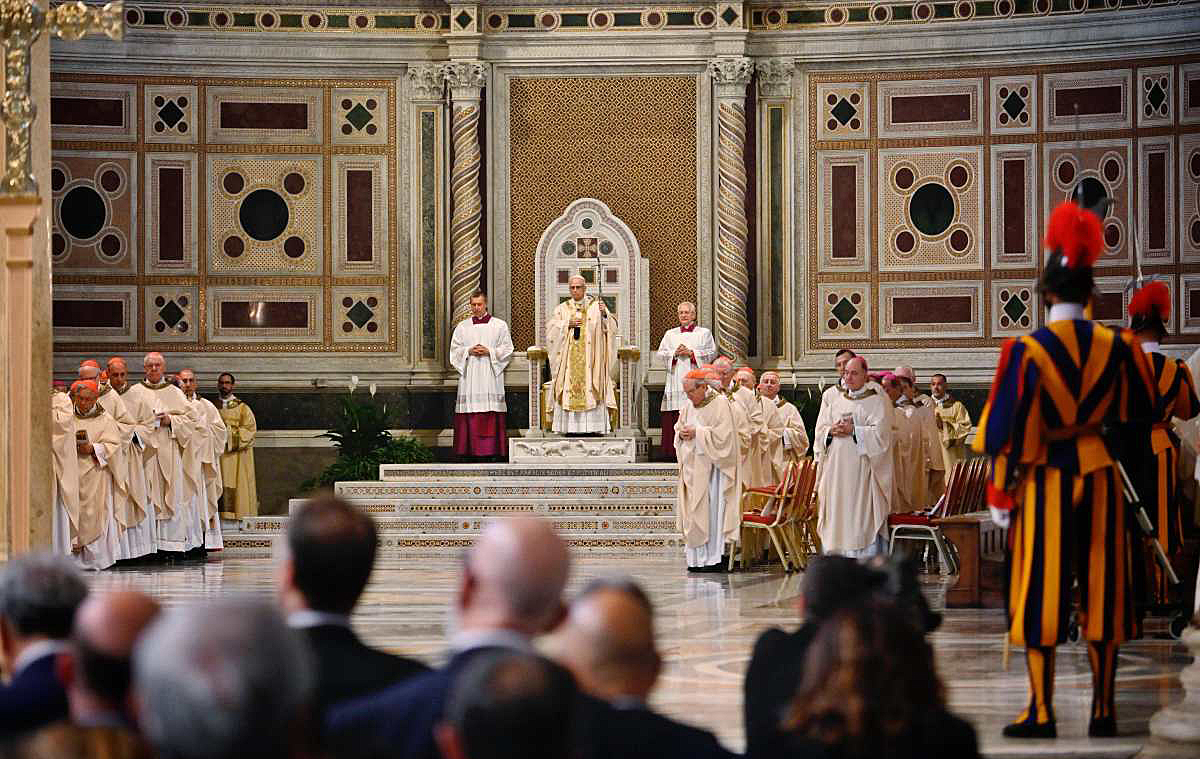
Click here to see Pope Leo XIV, Bishop of Rome, take possession of his diocese in May 2025. 

Installation of Pope Leo XIV, Bishop of Rome, May 25, 2025.

IF YOU THINK SOMEONE YOU KNOW WOULD RESPOND WELL TO THIS REFLECTION, PLEASE FORWARD THIS TO THEM. 

THANK YOU.

©SundayMassReadings.com

SUNDAY 2 NOVEMBER 2025: THE COMMEMORATION OF ALL THE FAITHFUL DEPARTED: ALL SOULS DAY.

“What is All Souls Day and…..” Colleen Pressprich October 2022, Brother Francis Store, McKinney, TX. USA.

Click here to read today’s Sunday Mass Readings.

(Jesus said) “…..this is the will of my Father, that everyone who sees the Son and believes in him may have eternal life, and I shall raise him on the last day.”  John 6:40.

Click on words highlighted in red for further information.

This Sunday is reminiscent of the feast of Saints Peter and Paul this year when the feast took precedence over the Sunday in Ordinary Time. Today we have another such upset of the regular progress of Sundays through the Church year. In the old days it was unthinkable that a day such as All Souls would take precedence over the regular Sunday, but the Second Vatican Council in the 1960s thought otherwise, and here we have the consequence. So today our thoughts and prayers turn to our beloved dead, to pray for them and to ask they be admitted into eternal happiness and peace. And perhaps a prayer could be offered for those who have no-one to pray for them. And today’s readings are designed to encourage us to intercede for our predecessors to ask for God’s mercy and love to envelope them and take them to heaven. It is our Christian duty so to do! 

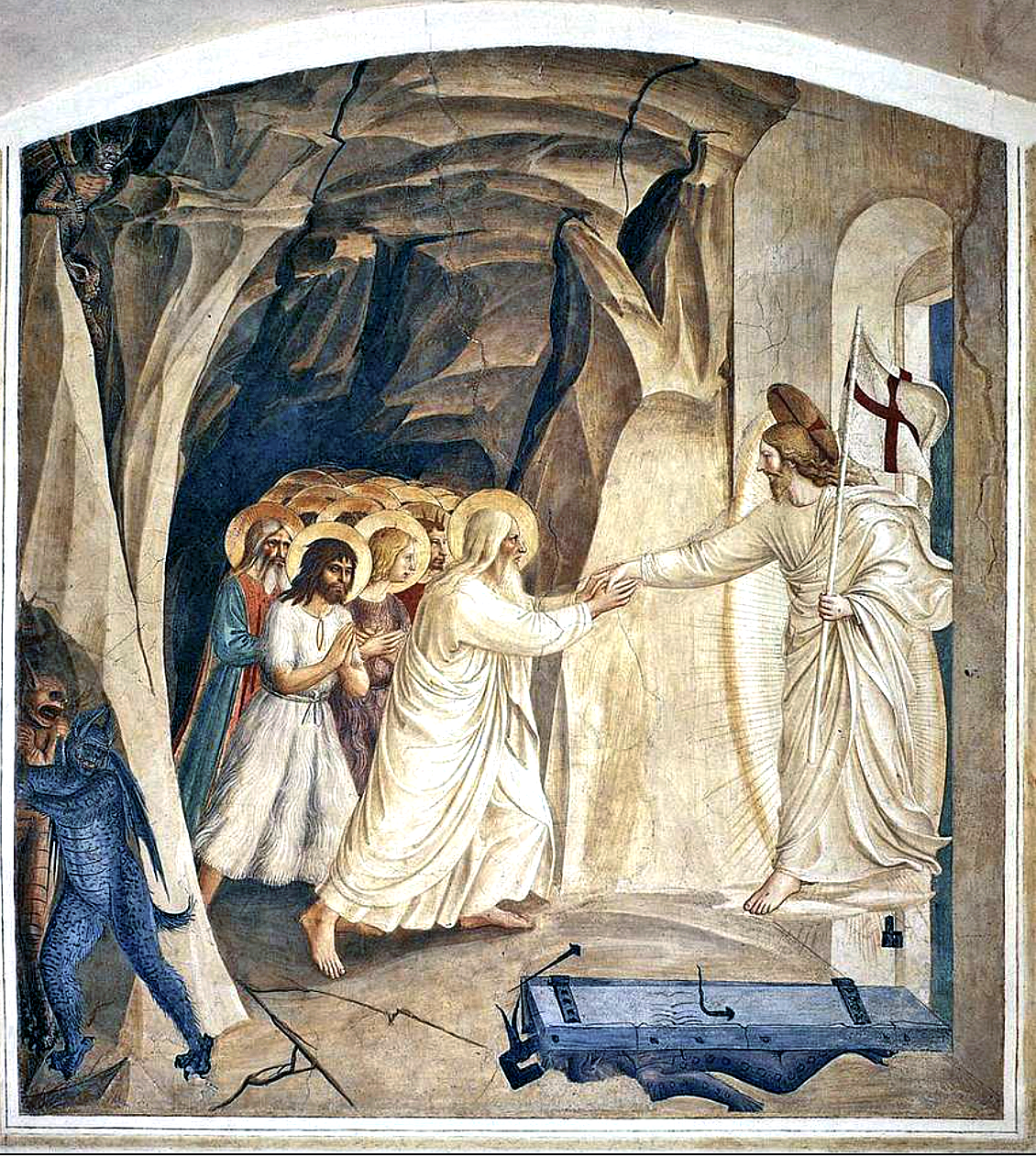
Now in the first reading from the Hebrew Book of Wisdom, there is a clear hope expressed for the dead: “The souls of the just are in the hand of God, and no torment shall touch them.” This is a huge progression from an earlier, more traditional view, where all the dead went to Sheol, a place of gloom, with both good and bad people, all of them, no matter how they had lived their lives. It represents an advance towards our Christian point of view, and as such the Book of Wisdom, written very close to the Christian era, has a more “modern” view of the dead. Much more can be said of this book of the Old Testament, but not here. You will recall in the Apostles Creed, we recite that Jesus “descended into hell”, into Sheol, to release all the righteous but imprisoned there. The Catholic idea of purgatory is similar, though there we are imprisoned by our own sins, until cleansed. 

The Harrowing of Hell, Fra Angelico c.1442, Convent of San Marco, Florence, Italy.

Indeed, our Orthodox Christian brothers and sisters emphasize this idea of Christ liberating the righteous from Sheol rather than concentrating on the silent tomb during Holy Saturday. That is a much more active, positive idea, suggesting Our Lord was busy fulfilling his mission to the very end, liberating not only the living, but also the dead. Love, of course, was at the root of all this, as ever. To the Lord, the dead were as much to be served as the living, and the picture above is a representation of this. Note the flattened devil under the broken-down door through which the Lord is stepping! Nothing can stop the advance of divine love and its power! 

So how can we help our own beloved dead? This of course is the day of days to be conscious of that. Today we remember those who have been responsible for bringing us to God in one way or another. My own mother, born into the Anglican/Episcopalian Communion, promised to bring my sister and I up in the Roman Church, and she did. She was faithful to the promise she made, and ultimately joined us, becoming Catholic late in life. My father, traumatized by fighting in the Second World War, never really recovered from it, but I only understood all that later in life, after he had died. Now, instead of thanking him (which of course I should have done when he was alive) I can now at least pray for him, knowing God is much more understanding than any of us. So today, in a way, gives us a chance to acknowledge not only those who have gone before us, but also to acknowledge the influence they have had over us, challenges and all, and both be thankful and forgiving for all that. The thought that they might well have been doing the best that they could (even if it is not our best) might be a source of comfort to us as we pray for them. And for those unfortunate enough to have had parents or friends who have been damaged by them, then we could ask God’s love to descend on them and balance out the evil done to them. Christ forgave everyone, even his torturers. It is the hallmark of our faith, the ultimate expression of belief, of love. Forgiving is, as it were, the essential attribute of our faith. 

So today, when we remember those who have gone before us, whether marked with the sign of faith or not, are today the focus of our Christian attention. We are asked to be generous in forgiveness, generous in prayer and above all generous in love. After all, the God of love made us, and so we must have love as a basic constituent in our spiritual DNA makeup! As Christians we are required to recognize that fact, cultivate that reality and let it overflow into our lives, our thoughts, our actions and our very identity. And recognizing that, to remember those who have left us and who may need our help even now, and make sure they receive it. And remember, we are never alone; the Lord stands beside us in all that we do. It is up to us to hope and trust in that truth, and be generous in thought, word and deeds.

Perhaps a few words could be said about the two days preceding All Souls Day. Let’s face it, Halloween seems to have taken much of the glamor (if you can use that word) out of All Saints Day, on Saturday. Even the word “Halloween” means little to many people, when in fact it means the evening before All Saints: “(All) Hallows Even(ing)”, hallows being an old English word for saints, or that which is holy. We even say it every Sunday at Mass: “Hallowed be thy name” or, may your name be ever holy, addressing God the Father. And many Catholic countries have a public holiday on All Saints Day. And then there seems to be a vague linking of ghosties and long leggedy beasties at this time with an ancient pagan Celtic tradition. In all a strange combination of the holy and profane. In the UK it also seems to have overtaken a very old tradition, remembered on November 5th, of the Catholic Guy Fawkes trying to blow up King and Parliament, thus setting back by at least 100 years Catholic emancipation in Britain. You can read all about that here. “Remember, remember, the fifth of November: gunpowder, treason and plot….” But the main focus of these days must be the holy men and women who fought for truth, generosity and love, both the canonized and those we ourselves remember today who made our lives better and happier. Blessed are they… 

God of Love, Christianity.com

IF YOU KNOW SOMEONE WHO WOULD APPRECIATE THESE THOUGHTS, PLEASE FORWARD THIS TO THEM. 

THANK YOU.

©SundayMassReadings.com

SUNDAY 26 OCTOBER 2025: THE THIRTIETH SUNDAY IN ORDINARY TIME.

The Pharisee and the Tax Collector, James Tissot c.1894, The Brooklyn Museum, New York City, NY, USA.

“The Pharisee took up his position and spoke this prayer to himself, ‘O God, I thank you that I am not like the rest of humanity — greedy, dishonest, adulterous…..”      Luke 18:11.

Click here to read today’s Sunday Mass Readings.

Click on words highlighted in red for further information.

Here we have one of the more well known parables in the gospels. It is pretty easy to imagine – and even update – this simple scene with the self-satisfied and complaisant and no doubt wealthy Pharisee and the clearly penitent tax collector, unable even to raise his eyes to heaven. Remember that the tax collector would be regarded with distain, even loathing, by just about everyone listening to Jesus. Such a one collaborated with the pagan, unclean Romans and was therefore unclean himself, yet here Jesus said he returned home justified, unlike the Pharisee. And no doubt “standing off at a distance” indicated that perhaps he was not allowed within the area of the holy temple at all, being unclean (and remember “unclean” does not mean unwashed; here it means he had become tainted with ritual impurity). Now Jesus did not try to justify the tax collector’s occupation, he did not say he returned home determined to quit his unclean job. Jesus simply said he went home “justified”. There might be a thousand reasons he could not renounce his unclean job – we do not know. But we do know he went home “justified”. In other words, the intention within his very soul is the important element here. The Pharisee was glorifying himself. The tax collector was asking for God’s mercy. Indeed there is a Catholic and Orthodox prayer based on this parable:

Oh Lord Jesus Christ, Son of God, be merciful to me a poor sinner”

Breath in for the first phrase, breathing in Christ himself, and then breath out the sinfulness, gone for good. So the tax collector, of all people, has led us all to the God of Mercy!

One might wonder after all that if there is any place at all for us to acknowledge our good works in obedience to God. Well, yes there is, and today’s second reading is pretty well perfect as an example. St. Paul was awaiting execution for being a believer in Christ. Now remember that the ancient Romans believed that the gods and goddesses were the ones who protected their empire. Refusal to worship them, honor them, sacrifice to them, was tantamount to betrayal – treason, if you will. You endangered the Empire if you did not bow to this pantheon. And Christians refused to do that. There was One God, and One alone. And that condemned the Christians to an on and off persecution which would last almost 300 years. Indeed, they were even accused of atheism as one god was tantamount to no god!

So St. Paul, in summing up his life prior to his impending martyrdom, today’s second reading, openly admits that God was the source of his strength and toughness: “But the Lord stood by me and gave me strength, so that through me the proclamation might be completed and all the Gentiles might hear it. He also says, “I am already being poured out like a libation, and the time of my departure is at hand. I have competed well; I have finished the race; I have kept the faith.” This is not boasting, but simply stating the truth, and thereby setting an example for everyone else. God is the source of his strength, not himself. You cannot say that of the Pharisee’s speech, which was entirely about himself in direct comparison to the lesser mortals around him. Paul says all that in order to encourage others to run the race and win the crown of righteousness. Not an echo of that with the Pharisee; no-one can even compete with his generosity and greatness! So today’s readings offer us a choice. And only each each one of us can decide, alone with God, which it should be.

The Crown of Righteousness, sabeel@sabeel.org

please forward this reflection to someone you think would like it. 

THANK YOU.

©SundayMassReadings.com