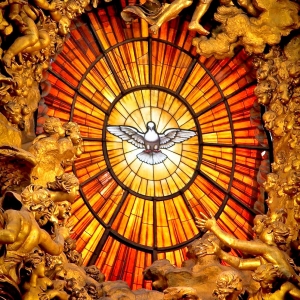
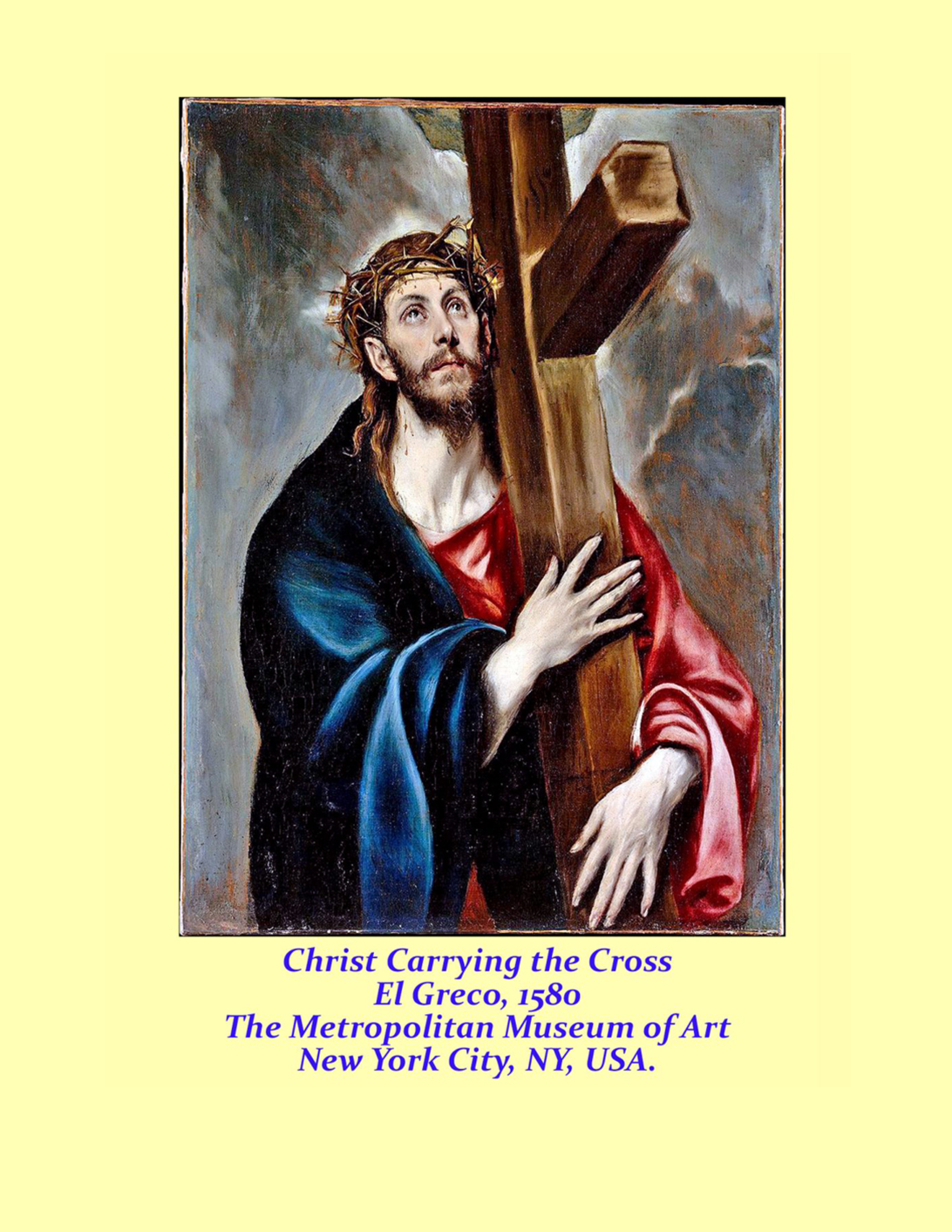

Divine Harmony – The Holy Family, Sanctified Souls, Etsy.
Click here to read today’s Sunday Mass Readings.
[Joseph].…..departed [from Egypt] for the region of Galilee. He went and dwelt in a town called Nazareth, so that what had been spoken through the prophets might be fulfilled, He shall be called a Nazorean. Matthew 2:22-23
Click on words highlighted in red for further information.
Family: A very common word in English. It has come down to us from Latin (familia) and then French (famille). In fact most western European languages are based in this Latin root: familj in Swedish, familie in German. So clearly there was something about this word which resounded true through many different types of people, at least in that area. And guess what; the root meaning comes from a word for servant or slave (famulus). And that, interestingly, has to resound with the Christian idea of service, each member of a family serving the others, and the youngest learning to do the same. Remember those words of Jesus: “I came to serve, not to be served” (Matthew 20:28; Mark 10:45; John 13:1-17). And we can take the example of Joseph, the head of the household where the child Jesus lived. He clearly took his divine vocation very seriously, seen in today’s gospel. He now devoted himself to his new vocation, protecting his young (foster) son from Herod’s son Archelaus. King Herod had died and this, his son, became ethnarch (that is, leader of a people) at age 18. It soon became clear that this was not an improvement in the running of the state. In the first year of his reign there was a slaughter of 3000 people within the Temple precincts. You can find out all about that here. It becomes very clear why our Joseph wanted to be very wary of this man. Nazareth was in Galilee where Herod Antipas, one of Herod’s younger sons, had been made tetrach (ruler of a smaller land), outside the rule of his brother Archelaus. Hence Nazareth was seen as a much safer place than, say, Jerusalem. So Jesus became Jesus of Nazareth. Now today’s gospel says this was in fulfillment of the prophecy “He shall be called a Nazorean”. Interestingly, there is no such prophecy in Scripture! Scholars have labored over this, and again look here to see what they say about this whole episode.
And so the Holy Family settled in Nazareth in Galilee for Jesus’ childhood and early adulthood. Joseph’s care is seen in today’s gospel. Mary’s love was certainly evident in the episode when she and Joseph, returning to Nazareth from pilgrimage to Jerusalem, realized he was not with the usual crowd of youngsters and rushed back to the city to find him with the elders in the Temple: “Son, why have you done this to us? Look, your father and I have sought you anxiously” she exclaimed, clearly expressing her relief, frustration and upset almost all of us can recognize from our own moments of childish mishaps. It was a community of love in which our Savior grew up.
And it is that thought I want to leave you with. Do you recognize this:
“A bell is not a bell ’till you ring it. A song is not a song ’till you sing it. Love in your heart isn’t put there to stay. Love isn’t love ’till you give it away.”
They were written by Oscar Hammerstein II, he the lyricist of Rogers and Hammerstein. It is said they were written for the actress playing Maria in The Sound of Music on a piece of paper by Hammerstein himself, presumably in rehearsal. Do you agree with the sentiment? It seems to talk of potential – we all have the potential for love, but it’s not love until another receives it, and returns it. For Jesus it was clearly his Father in Heaven – everything he said and did was for God his Father, following God’s clear desire that he act always and in every way as the Son of God. That is not to say he ignored everyone else. Hardly. It was the will of his Father that he show his love in every conceivable way, even on the cross itself, forgiving his murderers and the thief next to him, and even ensuring his mother was entrusted to St. John. We believe he is the Second Person of the Holy Trinity. With the Holy Spirit (who in Scripture is on almost every occasion of which I am aware, represented by feminine nouns in Hebrew) the Father’s and Spirit’s love eternally generates the Son. The Trinity is the ultimate sign of love, and it is out of that love that each one of us exists today. How on earth could a single god ever love us into existence if that god did not have it to give? Love isn’t love ’til you give it away…. And that same God gave us his most precious gift of all – his Son. That is the great mystery we celebrate in these days. And so we say ευχαριστώ, eucharistō, eucharist – “Thank you” in Greek…
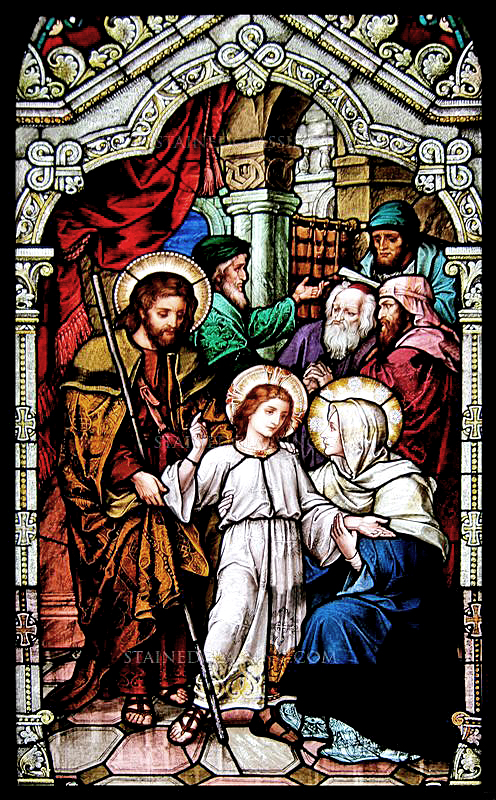
About My Father’s Business, Stained Glass Inc., Panel #5251.
DO YOU KNOW SOMEONE WHO WOULD LIKE THIS? PLEASE FORWARD IT TO THEM.
THANK YOU.
Reflections on next Sunday’s Mass Readings will be posted on Wednesday.
Please send your reactions to: RogerJohn@aol.com
©SundayMassReadings.com


 Sunday Mass Readings