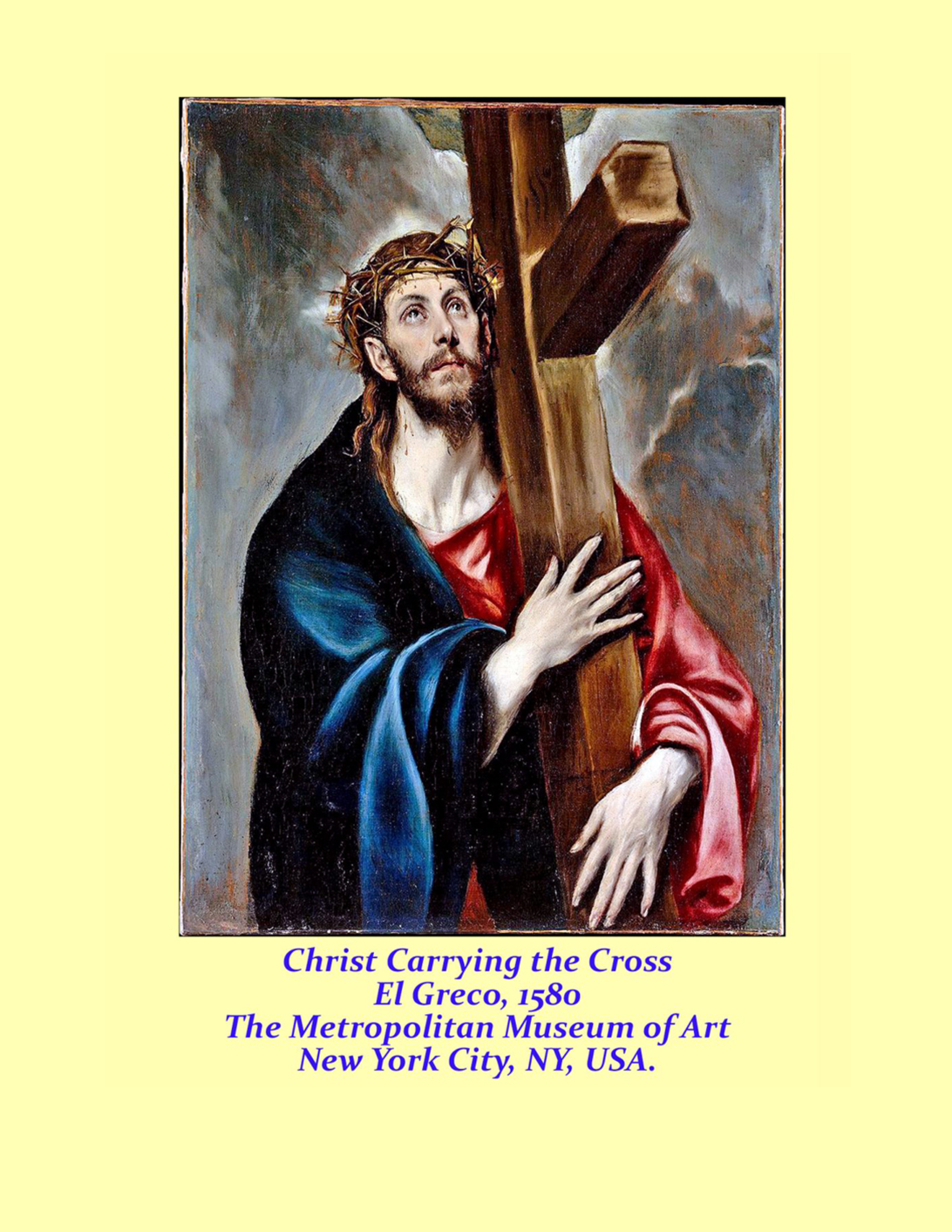
29 MAY 2025: in dioceses of boston, hartford, new york, omaha & philadelphia – SOLEMNITY of the ascension ***** 1 JUNE 2015: THE SEVENTH SUNDAY OF EASTER. (ELSEWHERE, THE SOLEMNITY OF THE ASCENSION)

THE SEVENTH SUNDAY OF EASTER

The Martyrdom of St. Stephen, Annibale Carracci 1604, Musée du Louvre, Paris, France.

Stephen said, “Behold, I see the heavens opened and the Son of Man standing at the right hand of God.” But they cried out in a loud voice, covered their ears, and rushed upon him together. They threw him out of the city, and began to stone him.      Acts of the Apostles, 7:55-57.

Click here to read today’s Sunday Mass Readings. 

Click on words highlighted in red for further information.

St. Stephen is revered as the first person to die for love of God, Jesus the Son of God and the Holy Spirit of God. His words exalting Jesus the Christ as the Messiah were so offensive to those who heard them that they stoned him to death, even though that was forbidden in the Roman Empire unless ordered under Roman authority. It was the first taste of the persecution God’s People would undergo for the next 300 years from many different quarters. And note, Stephen was one of the first ordained deacons of the church. The word deacon means servant in Greek; he had been ordained to serve the people of God, and he demonstrated that by dying a martyr’s death, the first of many martyrs to enter God’s kingdom thus; he was God’s servant first. You may recall that his feast day is December 26. The contrast is presumably intended, the birth of an innocent baby on the 25th and the brutal death of a man refusing to betray all that the baby represented remembered on the very next day. And the power which gives life to the birth of Jesus, the strength which Stephen demonstrated in bearing witness to Jesus, and the second reading inviting “the one who thirsts come forward, and the one who wants it receive the gift of life-giving water” are all examples of the love God has for us, expressed in many ways. It is the power which gives us more strength than we know. And sometimes it is good to demonstrate that love in unexpected ways, the expression of which is left to each of us. God has given multiple examples; pick and choose!

***************************************************************

Solemnity of the Ascension of the Lord

The Ascension of the Lord, S. G. Rudl 1900, St. Wenceslas Church, Prague, Czech Republic.

Then [Jesus] led them out as far as Bethany, raised his hands, and blessed them. As he blessed them he parted from them and was taken up to heaven.     Luke 24:50-51.

Click here to access the readings for the Solemnity of the Lord’s Ascension.

Click on words highlighted in red for further information.

Notes from the first reading:

  1. Jesus’ disciples asked “Lord, are you at this time going to restore the kingdom to Israel?” In other words, they still expected the Messiah to be a conquering soldier! And Jesus said definitively, “It is not for you to know the times or seasons that the Father has established by his own authority…” Remember those words the next time someone announces that the world will end on a certain future date. It is NOT for us to know!
  2. Jesus quite clearly enjoined them not to depart from Jerusalem, but to wait for “the promise of the Father about which you have heard me speak”. The two men on the road to Emmaus were clearly disobeying that instruction, until, of course, the Lord caught up with them and, as a result, they voluntarily returned to Jerusalem.

                       ****************************************************************

The Lord’s ascension into heaven effectively ended his bodily presence here on earth somewhat spectacularly. Death had no further power over him, and he was destined to be seated at the right hand of the Father. Consequently he had to depart this world. It was also to fulfill his promise to send the Holy Spirit to us and hence begin the era of the Holy Spirit which has lasted to the present day: “…it is better for you that I go away, because if I do not go, the Helper will not come to you. But if I do go away, then I will send him to you” Jesus said (John 16:7). In other words, it was necessary for the Lord to ascend to his Father in order to send the Holy Spirit to us, and inaugurate the time of the Spirit, in which we now all live. Remember that over the centuries before Jesus, God the Father slowly revealed the nature, the qualities, of God through the pages of the Old Testament. Then Jesus had to demonstrate totally and completely the identical qualities in his own life in order to be recognized as God’s Son. Finally, the Holy Spirit, sent by God, has been with us ever since, being the power through which we all strive to be good followers of Christ in the world, in fact to be Christ to the world as best we can. From the Ascension on, the saints have been the guiding men and women who have modeled themselves on Christ and shown us what it truly means to be Christ to the world. And we try our best to do exactly that. In fact, we have to exhibit the identical qualities of God in our lives.

For example, one of the first qualities revealed by God was power. Abraham was an old man, perhaps near 100, and his wife was perhaps a few years younger, yet God announced she would have a child. Sarah laughed at hearing this, and then argued with God! (Genesis 18: 10-15). She gave birth to Isaac. Anything is possible with God. Jesus had divine power, the supreme example of which was the raising of Lazarus from the dead. And each one of us has power too. Even a 6-year old has power! How? I ask altar servers sometimes, “Do you have the power to make your mother’s life today a total misery?” and then, “Do you have the power to make today one of the best days of your mother’s life?” The answer is clearly “Yes” to both questions. We all have power, but do we use it as Jesus would? Take a look at the lives of the saints; they used their God-given power to do great things, just as a 6-year old has. We know deep down what our powers can do in the way we conduct our lives. Another divine quality revealed through the Old Testament is that God is relational, unlike just about all the pagan gods of the time. Moses asked God for the divine name at the famous scene with the burning bush. God revealed the divine name, Yahweh, I AM WHO AM, at that moment creating a relationship between God and Moses, and through Moses to the entire Hebrew people. Jesus took this quality to the level of the infinite, when at the Last Supper he took some bread and said to his disciples “Take, eat, this is my body”. Each time we consume the consecrated host, we literally incorporate the Lord into our own body; the relationship is total. And so we, in our lives, must be open to others, welcoming to others, friendly to others, help others, just as the Lord did. It is a divine quality. God revealed other qualities through the pages of the Old Testament: God listens, God forgives, God loves freedom, God is loyal, God is merciful. Jesus displayed each one of these in his ministry, clearly and strongly. And so must we. 

For a few days there was, in a sense after the Ascension, a sort of absence of God before the arrival of the Holy Spirit on Pentecost Sunday, 50 days after Easter/Passover (hence pente, the Greek for 5). A provocative friend of mine often suggested that it was at that “vacant” time that the empty seat at the table, once occupied by Judas Iscariot, was filled by a man rather a woman! Now there’s a thought to be pondered! One wonders. But Jesus had completed his vocation, to be Christ to the world, which is also our vocation, based on the gifts, the talents, that God has given us. Each one of us is a child of God through baptism. All was set after the Ascension, then, for the arrival of God’s Holy Spirit, to give each of us the strength, the power, to be truly children of God.

The Ascension of the Lord, unknown provenance.

© SundayMassReadings.com

SUNDAY 25 MAY 2025: THE SIXTH SUNDAY OF EASTER.

The Eternal Father, Veronese (undated), Hospital Tavera, Toledo, Spain.

[Jesus said] “I have told you this while I am with you. The Advocate, the Holy Spirit, whom the Father will send in my name, will teach you everything and remind you of all that I told you. Peace I leave with you; my peace I give to you.”       John 14:26-27.

Click here to read today’s Sunday Mass Readings.

Click on words highlighted in red for further information.

It cannot be by coincidence that the first major crisis in the brand new Christian community, described in today’s first reading, has been linked with today’s gospel. Word was spreading among the earliest Christian communities that pagan men who had expressed interest in following the Lord had to be circumcised to become Christian. Now all Jewish boys, following God’s orders as stated in Genesis 17:11-12, had been made to follow that command for hundreds of years. So it was not too surprising that such a thought had occurred to the new Christians (who had not yet had that name applied to them; before then we were “Followers of The Way”) especially the ones who had converted from Judaism, probably the majority. Today’s first reading describes that first controversy in the fledgling church. Not surprisingly, it threatened to tear the infant community to pieces unless it was addressed. So, what theologians now call the Council of Jerusalem, namely the “apostles and elders”, met together and decided that it was not necessary for men to submit to that Jewish tradition in order to follow “The Way”. And so it was proclaimed. As such it has never been a condition for boys to be circumcised in order to become Christian. And so it was the first time that Jesus’ prophetic words in today’s gospel were put to the test.

And it is even more interesting if you apply that ultimate requirement of the 16th century Reformation for changes in Church teaching, the “sola scriptura” test. This states simply that if you cannot prove your case from Scripture, then it fails. Both the Catholic and the Orthodox churches reject this teaching. Indeed, this Council of Jerusalem event today supports this rejection. The early Christians were forced to decide what needed to be done for a man to become Christian. For generations the Hebrew people had circumcised all boys, following the clear command recorded in Genesis. Now the Christians had changed that rule. But Scripture clearly proclaimed that this was an absolute requirement if you took the Christian community to be Jewish; after all, it proclaimed Jesus to be the long-awaited Jewish Messiah! However, the apostles and elders said it was not, and so, no circumcision. Looking at today’s gospel, Jesus had clearly stated that his followers would be guided by God’s Holy Spirit if and when this became necessary. Today’s first reading demonstrates the reality of Jesus’ promise, and the apostles and elders stated without hesitation that “It is the decision of the Holy Spirit and of us” not to require circumcision for men wanting to become Christian. Such a conviction has been present in the church ever since that time. In fact, the 1871 First Vatican Council proclaimed the logical extension of this belief that when the pope speaks “ex cathedra” his proclamation is infallible, meaning it must be accepted by Catholics as true  and without fault. Apart from that papal infallibility statement, only two further teachings have been declared to be infallible. One was at that Council, with the proclamation that the Virgin Mary was conceived without sin, the Immaculate Conception. The only other time was in 1950 when Pope Pius XII declared the Assumption of the Blessed Virgin Mary body and soul into heaven to be a doctrine of faith, to be accepted as true by all Catholics. Both those teachings had been present in the church from very early times. And so, even though they are not in Scripture, they are articles of faith to be accepted by all Catholics. No other teaching has been declared ex cathedra since 1950.

The First Vatican Council 1870, image located in the Library of Congress.

The Proclamation of the Doctrine of the Assumption of the Blessed Virgin Mary by Pope Pius XII, 1950.

Today’s readings are therefore really an object lesson in the ability of the church to handle questions of faith whenever they arise. Although teachings ex cathedra are extremely rare, the church does have the ability to discern between levels of acceptable belief. For example, the church accepts that St. Bernadette was especially privileged to receive visions and messages from the Blessed Virgin Mary, but it does not require any of us to accept such as essential to our faith: we can accept or reject Bernadette’s experience as we wish; the church simply states it is “worthy of belief”. But, in contrast, the church does, for example, expect us to accept the Real Presence of Christ at Mass in exactly the same way Jesus expected such from his followers at the Last Supper. “This is my body” he said, and he meant it, ordering us for ever to “do this in memory of me”. And what will be our reward, if you like, for accepting God’s word and living God’s Way? Take a look at the second reading today describing our ultimate destination, our home: “The city had no need of sun or moon to shine on it, for the glory of God gave it light, and its lamp was the Lamb”. Amen.

The Sacrifice of the Mass, unknown attribution. 

© SundayMassReadings.com


SUNDAY 18 MAY 2025: THE FIFTH SUNDAY OF EASTER.

The New Jerusalem, The Apocalypse Tapestry c.1373, Château d’Angers, Angers, France.

Click here to read today’s Sunday Mass Readings.

Then I, John, saw a new heaven and a new earth. The former heaven and the former earth had passed away, and the sea was no more. I also saw the holy city, a new Jerusalem, coming down out of heaven from God, prepared as a bride adorned for her husband.            Revelation 21:1-2.

Click on words highlighted in red for further information.

Today’s gospel may well be one of the most challenging to understand, accept and live by: “Now is the Son of Man glorified, and God is glorified in him. If God is glorified in him, God will also glorify him in himself, and God will glorify him at once.” So we must rely on scripture scholars to help us. Jesus is talking of his “glorification”, which is to say his death and resurrection. It is noteworthy that Judas had just left the table in order to betray his Lord before Jesus said this. Those who remained lived out their whole lives spreading the words of life and love, all to be martyred (with the exception of John). Jesus’ utter determination to stand by his teachings and his identity as Son of God meant that he would glorify himself by upholding this teaching to the bitter end, death on the cross. His resurrection glorified God his Father as this action conquered even death. It is a unity of action which glorified God totally. And then there is the source of all this strength, even conquering death: “I give you a new commandment: love one another”. There is the heart of all Jesus’ belief, strength and power. Death cannot conquer love. It has met its match. There is the glory of which Jesus speaks. There is the overarching strength of Jesus’ conviction, love conquers all. The other two readings are the practical result. Paul and Barnabas encounter fearsome odds trying to convince others of the truth of Jesus’ teaching and example. Yes there is rejection and ridicule, but the goal is worth all the suffering. The result with be a new, glorious and shining example of the perfect city of love and life, the New Jerusalem. All the suffering, frustration and pain will be gone. 

Given all that, I think the quotation in the paragraph above is an attempt to describe, even analyze, love. The complete bond between Jesus, God’s Son, and God the Father is complete, eternal, total and binding. To see the one, as Jesus himself said, is to see the other. There are likenesses in human life. Two people who are utterly devoted to each other are completely open to those around them in the sense they welcome them into their homes, into their lives as if they are one person. They enjoy the company of others, just as the others completely enjoy being with them. There is something life-giving being with them. You feel strengthened having been with them. There is joy anticipating being with them. They reflect the love of God. It was to defend that love that Jesus died. To have denied it before the high priest, for example, would have meant denying the love he had for God, his Father. That was not possible. That meant he had to die. And that same love brought him back from death! That is how strong it was! It makes today’s second reading understandable. That new Jerusalem is the dwelling of God’s love into which each one of us is invited, to live with the source of love forever! And it explains the determination of Paul and Barnabas to continue in the face of hostility, rejection and denial; to give up would be to deny the love they feel towards God and the Lord. 

And so to us today. How does each one of us reflect God’s love for us in our lives, our relationships and our outlook to others? Jesus was open to everyone, save perhaps to the money traders in the Temple, where he saw contempt for the One he loved – and he was prepared to do something about it. How far is each one of us prepared to go to uphold our most cherished convictions in the face of criticisms or challenges to our faith? Is the love of God central to our love of others – or the other –  in our life? If God is being hurt in the course of a normal day at work, at home or wherever, how do we react in defense of the one we love? Silence is clearly not an option… And there is the rub. Jesus was prepared to die in defense of such. How far is each one of us prepared to stand up for our deepest belief? 

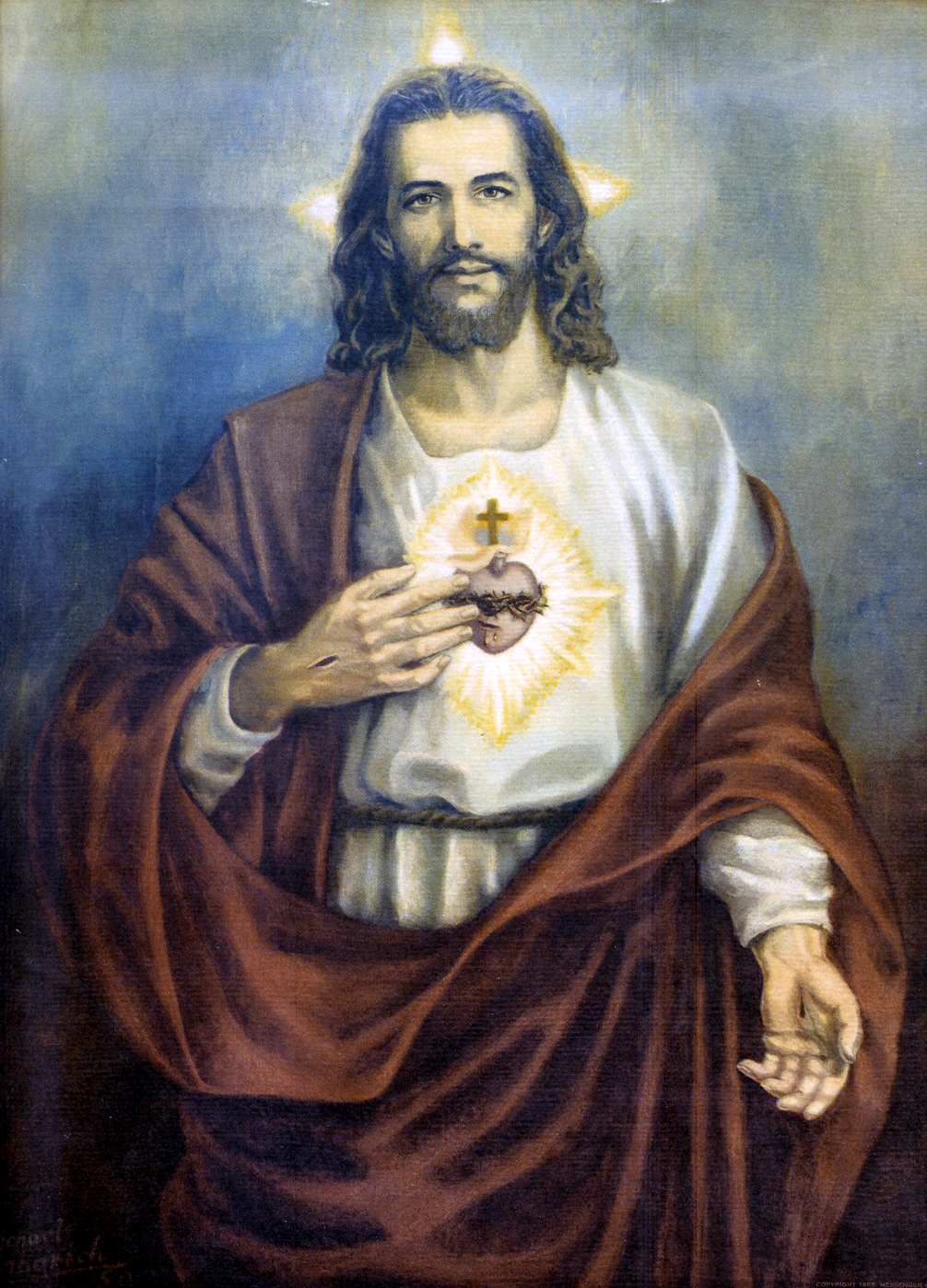
The Sacred Heart of Jesus 1955, Rocathour.

© SundayMassReadings.com

SUNDAY 11 MAY 2025: THE FOURTH SUNDAY OF EASTER: GOOD SHEPHERD SUNDAY.

The Good Shepherd mosaic, 5th century, Mausoleum of Galla Placidia 2015, Ravenna, Italy.

Jesus said: “My sheep hear my voice; I know them, and they follow me. I give them eternal life, and they shall never perish.”         John 10:27-28.

Click here to read today’s Sunday Mass Readings.

Click on words highlighted in red for further information.

The image above, created in the 5th century, making it over 1500 years old, shows a beardless Christ amid a pastoral scene of peace and abundance. Christianity was made legal in 313AD with the promulgation of the Edict of Milan. Between the time of Jesus and 313, the Christians had been hounded, persecuted, torn to pieces by the teeth of lions, and occasionally left in peace, so that, once the Edict was proclaimed, there was little idea of what a Jewish Jesus would have looked like. Hence he is seen here as a beardless young man, the Roman fashion of the time, amid a peaceful, luxuriant landscape completely removed from the Holy Land which is more desert than abundantly green! Also, Jesus as the Good Shepherd was by far the most popular image of the Lord for the next 100 or so years. Almost all the first representations of Jesus that we know of him are as the Good Shepherd. A crucified Lord was not the image those recently legalized Romans wanted to proclaim. A bearded Jesus began to appear later, possibly connected to the appearance of the image on the Shroud of Turin in the Byzantine Empire in the 6th century. But the point of all this is to cast light on the image created by the Lord in today’s gospel: Jesus said: “My sheep hear my voice; I know them, and they follow me.” In other words, Jesus is the Good Shepherd. Now for years I have been writing about how dumb sheep are, unable to learn to avoid mishaps, blindly following the leader, timid and easily frightened, and so on. Well, I was wrong. Although not as bright as dogs or pigs, they are, apparently, the equal of cows and other domesticated animals. So when Jesus called us his flock of sheep, there was no scantily disguised insult there. We are bright, other oriented, mutually helpful, even empathetic and exhibiting all the other qualities that the first hearers of today’s gospel would be familiar with, but we, today, are not. So it comes as a relief to know that we are intelligent creatures, treasured by our Shepherd who protects and loves us are cares about us to the extent of giving his very life for us.

And then there is the Lamb of God. It was John the Baptist who identified Jesus as such (John 1:29). There is a touch of pure innocence and life in a multitude of lambs together. Then there is the theological significance of the lamb slaughtered to ensure the protection from the angel of death, the 10th plague of Egypt, its blood therefore signifying life, not death. The blood on the Hebrew doorposts meant death would not enter their households. And the early Christians quickly came to the understanding of the full meaning of John the Baptist’s recognition of Jesus as the totally innocent lamb who would take away the sins, the corruption and death of the world. Its innocence would conquer everything! “Behold the Lamb of God, behold him who takes away the sins of the world….” That innocent Lamb’s blood washes our sinful souls white. And this from today’s second reading: For the Lamb who is in the center of the throne will shepherd them and lead them to springs of life-giving water, and God will wipe away every tear from their eyes.” Plenty for us to consider this Sunday, much to understand and apply to ourselves, and much to be thankful for.

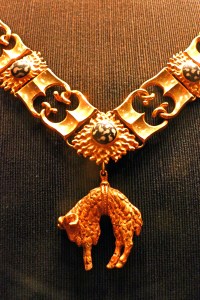
The symbolism of sheep and lambs is very old in Scripture. Apart from dogs, apparently domesticated 20,000 years ago, sheep are thought to have been among the next animals to be domesticated, perhaps about 10,000 years ago, probably in Mesopotamia. They were noted for their lack of aggression, they were of a size which was easily manageable, they had fast sexual maturity, a noticeable preference for good social behavior and a high reproduction rate, all of these being desirable qualities for domestication. Of course, their fleece and as a source of food made these animals highly desirable on many levels. Hence they became a symbol of wealth for their owners. Remember the legend of the Golden Fleece from ancient Greece, a symbol of wealth and strength, and the source of one of the most ancient honors in Europe:

The Order of the Golden Fleece, founded 1430, Schatzkammer, Hofburg Palace, Vienna, Austria.

But those who cared for them, the shepherds, were considered to be among the lowest in society. Remember that the prophet Samuel, sent by God to Bethlehem to seek a king to succeed Saul from Jesse’s sons, did not find him among the seven young men presented to him. Samuel, probably rather sheepishly, as it were, asked Jesse if he had any more sons. Yes, David, the youngest, who therefore had been sent to take care of the sheep, the traditional job of the youngest. And God chose him. So shepherds in the Bible were both lowly and yet kingly! And then there is Jesus, both lamb and shepherd: “For the Lamb who is in the center of the throne will shepherd them and lead them to springs of life-giving water…” from today’s second reading from the Book of Revelation. Here is the summation of the image, sacrificial Lamb and Shepherd protector and guide, both images found in the Lord Jesus. He is the perfect shepherd, willing even to give his life for the redemption of his flock’s souls, such is his love for us. No greater love can be conceived. 

Ghent Altarpiece: The Adoration of the Mystic Lamb, Hubert and Jan van Eyck 1432, St. Bavo’s Cathedral, Ghent, Belgium.


LET US GREET OUR NEW POPE, Pontifex Maximus, Servant of the Servants of God:

Robert Francis Prevost:

POPE LEO XIV

We are in the first days of the new pope, and we eagerly await the signs of what the new pontificate will be like. We probably will not have to wait long! Leo XIII, who seems to be the inspiration of our new pope, was a courageous man. He championed the cause of the worker, demanding just wages for honest work. He approved of trade, labor, unions, something unheard of from a Catholic leader. And he was the first pope to be filmed. And looking at these two men, they could well be identical twins! Let us pray for the new pope and ask God to strengthen and guide him as he takes on this most challenging rôle.

© SundayMassReadings.com

SUNDAY 4 MAY 2025: THE THIRD SUNDAY of EASTER.

Jesus appears to his Disciples at Lake Tiberias, James Tissot c. 1890, Brooklyn Museum, New York City, NY, USA. 

Click here to read today’s Sunday Mass Readings.

When it was already dawn, Jesus was standing on the shore; but the disciples did not realize that it was Jesus. Jesus said to them, “Children, have you caught anything to eat?” They answered him, “No.” So he said to them, “Cast the net over the right side of the boat and you will find something.” So they cast it, and were not able to pull it in because of the number of fish.          John 21:5-6.

Click on words highlighted in red for further information.

Today’s gospel scene is reminiscent of the call of Peter which was the gospel a few weeks ago. At that time, I invited you to put yourself in Peter’s shoes and react appropriately to the holy man, Jesus, who happened to be in that place at that time. Peter had caught nothing, laboring all night long with nothing to show for it. The holy man suggested, no doubt gently, that he should pull out again and cast his net down one more time. Now, if you put yourself in Peter’s shoes, wet, cold, exhausted and craving for rest, what would YOU have said to the holy man who was clearly no fisherman? However there must have been something special about this holy man, because the fisherman did go out again, caught a huge number of fish, and then fell at Jesus’ feet and told him to leave him as he was “a sinful man” (Luke 5-8). Jesus, of course, had no such intention; this was the man to whom he would entrust everything. He was the first leader of Jesus’ church. Now look at this scene in today’s gospel. Once again they have caught nothing, but without question or retort, they cast their net out once more as the Lord instructed them, on the right side of the boat as Jesus specifically told them, and the same miraculous catch resulted. Jesus is to be believed, be followed and obeyed. He was, is and will ever be the road to heaven. 

Now one thing attracted my attention in this scene. Jesus seemed to be very direct when he told the fishermen to cast their net on the right side of their boat. My thought was “what difference does it make? And that’s when at the age of 80 I learned something new. With ancient shipping, as most people are right-handed, steering the boat was, by convention, through a steering oar attached to the right-hand side of the boat, at the rear, or stern. So “steering board” became starboard, the ship’s right-hand side. With the steering mechanism  there, it was clearly easier to dock the vessel on the other side, especially when entering a port, utilizing the left-hand, or port side. When casting their net out to sea therefore, it would be much less likely to be caught up with the steering mechanism if it were cast out on the port side.

The Bark of St. Peter, after a drawing attributed to Giotto, no date, The Royal Academy, London, UK.

So Jesus seemed to have been breaking convention in his instruction to them telling them to cast their net out the starboard side! One might ask why? One commentator suggests that it is very unconventional  to reconcile, to be loving, patient, kind, gentle, understanding and self-controlled. Certainly Hollywood would find that so, being much more used to the opposite! But of course the Lord wouldn’t; it would be normal to him. Another claims “The act of casting the net on the right side of the boat also holds symbolic significance. In biblical and cultural symbolism, the right side is often associated with favor, blessing, and honor”. Yet another says “Jesus is not just giving fishing advice to the disciples in this verse; he is using it as a metaphor for faith and trust in his divine power. Jesus shows them that when they follow his guidance and trust in his words, they will experience abundance beyond their wildest expectations by instructing them to cast their nets on the right side of the boat after they had been fishing all night without success. The disciples witness a miraculous catch of fish by heeding his words, demonstrating Jesus’ authority over nature and emphasizing the importance of faith and obedience in the Christian walk”. With such a difference of interpretation, each one of us has to make up our own minds!

The longer gospel today has an intimate conversation between Jesus and Peter. Jesus asked  Peter three times if he loves him – three times! Anyone familiar with the Passion narrative would instantly connect this triple question with Peter’s three denials in the high priest’s garden that he even knew Jesus! After the Lord asked the question for the third time, Peter responded “Lord, you know everything; you know that I love you” perhaps with a little exasperation! It was as if Jesus was making sure that Peter had, indeed, reformed and was now ready for anything. Indeed he was, to the point of martyrdom years later. Now remember here that we are all free agents. The gift of total freedom that each of us enjoys extends everywhere. Jesus, the God-Man, cannot compel us to love him. We are utterly free to respond to the gift of love, the invitation to the company of Jesus, the strength resulting from that and the quiet, confident happiness which springs from it. We are completely free to reject all of it, to the delight of the Devil! Or we can accept it, and the challenges which flow from it, but which makes us all better people. And there is a glimpse of the final result in today’s second reading from the Book of Revelation, the most challenging and strangest in the Christian canon. All present cry out with an ecstatic cry, “Worthy is the Lamb that was slain to receive power and riches, wisdom and strength, honor and glory and blessing.”  Happiness is always from the other, love isn’t love ’till you give it away, as the song says. The Apocalypse reveals that the other is the Lamb of God, the sinless pure offering made on our behalf and for our salvation, the utter embodiment of life and love for us, always giving and always caring, jumping for the sheer joy of life. 

Revelation Scriptures, The Glorious Majesty of God’s Throne in Revelation 4.

IF YOU KNOW SOMEONE WHO WOULD FIND THIS HELPFUL, PLEASE FORWARD IT TO THEM. THANK YOU.

Reflections on next Sunday’s Mass Readings will be posted on Wednesday.

Please send your reactions to: RogerJohn@aol.com 

© SundayMassReadings.com
SUNDAY 27 APRIL: Second Sunday of Easter; Sunday of Divine Mercy

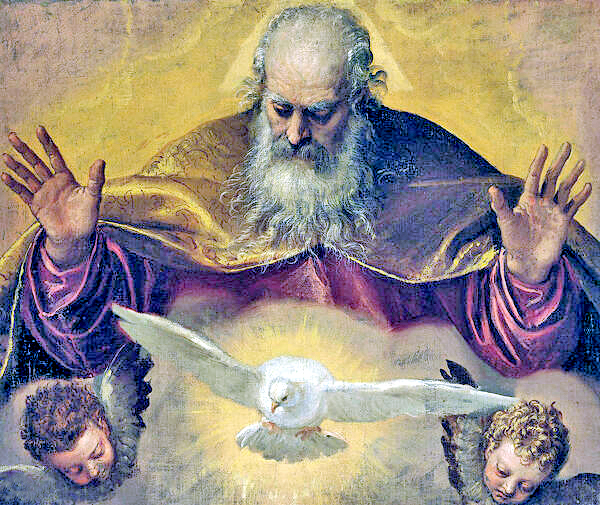
HIS HOLINESS POPE FRANCIS

Bishop of Rome 2013-2025

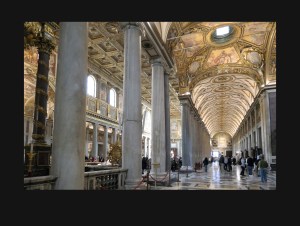
Basilica of Santa Maria Maggiore in Rome.

Our beloved Pope Francis will be laid to rest near the confessionals on the right hand side in the picture above, as per his wishes: The tomb should be in the ground; simple, without particular ornamentation, bearing only the inscription: Franciscus”.

~~~~~~~~~~~~~~~~~~~~~~~~~~~~~~~~~~~~~~~~~~~~~~~~~~~~~~~~~~~~~~~

APRIL 27 2025: THE SECOND SUNDAY OF EASTER: SUNDAY OF DIVINE MERCY

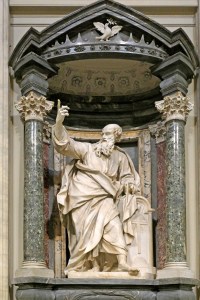
St. Thomas, Pierre Le Gros the Younger 1705-11, Papal, Patriarchal and Roman Archbasilica Cathedral of the Most Holy Saviour and Saints John the Baptist and the Evangelist in Lateran, Mother and Head of All Churches in Rome and in the World, Rome, Italy, commonly known as St. John Lateran.

Click here to read today’s Sunday Mass Readings.

[Jesus] said to Thomas, “Put your finger here and see my hands, and bring your hand and put it into my side, and do not be unbelieving, but believe.” Thomas answered and said to him, “My Lord and my God!” Jesus said to him, “Have you come to believe because you have seen me? Blessed are those who have not seen and have believed.”    John 20:27-28.

Click on words highlighted in red for further information. 

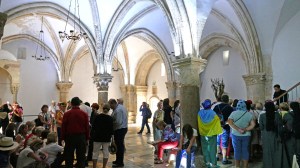
Thomas, after that passage appeared in John’s gospel, today’s gospel, has forever been given the name Doubting Thomas, and his finger has been his sign and symbol ever since (look at the statue above). And we might well be tempted to have done the same thing, hearing the outlandish claim that someone had returned from the grave! Thomas was pretty defiant about it, “Unless I see the mark of the nails in his hands and put my finger into the nail marks and put my hand into his side, I will not believe.” Then, confronted by the irrefutable evidence that he was wrong, Thomas sank to his knees with the words, “My Lord and my God”, the one and only time in all Christian Scripture that Jesus was so addressed. And we are not told if he did place his finger into the wounds. So, in a sense, we are all Thomases until we accept and believe the truth of this gospel and can utter those words “My Lord and my God” from the heart. And there are other revelations in today’s gospel. We are told two times that the doors of the place where the disciples found themselves were locked. So, the entire Christian church was sealed in one room somewhere in Jerusalem, by tradition, the Upper Room, the Cenacle:

The Upper Room, traditionally called The Cenacle, 2018, Jerusalem, Israel. 

Why? One presumes they were terrified that the fate which had fallen on Jesus would fall on them as his followers. And who would not blame them for being scared of that hideous Roman punishment? It was deliberately brutal as a disincentive to challenge any Roman law or question any Roman authority (or, in this case, to appease a hostile crowd). They were all in hiding. So when the Lord appeared in their midst and said “Peace be with you” you can be pretty sure that peace was just about the last attribute they enjoyed. Terror would be more like it. It also seems from this passage in John’s gospel that there was a kind of Pentecost event which took place, the receiving of the Holy Spirit of God. But as they remained behind locked doors, perhaps that was still to happen fully. At the real event, commemorated on Pentecost Sunday, they all rushed out into the street proclaiming the Lord as Messiah and Savior with no fear at all of the consequences! Perhaps this was a prequel gift from God waiting to be unwrapped. Today’s first reading in fact does describe that later post-Pentecost boldness the disciples eventually displayed.

And this Divine Mercy Sunday is one of the rare occasions when the main readings are all from the New Testament; only today’s psalm is from Jewish scripture, and that praises the divine quality of mercy: Let the house of Israel say, “His mercy endures forever”. My preferred definition of mercy is, “Compassion on someone who does not deserve it”. Recall the woman caught in adultery two Sundays ago. She did not ask for forgiveness, but Jesus did forgive her. This gentle act of forgiveness shows mercy, compassion on someone who did not deserve it. And remember the criminal crucified next to Jesus, who said that he deserved his punishment, but Jesus had done no wrong, and asked him to remember him. Jesus, in an act of pure mercy, said that he would be with him in paradise. So mercy reflects the divine; it is of God, and hence we are required to be merciful servants of God. Not easy!

And then there is the second reading today, again traditionally from John’s hand. This talks of his divine inspiration to write the Book of Revelation, certainly one of the strangest of all Christian writings, describing the end time and the extraordinary events to come. And he saw the Risen Lord also, the Alpha and Omega (the first and last letters of the Greek Alphabet, A and Ω, meaning the Lord of Everything). It was he who instructed John to write down what he saw. In Angers, in France, there is a unique collection of tapestries which display what he saw:

Tapestry of the Apocalypse, 1375, Château d’Angers, Angers, France.

So, how do we conclude this extraordinary week, tying in the death of a beloved Pope and this Sunday of Divine Mercy? Pope Francis was, if anything, a Pope of Mercy. He delighted in accepting people of all religions or none, he washed the feet of criminals, he listened to people who were in pain, victims of horrendous sexual abuse by Catholic priests. He insisted that the official church listen to the voices of the non-ordained. He appealed time and again for peace between nations, between opposing viewpoints, between individuals. He became the voice of peace and acceptance in the world. We could hardly do any better than to adopt his attitudes and response to others, to women, to gay people, to non-Christians, to those you disagree with, putting aside hostility in favor of friendship and the love that Jesus had for everyone, including his torturers. We could do no better than that.


PLEASE FORWARD THIS A SOMEONE YOU KNOW  WHO MIGHT FIND IT HELPFUL, REASSURING AND FULL OF HOPE. THANK YOU. 

Reflections on next Sunday’s Mass Readings will be posted on Wednesday.

Please send your reactions to: RogerJohn@aol.com 

© SundayMassReadings.com

SUNDAY 13 APRIL 2025: PALM SUNDAY OF THE LORD’S PASSION.

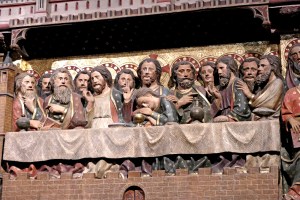
The Last Supper, Cathedral of Notre-Dame de Paris, Paris, France.

Click here to read today’s Sunday Mass Readings.

Then he took the bread, said the blessing, broke it, and gave it to them, saying, “This is my body, which will be given for you; do this in memory of me.”    Luke 22:19.

Click on words highlighted in red for further information.

The beginning of Passiontide, Holy Week, commemorates the triumphal entrance of Jesus into Jerusalem. Just as the prophet Zechariah had foretold, “Rejoice greatly, Daughter Zion! Shout, Daughter Jerusalem! See, your king comes to you, righteous and victorious, lowly and riding on a donkey, on a colt, the foal of a donkey” (9:9). The stories that had preceded Jesus, above all the raising of Lazarus from the dead just a few miles away in Bethany, seemed to put a seal on it; here, at last, was the Messiah long promised by God, come to rescue God’s people from oppression and evil. And Jesus was greeted as a king, with today’s special entrance gospel reporting the people as proclaiming, “Blessed is the king who comes in the name of the Lord. Peace in heaven and glory in the highest”. Their joy and hope could not be any greater! This was the man who would restore the kingdom of David and at last expel the hated, pagan Romans. And Jesus knew this and also knew what was to follow, and yet he allowed this delirious crowd scene to take place.

The Entry into Jerusalem, Lippo Memmi 1335-1345, Santa Maria Assunta, San Gimignano, Italy.

It is important to remember this scene, as it accounts for what happened next. After this event the people were waiting to be called to arms and led by God’s Messiah to military triumph and victory. It was the universal understanding of what the Messiah would do. All he had to do was summon them, and victory was theirs. Except, of course, he didn’t. In Zeffirelli’s rendition of Jesus of Nazareth, he has an imagined meeting of Jesus with Barabbas in the Temple a few days later, who asks him when the uprising will begin. Jesus says those who live by the sword will die by the sword, and more. The bewildered man does not see the Messiah he has imagined, but a man of forgiveness and mercy. And he rejects Jesus, as does the whole city who now begin to call for his death, so bitter is their disappointment in this man who had fooled them all. To have a fever pitch of enthusiasm crushed to a feeling of betrayal accounts for the call for his death, all in the space of a few days, especially as it was so close to Passover. Recall that Passover commemorated the release from slavery in Egypt, just as the Jews longed for release from the power of the Roman Empire over them. And the Lord knew this, yet he also knew that he had to remain true to his vocation, being Christ to the world, even if that meant proclaiming a message of love and forgiveness rather than a call to arms and warfare. It was a message that condemned him to a brutal death, driven by the bitter sense of betrayal held by the people of Jerusalem, encouraged by the chief priests who feared him. His image of the Messiah was the opposite of what everyone expected. So he had to die.

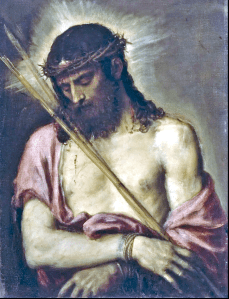
Ecce Homo (Behold the Man), Titian 1558-1560, National Gallery of Ireland, Dublin, Ireland.

So today marks the start of Passion Week, when each year we contemplate the fate of this wonderful man who had done nothing wrong and everything right, yet who was reviled, scourged and brutally nailed to a wooden cross because he did not fit the image of the Messiah that everyone expected. He was God’s Messiah, not the craven image of a man of warfare, physical strength and military victory. Jesus’ total commitment to his vocation – to show the real and true meaning of what it is to be human – resulted in disaster; until it became clear that it was all true. That to live as he did and act the way he acted results in a life of eternal happiness with God. And that is worth everything. 

The Cross, pixers.

IF YOU KNOW SOMEONE WHO WOULD APPRECIATE THIS MESSAGE, PLEASE FORWARD IT TO THEM. THANK YOU. 

Reflections on Mass Readings for the Sacred Triduum will be posted on Wednesday.

Please send your reactions to: RogerJohn@aol.com 

© SundayMassReadings.com

SUNDAY 6 APRIL 2025: THE FIFTH SUNDAY OF LENT.

The Woman Caught in Adultery, Sunflower Seeds, SND Blogs.

“Teacher, this woman was caught in the very act of committing adultery. Now in the law, Moses commanded us to stone such women. So what do you say?” They said this to test him, so that they could have some charge to bring against him. Jesus bent down and began to write on the ground with his finger.   John 8:5-8.

Click here to read today’s Sunday Mass Readings.

Click on words highlighted in red for further information.

Our Lord, Jesus as we call him, Y’shua bar Josef as his friends would have called him, was a very clever man. He was perceptive, could read people accurately and know when they were friendly and when they were out to get him. In today’s scene, they are definitely out for his blood. Someone had discovered a woman in a compromising situation which clearly demonstrated that she was committing adultery. The Jewish law on that point is pretty clear: “If a man commits adultery with the wife of an Israelite, both he and the woman shall be put to death” (Leviticus 20:10). In fact, any adultery was punishable by death. (And, by the way, where was the man caught in the very act in this scenario?). So those who had any dislike of the Lord thought they had found their ultimate weapon. If he agreed that the law said that, and the woman should be put to death, they would retort that here was the man who preached forgiveness even concerning the hated Romans! Guilty of duplicity, Orwellian doublethink! If, on the other hand, he said she should be forgiven, then he would be be trashing the law of Moses and be guilty of blasphemy! Damned if he did; damned if he didn’t! So what did the Lord do? Knelt down and wrote in the dust something not recorded in Scripture, unfortunately. It is the only occasion in the gospels that Jesus wrote anything! However, his enemies persisted: Answer! Answer! And he did: “Let the one among you who is without sin be the first to throw a stone at her”. See the picture above. Not going against the Law, but placing an impossible condition on it. People in those days lived in fairly small communities. There were no gigantic cities back then. Jerusalem was estimated to be about 80,000 strong at that time. So probably those who disliked Jesus would certainly know each other, probably churchy types, strict adherents of the Law. They would also know each other, their histories and habits. Anyone who picked up a stone would have invited all sorts of memories and lapses to be remembered and giggled over, so it was not advisable to even begin…. They drifted away, leaving the terrified woman alone. Note she did not admit her sin and ask forgiveness, but Jesus forgave her anyway but told her not to sin again. Adultery remained a sin, and still does. But those who admit it, know it is wrong and resolve to amend their ways and seek forgiveness in the sacrament of Reconciliation, are forgiven. No stoning necessary, just personal reform and determination to change. Whether the injured partner forgives is another thing altogether, but that is a different matter. 

The other two readings today talk of new beginnings, Ezekiel talking of God placing the divine spirit in the people to make them ready to settle once more on their land. This concerns the Babylonian exile which was to end with the arrival of the Persian king Cyrus the Great who defeated the Babylonians and issued a decree permitting the Jewish exiles to return to Jerusalem and rebuild their Temple. Many did, but probably more remained as they had become very successful in Babylon. But one change has been noted by scholars studying this period which is significant. Prior to the exile, the Jewish people were so-called monolateralists. That means that other gods and goddesses were recognized and respected in Jewish households. After the exile, monotheism dominated and all other beliefs were absolutely rejected. In a sense, therefore, the people of God had undergone a change and were now, as it were made perfect. Ezekiel’s prophecy had come to pass.

A similar transformation is captured in the second reading. “Those who are in the flesh cannot please God” it says. It continues, “But if Christ is in you, although the body is dead because of sin, the spirit is alive because of righteousness”. And the consequence of this is clearly stated: “…the one who raised Christ from the dead will give life to your mortal bodies also, through his Spirit dwelling in you”. And now, if we return to the dramatic story in today’s gospel, the woman who was almost stoned to death now confronts a life-changing moment; will she or won’t she change? And here we all are, approaching the end of Lent, which invites us to change for the better. We may not have the luxury, as it were, of a dramatic moment where we face possible futures in that same way. But we are all invited to consider such. Will we attempt even a little change for the better or not? God is calling us to do exactly that, and only each one of us can answer that call.

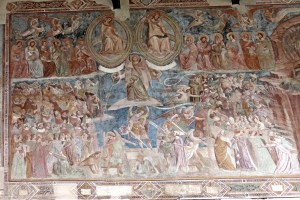
Heaven and Hell, Camposanto Monumentale di Pisa 13th century, Pisa Cathedral, Italy.

IF YOU KNOW SOMEONE WHO WOULD LIKE THIS REFLECTION, PLEASE FORWARD IT TO THEM. THANK YOU.

Reflections on next Sunday’s Mass Readings will be posted on Wednesday.

Please send your reactions to: RogerJohn@aol.com 

© SundayMassReadings.com

SUNDAY 23 MARCH 2025: THE THIRD SUNDAY OF LENT.

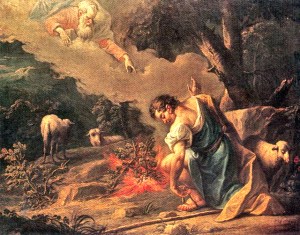
Moses and the Burning Bush, Jean Baptiste van Loo, no date, Chi-Mei Museum, Tainan City, Taiwan

Click here to read today’s Sunday Mass Readings.

When the LORD saw him coming over to look at [the burning bush] more closely, God called out to him from the bush, “Moses! Moses!” He answered, “Here I am.” God said, “Come no nearer! Remove the sandals from your feet, for the place where you stand is holy ground.      Exodus 3: 5-4.

Click on words highlighted in red for further information.

Today’s first reading has to be among the most famous scenes from Scripture. Put it another way, who has NOT heard of the Burning Bush? Moses, caring for his flock of sheep, noticed that there was a bush on fire, presumably isolated from neighboring vegetation otherwise he might just have gathered the whole flock and moved away from apparent danger. But no, this was unusual, as there was no spreading of the flames, but even stranger, the fire was not consuming the bush; it just burned and burned. So, as anyone would, he got up and went over to take a closer look. And then he heard The Voice, as shown in the caption above. Clearly this was something very, very, special. He heard the voice telling him he stood on holy ground and that therefore he should remove his sandals as a sign of respect. This Moses did. But who or what, we might ask, was going on and whose voice was it? It turned out that Moses was probably thinking the same thing, because the voice from the bush anticipated it, and stated “I am the God of your fathers, the God of Abraham, the God of Isaac, the God of Jacob.” In other words, here was the God who had inspired the founding fathers of the faith into which Moses had been born many generations later. Understandably, Moses was reluctant, terrified even, to look up, for to see the face of God was to die. There is nothing in the text to say Moses looked up even for a second. Then God began to explain what this incredible scene was all about.

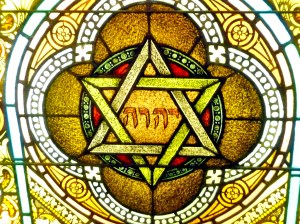
Now, recall that Moses, who had grown up in the household of the Egyptian king, the pharaoh, having been rescued from the River Nile following the order of the king that all Hebrew boys were to be destroyed (the Hebrews had become too numerous and hence were a threat to the Egyptians). An Egyptian princess had rescued him and had brought him up amid privilege and wealth, including, it can be assumed, a fine education. Hence he was special – Hebrew slaves were not educated. But he knew his roots, that he was Hebrew, not Egyptian. One day he was outside and an incident took place which meant he had to escape Egypt. Read all about it here. That explains why he was a humble shepherd when today’s incident took place. But God had other plans for him, and I believe this to be the underlying theme of today’s readings. But before we get on to that, consider the implications of what followed between God and Moses. Moses agreed to return to Egypt and obey God’s command that he insist the pharaoh release all Hebrew slaves and allow them to depart to the land promised them by God, a land “flowing with milk and honey”. But then Moses asked, “But when I go to the Israelites and say to them, ‘The God of your fathers has sent me to you’, if they ask me, ‘What is his name?’ what am I to tell them?” (Remember that all the Egyptian gods had names, Isis, Osiris, Ptah, etc.). Note that God had only given Moses his titles (“The God of Abraham” etc.), not the personal name of God, which was, until this moment, completely unknown. So God answered, I am who am.” Then God added, “This is what you shall tell the Israelites: I AM sent me to you.” In Hebrew, Yahweh. This is the most sacred name in existence. To strict Jews it is never to be spoken. So ancient is this stricture that no-one is really sure how to pronounce the name properly. The consequence is that Moses now has an intimate bond with God: he knows the sacred name, and a sacred relationship was now established as never before between Moses and God, who, note, also called Moses by his name. Later, through Moses, that relationship was expanded to the entire Hebrew people, now the Chosen People of God.

The Tetragrammaton, the Sacred Name of God, Museum of Stained Glass, Chicago, USA.

Moses had fled Egypt as there was, so to say, a price on his head for killing an Egyptian who was striking a Hebrew. Given today’s first reading, it is clear that God had forgiven Moses, presumably taking all things concerning the incident into account. Scripture also tells us that the pharaoh of that time had died, suggesting that Moses was less likely to be accused of a crime. But now God had given him a much more important mission, to lead God’s people out of Egypt to a new, promised, land. Clearly this mission was greater than tending sheep; yes he was to be a shepherd still, but of God’s chosen people! And here we can begin to see the links in today’s readings. God has given each one of us a mission, and the talents – skills – to enable us to fulfill such a mission. The second reading demonstrates that the rescued Hebrews, instead of being overwhelmed with gratitude that God had led them out of slavery, acted in ways which were not evident of thanksgiving. Yes, life is tough, even horrible at times, but there is always a God of love ready to assist us. Instead, as the second reading says, many Hebrews “desired evil things” and many of them “grumbled” about their conditions. In other words, they brought evil upon themselves.

This stands in contrast to today’s gospel however. Two incidents are mentioned, presumably current and well-known at the time, where people had died, which were not the result of dissatisfaction with God, but simply being in the wrong place at the wrong time. Poor construction caused one disaster, and a brutal Roman governor the other. All who suffered were not guilty of anything in those cases. But, concluding, Jesus does point out that indeed each one of us has been given a divine vocation where we are responsible for what happens. The fig tree that produces no figs is pretty clearly not fulfilling its destiny, but is given one last chance. That applies to everyone with no exception. We are all gifted by God, some more abundantly than others, and only God knows why. But each one of us is expected to use our God-given talents in ways God expects, to serve God, others and self. On that we can be sure we will be judged. This being Lent, we are all asked to consider our response to that challenge anew: are we, in fact, fulfilling our destiny? A grand word – but the right one for each one of us. And with God happy and willing to assist us in that, are we grabbing that opportunity and doing what we ought? Are we being God’s true, obedient and willing children?

The Fruitful Fig Tree, Jill Morgan, Homes and Gardens, January 2023.

PLEASE SHARE THIS REFLECTION WITH SOMEONE YOU KNOW WOULD APPRECIATE IT. THANK YOU. 

Reflections on next Sunday’s Mass Readings will be posted on Wednesday.

Please send your reactions to: RogerJohn@aol.com 

© SundayMassReadings.com