Then he took the bread, said the blessing, broke it, and gave it to them, saying, “This is my body, which will be given for you; do this in memory of me.” Luke 22:19.
Click on words highlighted in redfor further information.
The beginning of Passiontide, Holy Week, commemorates the triumphal entrance of Jesus into Jerusalem. Just as the prophet Zechariah had foretold, “Rejoice greatly, Daughter Zion! Shout, Daughter Jerusalem! See, your king comes to you, righteous and victorious, lowly and riding on a donkey, on a colt, the foal of a donkey” (9:9). The stories that had preceded Jesus, above all the raising of Lazarus from the dead just a few miles away in Bethany, seemed to put a seal on it; here, at last, was the Messiah long promised by God, come to rescue God’s people from oppression and evil. And Jesus was greeted as a king, with today’s special entrance gospel reporting the people as proclaiming, “Blessed is the king who comes in the name of the Lord. Peace in heaven and glory in the highest”. Their joy and hope could not be any greater! This was the man who would restore the kingdom of David and at last expel the hated, pagan Romans. And Jesus knew this and also knew what was to follow, and yet he allowed this delirious crowd scene to take place.
The Entry into Jerusalem,Lippo Memmi 1335-1345,Santa Maria Assunta, San Gimignano, Italy.
It is important to remember this scene, as it accounts for what happened next. After this event the people were waiting to be called to arms and led by God’s Messiah to military triumph and victory. It was the universal understanding of what the Messiah would do. All he had to do was summon them, and victory was theirs. Except, of course, he didn’t. In Zeffirelli’s rendition of Jesus of Nazareth, he has an imagined meeting of Jesus with Barabbas in the Temple a few days later, who asks him when the uprising will begin. Jesus says those who live by the sword will die by the sword, and more. The bewildered man does not see the Messiah he has imagined, but a man of forgiveness and mercy. And he rejects Jesus, as does the whole city who now begin to call for his death, so bitter is their disappointment in this man who had fooled them all. To have a fever pitch of enthusiasm crushed to a feeling of betrayal accounts for the call for his death, all in the space of a few days, especially as it was so close to Passover. Recall that Passover commemorated the release from slavery in Egypt, just as the Jews longed for release from the power of the Roman Empire over them. And the Lord knew this, yet he also knew that he had to remain true to his vocation, being Christ to the world, even if that meant proclaiming a message of love and forgiveness rather than a call to arms and warfare. It was a message that condemned him to a brutal death, driven by the bitter sense of betrayal held by the people of Jerusalem, encouraged by the chief priests who feared him. His image of the Messiah was the opposite of what everyone expected. So he had to die.
Ecce Homo (Behold the Man), Titian 1558-1560, National Gallery of Ireland, Dublin, Ireland.
So today marks the start of Passion Week, when each year we contemplate the fate of this wonderful man who had done nothing wrong and everything right, yet who was reviled, scourged and brutally nailed to a wooden cross because he did not fit the image of the Messiah that everyone expected. He was God’s Messiah, not the craven image of a man of warfare, physical strength and military victory. Jesus’ total commitment to his vocation – to show the real and true meaning of what it is to be human – resulted in disaster; until it became clear that it was all true. That to live as he did and act the way he acted results in a life of eternal happiness with God. And that is worth everything.
The Woman Caught in Adultery, Sunflower Seeds, SND Blogs.
“Teacher, this woman was caught in the very act of committing adultery. Now in the law, Moses commanded us to stone such women. So what do you say?” They said this to test him, so that they could have some charge to bring against him. Jesus bent down and began to write on the ground with his finger. John 8:5-8.
Click on words highlighted in redfor further information.
Our Lord, Jesus as we call him, Y’shua bar Josef as his friends would have called him, was a very clever man. He was perceptive, could read people accurately and know when they were friendly and when they were out to get him. In today’s scene, they are definitely out for his blood. Someone had discovered a woman in a compromising situation which clearly demonstrated that she was committing adultery. The Jewish law on that point is pretty clear: “If a man commits adultery with the wife of an Israelite, both he and the woman shall be put to death” (Leviticus 20:10). In fact, any adultery was punishable by death. (And, by the way, where was the man caught in the very act in this scenario?). So those who had any dislike of the Lord thought they had found their ultimate weapon. If he agreed that the law said that, and the woman should be put to death, they would retort that here was the man who preached forgiveness even concerning the hated Romans! Guilty of duplicity, Orwellian doublethink! If, on the other hand, he said she should be forgiven, then he would be be trashing the law of Moses and be guilty of blasphemy! Damned if he did; damned if he didn’t! So what did the Lord do? Knelt down and wrote in the dust something not recorded in Scripture, unfortunately. It is the only occasion in the gospels that Jesus wrote anything! However, his enemies persisted: Answer! Answer! And he did: “Let the one among you who is without sin be the first to throw a stone at her”. See the picture above. Not going against the Law, but placing an impossible condition on it. People in those days lived in fairly small communities. There were no gigantic cities back then. Jerusalem was estimated to be about 80,000 strong at that time. So probably those who disliked Jesus would certainly know each other, probably churchy types, strict adherents of the Law. They would also know each other, their histories and habits. Anyone who picked up a stone would have invited all sorts of memories and lapses to be remembered and giggled over, so it was not advisable to even begin…. They drifted away, leaving the terrified woman alone. Note she did not admit her sin and ask forgiveness, but Jesus forgave her anyway but told her not to sin again. Adultery remained a sin, and still does. But those who admit it, know it is wrong and resolve to amend their ways and seek forgiveness in the sacrament of Reconciliation, are forgiven. No stoning necessary, just personal reform and determination to change. Whether the injured partner forgives is another thing altogether, but that is a different matter.
The other two readings today talk of new beginnings, Ezekiel talking of God placing the divine spirit in the people to make them ready to settle once more on their land. This concerns the Babylonian exile which was to end with the arrival of the Persian king Cyrus the Great who defeated the Babylonians and issued a decree permitting the Jewish exiles to return to Jerusalem and rebuild their Temple. Many did, but probably more remained as they had become very successful in Babylon. But one change has been noted by scholars studying this period which is significant. Prior to the exile, the Jewish people were so-called monolateralists. That means that other gods and goddesses were recognized and respected in Jewish households. After the exile, monotheism dominated and all other beliefs were absolutely rejected. In a sense, therefore, the people of God had undergone a change and were now, as it were made perfect. Ezekiel’s prophecy had come to pass.
A similar transformation is captured in the second reading. “Those who are in the flesh cannot please God” it says. It continues, “But if Christ is in you, although the body is dead because of sin, the spirit is alive because of righteousness”. And the consequence of this is clearly stated: “…the one who raised Christ from the dead will give life to your mortal bodies also, through his Spirit dwelling in you”. And now, if we return to the dramatic story in today’s gospel, the woman who was almost stoned to death now confronts a life-changing moment; will she or won’t she change? And here we all are, approaching the end of Lent, which invites us to change for the better. We may not have the luxury, as it were, of a dramatic moment where we face possible futures in that same way. But we are all invited to consider such. Will we attempt even a little change for the better or not? God is calling us to do exactly that, and only each one of us can answer that call.
[His father] said to [his older son], ‘My son, you are here with me always; everything I have is yours. But now we must celebrate and rejoice, because your brother was dead and has come to life again; he was lost and has been found.’ Luke 15: 31-32.
Click on words highlighted in redfor further information.
Today has possibly the most famous of all of Jesus’ parables, the Prodigal Son, prodigal meaning, in this case, he had spent everything on things which vanish (“swallowed up your property with prostitutes” as his older brother put it) and he had nothing to show for it. I can quite imagine that the majority of us sympathize almightily with the older son… But Jesus, as ever, upends us yet again, making us think, reflect and quite possibly change our minds. But first, some interesting points: (1) – The younger son went really to “a distant country” because, as he ended up taking care of pigs, a food forbidden by Leviticus 11:7: “Do not eat pigs; they must be considered unclean”, strongly suggests a pagan land, a long way from home; it also meant he had reached complete degradation. (2) – He “came to his senses”. Such moments should be carefully considered, as sometimes the Finger of God is there. Alcoholics sometimes experience that, waking one day amid mess and chaos and wonder what am I doing? In the 1951 movie “Christmas Carol”, the reformed Scrooge welcomes his astonished clerk Bob Cratchet with an increase in salary and a promise to help his family with the explanation, “I haven’t lost my senses Bob, I’ve come to them”. As did the prodigal son. (3) – The prodigal then sets out returning home, with his apology memorized, but his father sees him before he sees his father! His father had been looking out for him every day with hope. (4) – He is not given enough time to get out his full apology before his father instantly orders a huge celebration of thanks for his return. (5) – But the older brother refuses to enter the house and join the celebration, as he is so angry, but his father goes out to him! (6) – His older brother is so angry that he says to his father, “but when your son returns…you slaughter the fatted calf”. He is incapable of calling him his brother! His father then speaks the rationale of forgiveness and love. We are not given the response, if any, of the older son.
Forgiveness is central to the Christian spirit. Jesus forgave his torturers! From the cross itself! Do we have it in us to forgive each and every time it is called for? In October 2006, in the Pennsylvania hamlet of West Nickel Mines, in the one-room Amish schoolhouse of elementary children, Charles Roberts, the local milkman, walked into the schoolhouse and shot dead six young girls and wounded four others. He then shot himself. Read the whole sad history here. It was one of the worst crimes ever. The Amish reaction to the crime was what caught the attention of the world: forgiveness. Their leaders even went to the perpetrator’s house to comfort his widow. There was no evidence of anger, retribution or fury, just forgiveness amid broken hearts. It was the perfect Christian example of what Jesus was telling us in his parable. Forgiveness is difficult, sometimes verging on the impossible, but it is what each Christian must do, and from the heart.
And that new thought might well be reflected in today’s second reading: “Whoever is in Christ is a new creation: the old things have passed away; behold, new things have come”. If the Lord is telling us to forgive in each and every occasion which warrants it, it might well be a brand-new experience for many of us. It is so easy to hold a grudge because of some incident, perhaps years ago, where we were hurt in some way. So many Hollywood movies rest on such a premise that it becomes second nature. But today’s teaching flies in its face. No, we are not to hold grudges, because that means we have not forgiven. Does that mean we bury the hatchet? Yes; but we do not have to forget where. We are not required to become a soft target for the evil of others, just to be more careful and alert, perhaps even become a teacher of good behavior which Christians are called to do. As today’s second reading says, “God was reconciling the world to himself in Christ, not counting their trespasses against them and entrusting to us the message of reconciliation”. And it even says, “For our sake he made him to be sin who did not know sin, so that we might become the righteousness of God in him”. This is such a remarkable statement that volumes have been written about it. What on earth does it mean? Jesus was sinless! But, as the scholars say, because “he became flesh”, he took on our sinful nature in order to allow us to become sinless, should we so choose. Another interpretation is that Jesus’ sacrifice was the same as the sacrifice of a sinless and innocent lamb in reparation for sins we have committed; Jesus was the “sinless offering” to enable us to be sinless in the eyes of God. It follows that the suffering he endured includes the sins we have committed in our lifetime. Take a look at this.
And so we can rejoice in the sacrifice of the Lord for our sake, that we might become sinless in the sight of God, hence the name for this midpoint in Lent, Laetare, or “Rejoice” in Latin from the opening prayer today, “Rejoice Jerusalem!” We are invited by God to become sinless, joyful, true followers of the Lord – to become, in fact, the forgiver as represented by the father in today’s parable. Forgiveness, then, is so close to the heart of God as to be inseparable from it.
When the LORD saw him coming over to look at [the burning bush] more closely, God called out to him from the bush, “Moses! Moses!” He answered, “Here I am.” God said, “Come no nearer! Remove the sandals from your feet, for the place where you stand is holy ground. Exodus 3: 5-4.
Click on words highlighted in red for further information.
Today’s first reading has to be among the most famous scenes from Scripture. Put it another way, who has NOT heard of the Burning Bush? Moses, caring for his flock of sheep, noticed that there was a bush on fire, presumably isolated from neighboring vegetation otherwise he might just have gathered the whole flock and moved away from apparent danger. But no, this was unusual, as there was no spreading of the flames, but even stranger, the fire was not consuming the bush; it just burned and burned. So, as anyone would, he got up and went over to take a closer look. And then he heard The Voice, as shown in the caption above. Clearly this was something very, very, special. He heard the voice telling him he stood on holy ground and that therefore he should remove his sandals as a sign of respect. This Moses did. But who or what, we might ask, was going on and whose voice was it? It turned out that Moses was probably thinking the same thing, because the voice from the bush anticipated it, and stated “I am the God of your fathers, the God of Abraham, the God of Isaac, the God of Jacob.” In other words, here was the God who had inspired the founding fathers of the faith into which Moses had been born many generations later. Understandably, Moses was reluctant, terrified even, to look up, for to see the face of God was to die. There is nothing in the text to say Moses looked up even for a second. Then God began to explain what this incredible scene was all about.
Now, recall that Moses, who had grown up in the household of the Egyptian king, the pharaoh, having been rescued from the River Nile following the order of the king that all Hebrew boys were to be destroyed (the Hebrews had become too numerous and hence were a threat to the Egyptians). An Egyptian princess had rescued him and had brought him up amid privilege and wealth, including, it can be assumed, a fine education. Hence he was special – Hebrew slaves were not educated. But he knew his roots, that he was Hebrew, not Egyptian. One day he was outside and an incident took place which meant he had to escape Egypt. Read all about it here. That explains why he was a humble shepherd when today’s incident took place. But God had other plans for him, and I believe this to be the underlying theme of today’s readings. But before we get on to that, consider the implications of what followed between God and Moses. Moses agreed to return to Egypt and obey God’s command that he insist the pharaoh release all Hebrew slaves and allow them to depart to the land promised them by God, a land “flowing with milk and honey”. But then Moses asked, “But when I go to the Israelites and say to them, ‘The God of your fathers has sent me to you’, if they ask me, ‘What is his name?’ what am I to tell them?” (Remember that all the Egyptian gods had names, Isis, Osiris, Ptah, etc.). Note that God had only given Moses his titles (“The God of Abraham” etc.), not the personal name of God, which was, until this moment, completely unknown. So God answered, “I am who am.” Then God added, “This is what you shall tell the Israelites: I AM sent me to you.” In Hebrew,Yahweh. This is the most sacred name in existence. To strict Jews it is never to be spoken. So ancient is this stricture that no-one is really sure how to pronounce the name properly. The consequence is that Moses now has an intimate bond with God: he knows the sacred name, and a sacred relationship was now established as never before between Moses and God, who, note, also called Moses by his name. Later, through Moses, that relationship was expanded to the entire Hebrew people, now the Chosen People of God.
Moses had fled Egypt as there was, so to say, a price on his head for killing an Egyptian who was striking a Hebrew. Given today’s first reading, it is clear that God had forgiven Moses, presumably taking all things concerning the incident into account. Scripture also tells us that the pharaoh of that time had died, suggesting that Moses was less likely to be accused of a crime. But now God had given him a much more important mission, to lead God’s people out of Egypt to a new, promised, land. Clearly this mission was greater than tending sheep; yes he was to be a shepherd still, but of God’s chosen people! And here we can begin to see the links in today’s readings. God has given each one of us a mission, and the talents – skills – to enable us to fulfill such a mission. The second reading demonstrates that the rescued Hebrews, instead of being overwhelmed with gratitude that God had led them out of slavery, acted in ways which were not evident of thanksgiving. Yes, life is tough, even horrible at times, but there is always a God of love ready to assist us. Instead, as the second reading says, many Hebrews “desired evil things” and many of them “grumbled” about their conditions. In other words, they brought evil upon themselves.
This stands in contrast to today’s gospel however. Two incidents are mentioned, presumably current and well-known at the time, where people had died, which were not the result of dissatisfaction with God, but simply being in the wrong place at the wrong time. Poor construction caused one disaster, and a brutal Roman governor the other. All who suffered were not guilty of anything in those cases. But, concluding, Jesus does point out that indeed each one of us has been given a divine vocation where we are responsible for what happens. The fig tree that produces no figs is pretty clearly not fulfilling its destiny, but is given one last chance. That applies to everyone with no exception. We are all gifted by God, some more abundantly than others, and only God knows why. But each one of us is expected to use our God-given talents in ways God expects, to serve God, others and self. On that we can be sure we will be judged. This being Lent, we are all asked to consider our response to that challenge anew: are we, in fact, fulfilling our destiny? A grand word – but the right one for each one of us. And with God happy and willing to assist us in that, are we grabbing that opportunity and doing what we ought? Are we being God’s true, obedient and willing children?
“While he was praying his face changed in appearance and his clothing became dazzling white. And behold, two men were conversing with him, Moses and Elijah….” Luke 9:29-30.
Click on words highlighted in red for further information.
The Transfiguration is recorded in the gospels of Matthew, Mark, and today’s gospel from Luke. There is no clear mention of it in John, though John chapter 1 verse 14 does say. “We saw his glory, the glory which he received as the Father’s only Son”. But it is clearly a key event which established Jesus’ authority and closeness to God, an event which gave the Lord an undoubted authority acceptable to his disciples. He was worthy of belief. He appeared with two towering figures from Scripture, Moses, who had received the 10 Commandments from God, and Elijah who, most famously, was taken up to heaven in a chariot of fire:
You may recall the reflection on the call of Peter by Jesus on the shore of the Sea of Galilee, 9th February 2025, the fifth Sunday in ordinary time. I mentioned that Peter must have seen in Jesus the “real thing”. That impression was the reason he had agreed to go out fishing once more, although an entire night’s labor had produced nothing. But he discovered that Jesus was, in fact, the real thing, confirmed by a huge catch of fish, and then left everything to follow him; clearly he thought Jesus was worth more than a record catch! Today’s extraordinary episode, therefore, can be seen as the confirmation of that moment. Here now was the Lord standing between two of the mightiest figures in Scripture. Not only that, but a voice from heaven, clearly that of God, identified Jesus as Son of God, and the three witnesses were ordered “Follow Him”!
So the Transfiguration of the Lord can be seen as a kind of bonding between Jesus and his three closest followers. Having experienced this unique event, they were pretty certain that this man was, indeed, the long-promised Messiah. Today’s first reading is also a bonding moment, this time between God and Abram (soon to be renamed Abraham by God). Abram was an old man, over 75, and God approached him and laid out a promise. He had already told him that he was to be made into a great nation (Genesis 12:2) but this time God was more specific. “Look up at the sky and count the stars, if you can. Just so shall your descendants be.” Now most of us tend to live in cities, and if we look up, we can see the moon and perhaps a few more stars and that’s it, today called “light pollution”. But if we go to a remote part of the state, staying in a cabin or similar, and look up at night, the sight is unbelievable. Indeed unforgettable. That is why God said to Abram “count the stars, if you can”. Because you can’t. And professional astronomers tell us there are probably 30 and 70 billion trillion stars up there! Well, God knew that, but Abram would be simply overawed at the promise. He didn’t even have a single child at that time! And his wife was in her 60s! So it might be reasonable to think that he took God’s promise with a pinch of salt. Then the extraordinary event in today’s first reading took place. It was an ancient bonding covenant which looks terrible to us, with divided animal bodies and dead birds and blood all over the place. But such agreements, treaties or whatever were not uncommon then, and even survive in various forms today. The presence of blood in the more ancient forms symbolizes life rather than death, even between two individuals. And if you are a fan of Wagner, there is even a blood brotherhood scene in Götterdämmerung (The Twilight of the Gods). Note also that blood was sprinkled over the Ark of the Covenant on the one day the high priest entered the Holy of Holies in the Temple. It combined the life of the two parties in the treaty In the case of today’s first reading, it was the life of God and Abram. But note that in that case it was one-sided. Abram did not pass through the blood offerings, only God in the form of fire and light. And the ultimate image of blood, of course, was at the Last Supper, with the Lord proclaiming the wine to be is most precious blood, the last and most sacred of all blood offerings.
The final note is from today’s second reading. There is a solemn linking there as well: “But our citizenship is in heaven, and from it we also await a savior, the Lord Jesus Christ. He will change our lowly body to conform with his glorified body”. So Peter, James and John became confirmed completely as disciples of Jesus at the Transfiguration, God linked Abram, human life, to the divine at the covenant ceremony and Paul linked us to heavenly citizenship, the ultimate hope we all share. The only thing left is for each of us to live the life that honors such a Godly invitation and so become worthy of the invitation to become citizens of heaven.
Jesus said to him in reply…..You shall not put the Lord, your God, to the test.” When the devil had finished every temptation, he departed from him for a time. Luke 4 12-13.
Click on words highlighted in redfor further information.
Ash Wednesday, a few days ago, heralds the beginning of the most solemn period of the Church year. The word “Lent” has been traced back to an old English word “Lencten” meaning to lengthen, namely the days getting longer (in the northern hemisphere that is). Compare it to an old German word for Spring, Lenz. However, English is the only language which links those two ideas. The German for Lent is Fastenzeit, the time of fasting. That is certainly closer to the real meaning of the season. For it is a time to strip away the things of this world, even food at certain times, to fast, and to see what needs to be purified and made ready for the event of events, the conquest of death itself on Easter Sunday. We are surrounded by challenges, by problems and a million other things which obstruct contemplation of that ultimate event which changed everything. What could be more important than Jesus’ conquest of death? No-one, even the greatest general, has ever managed that! Death has defeated everyone – except that one man. And that is the focus for the next 40 days – or should be.
It is appropriate that this first Sunday gospel of Lent concerns temptations. It almost seems to be a repeat of the events in the Garden of Eden. That explained the miseries and suffering we have, all of us, encountered in life. Disobeying God’s will quite simply leads to disaster. When we do obey God there is an inner peace and grace which is strong enough to deal with any and all of life’s challenges. And Lent is the time to seek that inner peace, buried as it might be under oceans of garbage, but there still, waiting to be rediscovered, then nourished and made ready to welcome the Prince of Peace at Easter. And Jesus shows us today what it means to be a true child of God. In each example of temptation – food, power and misplaced trust – the Lord put God first and foremost in each case. That is the example and message for us, tempted as we are to ignore Lent entirely and just continue on as if this season means nothing. Remember that Jesus had just been baptized in the Jordan by his cousin John, and discovered that he was not only the long-promised Messiah, but also Son of God (though how this could have come to him as a surprise in one of those great Christian mysteries). In other words, he was empowered with the strength of God Almighty! So, not surprisingly, he was subject to enormous temptations as to what he could do. Hence this was all a tough learning experience. If he remained true to God, his Father, all that power, all of it, had to be used for the benefit of others and never for himself.
Therein lies the lesson for us all. Each one of us had been gifted by God with sundry and various skills, powers if you like. Lent is the time to look at these carefully and critically. Are we using all of them for the benefit of others? Are we using most of them for others? Are we using any of them for others? Now there’s a lenten exercise if ever there was one. Serious and critical self examination, just like the Lord in the wilderness, is what is being asked of us this Lent. Not easy; not comfortable; not pleasant – just like the Lord in the wilderness. Let us all ask the Lord to be with us on that painful and cleansing journey and be ready to welcome the Risen Savior cleansed and renewed, a “more perfect Christian” if you like, on the day of Resurrection. And Jesus is there, ready and waiting to help us, to be with us on the journey, now and forever.
The Risen Lord, Andrea di Bonaiuto and assistants, ca. 1365, Church of Santa Maria Novella, Florence, Italy.
PLEASE LET OTHERS KNOW ABOUT THESE LENTEN SUGGESTIONS IF YOU BELIEVE IT WILL HELP THEM, THANK YOU.
Reflections on next Sunday’s Mass Readings will be posted on Wednesday.
[Jesus said] “You hypocrite! Remove the wooden beam from your eye first; then you will see clearly to remove the splinter in your brother’s eye.” Luke 6:42
Click on words highlighted in red for further information.
There is a character in Dickens’ novel David Copperfield named Uriah Heep. He has to be one of Dickens’ most horrible creations. He almost never says anything which could reflect badly on himself, as he was “too ‘umble”. Working in a law firm, especially in the 19th century, would suggest you should have a decent command of Latin. The hero of the piece, David, offers to help him learn it, but no, he was “too ‘umble”. However, he wasn’t too ‘umble to cheat and lie his way to the top of the firm, becoming the main antagonist in the story, ultimately ending up in jail for fraud, forgery, and conspiracy. Here he sanctimoniously “forgives” David for being “violent” to him and warns him to mend his ways, none of which is true. Hypocrisy might well be one of the most angry-making character flaws in someone. You might never be able to understand or accept such a one after you have found out the truth. And Jesus’ tone in today’s gospel is clearly one of anger and frustration in dealing with that terrible flaw. But remember that a hypocrite is out for him or herself only and always; that is the true motivation. Selfishness, the sin of the devil.
Jesus seems to be particularly strong in his condemnation of hypocrisy: “A good tree does not bear rotten fruit, nor does a rotten tree bear good fruit. For every tree is known by its own fruit. For people do not pick figs from thorn bushes, nor do they gather grapes from brambles”. Yet it must be very hard for a hypocrite to realize anything bad is his fault because, almost by definition, it isn’t, and nor can it ever be! Consider the examples of several religious preachers who have been revealed to be adulterers or worse. They have stood up in front of thousands of people and condemned all sorts of behavior which, in their estimation, was evil, only to have been revealed as guilty of the same. There is a sense of betrayal there. People who believed every word they said must now confront themselves with the truth that it was a pack of lies. It shakes one’s whole belief in humanity! Perhaps that is why the Lord was so very angry at such behavior. If you cannot believe what a supposedly holy man said about evil lifestyle only to be revealed as guilty of that sin, who can you believe? I think we want to believe in certain people in whom we place our trust, but if we have made a horrible mistake there, our very confidence in people must be shaken.
So we run to our Savior, this time knowing that our trust will not be misplaced. We can trust in the Lord. His word is true, unshakeable and eternal. “I am the Way, the Truth and the Life” he said (John 14:6), the mirror opposite of hypocrisy. And after 2000 years of people trusting and believing in that, we can be pretty sure it is true! Here is someone who will stand by us through thick and thin, good times and bad. Here is someone who will quietly and surely lead us back to the ability to trust once more, one who was fearless in condemningthose guilty of this horrible fault. We can trust him because this was one of his characteristics which brought him to the cross. And if we are victim to hypocrisy, today’s readings might give us a little consolation. Ultimately it is God who can see behind the Wizard of Oz-type falsehood of the hypocrite, “when a sieve is shaken, the husks appear” as Sirach says in the first reading, which can only be burned in the fire, the moment of truth when called from this life. And that is the point of today’s second reading. Ultimately all will be revealed when we are judged by the Lord of All. If we have no deadly faults, then, as Paul says, Death is swallowed up in victory. Where, O death, is your victory? Where, O death, is your sting?, quoting Hosea 13:14.But where will the hypocrite hide, revealed at last, at such a time? They will be presented with the clear evidence of their deadly fault, and this time there will be no way of hiding it or even explaining it away.
The fact that Jesus saw fit to attack this fault meant that his conscience must have been clear. He knew there was no evidence in his life which could support hypocrisy. He was completely innocent of such a fault. He told it as it was, whatever the situation. Such truth, supported by evidence, is dangerous. Indeed, it could easily be said that he made very powerful enemies who were ultimately responsible for his death. That was how serious the accusation was, especially so if those guilty knew he was right. And so we are each called to look for any evidence of hypocrisy in our own lives. It calls for brutal strength, clear vision and a dedication to the truth. And we might well be advised to ask the Lord to help us in that. Have I said anything at any time which suggested a hypocritical streak? Have I ever condemned someone for a fault of which I myself was guilty? It really does sound like a Lenten exercise. Well, we are now very close to Lent. What a challenging goal to set for ourselves. And, of course, we should never say “Yes, that’s what I’ll do for Lent” and then not do it. Because we would be guilty of…….
En Gedi in the Desert of Zipth 2018, The Palestinian Authority.
[Jesus said], “Stop judging and you will not be judged. Stop condemning and you will not be condemned. Forgive and you will be forgiven. Give, and gifts will be given to you; a good measure, packed together, shaken down, and overflowing, will be poured into your lap. For the measure with which you measure will in return be measured out to you.” Luke 6:37-38.
For further information, click on the words highlighted in red.
The remarkable story of David sparing the life of King Saul who was out to track David down in the desert of Ziph, is one of mercy, generosity and recognizing the holiness of Saul, the anointed of God. It was chosen as today’s first reading, I imagine, to present a real-life example of what Jesus is talking about: “love your enemies and do good to them….Be merciful, just as your Father is merciful.” Having read today’s gospel (and I stronglyrecommend that you do), a reflection attributed to Cardinal Robert Walter McElroy, soon to become the Archbishop of Washington, DC, came to mind. The good cardinal was questioned about an openly gay man working in a local Catholic parish. He remarked: “If the Church eliminated all the employees who are not living out the teachings of the Church in its fullness, we would be employing only angels.” (Which reminded me of a story I heard of the plans of a house of study the Jesuits were proposing in the Maryland countryside years ago. The plans were sent to Rome for approval. The response from Rome said simply, “Suntne angeli?” (Are they angels?) There were no toilets in the plans! I guess they were anticipating the perfection mentioned by Cardinal McElroy).
In today’s gospel, I challenged myself as to how many of Jesus’ requirements I have regularly failed to implement. And the answer is… Well, I must do much better in future. It seems to amount to a call for major soul spring cleaning! It’s another of those occasions when I have to employ an old bromide: that this is a “counsel of perfection”, meaning it is mightily worthy and demands our attention and effort, but in all frankness, it is unattainable. Which begs the question, “Is it?” Does Jesus ask the impossible of us? As far as I can make out, today’s gospel demands about 18 charitable actions on our part, no matter what evil and cruelty is being inflicted on us. Bearing in mind his own unthinkable suffering, where he begged God to forgive those who had tortured him, it is clear he meant every syllable of his demands of us. Today’s gospel sets out a set of very clear goals. Are we up to them? And before any one of us says, “But we are only human”, and perhaps tries to hold up today’s second reading as proof, then take care. The Christian teaching has ever been that Jesus was fully, totally human. He was tempted in the same ways we are, he suffered as we do, he enjoyed life as we do. He was fully human in every way – yet did not sin. So we have to be just as fully human!
In other words, we are all fully capable of living just as he did, a good, godly, satisfactory, happy life, yet standing up and defending, if necessary, our core beliefs – the truths with which we identify ourselves. As Thomas More says to his daughter Meg prior to his trial for treason in Man for All Seasons, “When a man takes an oath, he’s holding his own self in his own hands. Like water. And if he opens his fingers then – he needn’t hope to find himself again.”(Robert Bolt, 1960, Vintage Books, page 81). Our core beliefs, and the actions which spring from them, are what makes us children of God. Our actions reflect our core beliefs. We will be judged by them and, if worthy, “gifts will be given to you; a good measure, packed together, shaken down, and overflowing”. And the one who said that waits for us to ask him for help so that this will, indeed, become true.
And raising his eyes toward his disciples [Jesus] said: “Blessed are you who are poor, for the kingdom of God is yours. Luke 6:20.
Click on words highlighted in red for further information.
These are the Beatitudes, said to be the heart and soul of Jesus’ teachings. So one could say that you can forget all the other teachings and live by these alone (along with, naturally, the Beatitudes listed in Matthew’s gospel). They concern the poor, the hungry, the powerless, the defenseless, the weak, the persecuted, those unjustly treated for whatever reason. And when Jesus says “Blessed are….”, it means God is on their side. It is up to us, therefore, to help them and ensure that they are safe from all injustice from whatever source, even if we too can be counted among them! Each one of us is obligated by the Lord to bring justice to the poor. It is a tall order, but remember Jesus never flinched from doing his best, with the power of God, to help all who came his way. Matthew’s Beatitudes take place on a mountainside, whereas today’s teachings are on a plain, a level area. One scholar points out that level places in the Old Testament are often the site of suffering, misery, hunger, even corpses! In other words, it is a metaphor for evil and debilitation. (The sermon on the mount in Matthew, on the other hand, represents closeness to God). Consequently the Beatitudes could be considered to be remedies for such evil, but Luke adds the woes to make the point that those who could assist the underprivileged and the suffering and did not are doomed by their own choice.
Today’s first reading, from Jeremiah, makes the point that we alone, trusting only in ourselves and excluding divine guidance and help are also doomed. And the second reading makes the point that our foundation in Christ rests securely on his conquest of death itself. Without that belief, all is in vain, as Paul says. Hence linking all three readings together it becomes very clear that as we navigate through this life, we are all in extreme need of help. And in that sense, we are expected not only to assist others, but that we too are needy, we too require help when we are hungry, perhaps for assistance, for love, for support. When we weep we need a shoulder to cry on. Are we poor in being truly Christian to those around? Then all the teachings of the beatitudes should come into full force. If not, then the woes will.
So we Christians are obligated to help others in any and all circumstances, and have a kind of right to be helped when things go wrong for us, both divine help and human help. In that way the whole community becomes truly Christian and demonstrates what Jesus is teaching us today in the gospel. It is not easy, either to offer help or indeed sometimes to receive it. But if we are open to the others around us and can see need and generosity and are able to respond as required by the Lord, then truly the beatitudes make great sense and are true guides towards the Lord. So, as we try to adopt his guidelines outlined today we will truly be Christ to the world in both good and bad times, because the ground on which we stand is true and good, reversing the grim image painted in the Old Testament!
Click on words highlighted in red for further information.
There is a bit of a tradition in England that men who deal with fish are renowned for their foul language. Its source, it is said, comes from the Billingsgate Fish Market which used to be in the Pool of London, which is to say the part of the River Thames between London Bridge and Tower Bridge. The market has since been moved downriver, but the rather splendid building remains. It has fish finials on the roof!
I say this not to insult the good workers of the fish market, but rather to suggest a clearer picture than painted in today’s gospel. A holy man, Jesus, happened upon a bunch of fishermen who were cleaning their nets. There was such a crowd following Jesus that he asked, no doubt politely, if he could borrow one of their fishing boats, pull out a little from the shore so that he could address the people in a way they could see and hear him. No doubt with a nonchalant shrug, Peter agreed, and presumably continued his net cleaning. Afterwards this holy man suggested to Simon, Peter’s birth name (Jesus was to give him his new name later), that he pull out into deep water and let down his nets down once more. He was then told that the fishermen had been laboring all night long and had caught nothing. Now consider: Simon Peter was exhausted, no doubt dog-tired, angry, disappointed and had nothing to show for all his work. Here was this holy man telling him to pull out once more. Today’s gospel has the fisherman’s response as “Master, we have worked hard all night and have caught nothing, but at your command I will lower the nets.” Bear that response in mind and consider this. In early 19th century England there was a good country doctor, Dr. Thomas Bowdler, who lived near Bath in the West Country. He decided he would publish the works of Shakespeare with all the dirty bits removed, which, as he said, would allow “a father to read aloud to his family without fear of offending their susceptibilities or corrupting their minds.” Hence the verb “to bowdlerize” entered the language. I say this to suggest that today’s gospel has been subjected to just such an exercise. Put yourself into the wet, cold slippers of this exhausted fisherman cleaning his nets with which he had caught nothing all night long. Now tell me, in all honesty, what would YOU have said to the holy man (who probably knew nothing about fishing) if he told you to go out and cast your nets again? I can’t prove it, but I smell bowdlerization at work here. It certainly makes Peter’s exclamation to the Lord when he returned, “Depart from me, Lord, for I am a sinful man.” much more understandable (look at the painting above). But clearly Peter, for all his gruffness, saw in Jesus something very special to go ahead and do what Jesus suggested. He must have sensed here the presence of the real thing, as it were. And afterwards he dropped everything to follow this wonderful man! And so, in many ways, have we. Here is someone who has changed peoples’ whole lives, possibly beginning with St. Peter himself. We Christians in our heart of hearts know how we should respond to life’s dramas and problems. We might, or might not do what we know we should do, and thereafter we might scourge ourselves with remorse. Guilt is not unknown in Christian circles. All this because we try to model ourselves on the way Jesus would deal with every situation, sometimes succeeding, sometimes not.
Now look at today’s first reading, from Isaiah: Then I said, “Woe is me, I am doomed! For I am a man of unclean lips, living among a people of unclean lips; yet my eyes have seen the King, the LORD of hosts!” I fear many of us could identify with that man. In his case, the reading continues, “…one of the seraphim flew to me, holding an ember that he had taken with tongs from the altar. He touched my mouth with it, and said, “See, now that this has touched your lips, your wickedness is removed, your sin purged.” This person was cleansed by God, and in a way it parallels Peter’s experience at Lake Gennesaret (another name for Lake Tiberias or, more commonly, the Sea of Galilee). Jesus’ response to Peter’s almost certain declaration as to what Jesus could do with his suggestion and where and how he could do it, aligns with Isaiah’s plea for forgiveness as a person of unclean lips. In asking Jesus to leave him because of his almost certain bad behavior, Simon Peter was greeted instead with Jesus’ total acceptance of him, his utter forgiveness, and bestowing on him his new vocation, to be a fisher of all who would listen to him and follow the Lord, as indeed he did now do.
Today’s second reading talks of an even more dramatic conversion to serve the Lord. Paul, who, as Saul, had set out to destroy the infant Christian communities in Jerusalem and Damascus (and almost succeeded) was approached by Jesus in an even more dramatic way, leading to a complete about turn and preach the Good News instead of destroying it. Does this mean that Jesus seeks us out in the same way, to overwhelm us with an incredible experience? Well, perhaps, but it is more likely with a still small voice, just as the prophet Elijah heard but in dramatic circumstances. Perhaps the lesson is that we should always be aware of the possibility of the Lord speaking through major life dramas, or in the still small voice of those more frequent moments when we can reflect on how good a servant of the Lord we have been, and promise better in the future, or give thanks for the guidance and the satisfaction of doing one’s best. No matter which one it is, as we can see from today’s lesson, we are always accepted and loved.
Fishing in Lake Gennesaret 2019, Shay Levy, PX Pixels.
SHOULD YOU KNOW SOMEONE WHO WOULD LIKE TO READ THIS, PLEASE PASS IT ON. THANK YOU.
Reflections on next Sunday’s Mass Readings will be posted on Wednesday.
Mary and Joseph took Jesus up to Jerusalem to present him to the Lord, just as it is written in the law of the Lord, “Every male that opens the womb shall be consecrated to the Lord….” Luke 2:22-23.
Click on words highlighted in red for further information.
The birth of a first-born son is a special event in a Jewish family. He, and all other boys born into the family, must be circumcised, according to the ancient tradition dating back to God’s direct instruction to Abraham: “You must circumcise every baby boy when he is eight days old…” (Genesis 17:11-12). But, as seen in today’s gospel, the boy must also be presented to God in the Temple and be “redeemed” by the sacrifice of an animal. Although scholars think that the tradition of presenting one’s first born son to God, and then redeeming him through sacrifice of animals, sprang from the death of the firstborn as the 10th plague resulting in the release of the Hebrew slaves from Egypt, Abraham’s sacrifice of his son Isaac represents another, perhaps more profound, possible source for this tradition. Whatever it was, a tradition developed among the Hebrew people to “redeem” their first born sons by offering something in his place. For Mary and Joseph it was two turtle doves when they presented Jesus in the Temple, as stated in today’s gospel. Acceptable sacrifices were oxen, sheep, goats, turtledoves or pigeons, depending on the ability of the family to afford the sacrifice. But the boy was clearly redeemed for God. You should also know that first-born male child sacrifice, which God originally ordered Abraham to do, had been a culturally and religiously acceptable, albeit very harrowing, tradition in ancient pre-Jewish Canaan. This was clearly abhorrent to God, and it is this author’s opinion that it is the reason God intervened in our history at all! The generally accepted root of this tradition, however, was the 10th plague in Egypt, the death of the first-born male, from the son of pharaoh to the lowest beast of the field. But the blood of a sacrificed lamb was to be placed on the doorposts of the Hebrew homes, and the angel of death would “pass over” those homes, and their first-born sons would live (Exodus chapter 12). Following on that event, all first-born sons, as Jesus was, were to be presented to God in the Temple and then redeemed. But whatever events triggered this tradition it was one of the oldest in the Christian calendar, being described by Egeria in the 4th century in Jerusalem. It was once called the feast of the Purification of Our Lady. All about that here. Clearly it was important enough for Joseph and Mary to take the long journey to present Jesus to his Father in the Temple in Jerusalem. And it was at this time that Simeon, the old man in today’s gospel, took the baby Jesus in his arms. He had been promised by God’s Holy Spirit that “he should not see death before he had seen the Christ of the Lord”. It was at that moment he said, “Now, Master, you may let your servant go in peace”, the famous “Nunc Dimittis” prayer traditionally sung at Evensong.He accepted that he would now be called by God from this life.
Also attached to this day is a festivity involving candles. In fact another name for today is “Candlemas”. That springs ultimately from another non-Christian tradition but this time taken not from a Jewish source, but from a pagan celebration at the time of the early church. You can find out about at least one possible source (there are several) here. The church has a long tradition of taking ancient pagan feasts and adapting them into a Christian celebration, most importantly Christmas itself! The connection with candles probably comes from Simeon’s prayer, which goes on to say, “…my eyes have seen your salvation, which you prepared in the sight of all the peoples: a light for revelation to the Gentiles, and glory for your people Israel.” Apart from the sun, moonlight at certain times of the month and fire, candles were the only source of bright light for most people. Hence the light of Christ became associated with that most familiar source. Whatever it was, the image of light to the world is an image of the Lord who lights the way for all of us, and as ever, it is up to us to follow that light, the surest pathway to God and eternal happiness.
Feast of our Lord Entering The Sanctuary, Bodour Latif and Youssef Nassief 1992, St-Takla.org.
PLEASE PASS THIS ON TO SOMEONE YOU KNOW WOULD LIKE IT. THANK YOU.
Reflections on next Sunday’s Mass Readings will be posted on Wednesday.
[Jesus said] “Today this Scripture passage is fulfilled in your hearing.” Luke 1:21
Click on words highlighted in red for further information.
Firstly today’s gospel is in two parts, the first verses are from the very beginning of Luke’s gospel, and the second part taken from chapter 4. Luke begins by assuring his reader, Theophilus, that everything that follows are the testimonies of eyewitnesses, checked by Luke himself, assuring him of the source of the teaching he had already received. One small point here. The Acts of the Apostles begins in a similar way, also addressed to Theophilus, and so this gospel and the Acts came from the same hand. Additionally, Luke begins his gospel with the birth not of Jesus but with the earlier drama of the birth of John the Baptist. Acts ends with St. Paul arriving in Rome where he lived in a place “he rented for himself” and preached boldly and freely about the Kingdom of God (Acts 28:30-31). That makes Luke the second longest book of the New Testament. Mark is the shortest, beginning with Jesus’ baptism and ending with the empty tomb (in the opinion of most scholars). And John, which begins before all things (“In the beginning was the Word”), and with the same author writing the Book of Revelation, ends with the ending of all things, is the longest in time. And Matthew fits in after Mark and before Luke, with the birth of Jesus and ending with the Risen Lord commanding his followers to go preach to the world. There also seems to be a temporal sequence here too, with Mark the earliest and John the last, again the the opinion of most scholars.
Now, when Jesus arrived back in his home town of Nazareth, he was fresh from the revelation that he was the Son of God, declared so by a voice from heaven no less at his baptism, and his lengthy meditation on what had happened for 40 days in the wilderness. So it can be assumed he had come to some understanding of what had happened at his baptism, which is probably why he said what he said in the Synagogue on one of the earliest Sabbaths after his return. There he announced that he was the incarnation of the prophecies of Isaiah with the boldness, not to say innocence, of youth. Well, it is hardly surprising that this was greeted with incredulity, even violence as they tried to throw him over a cliff! He was the son of Joseph, not the Son of God! Such arrogance! Such sinful pride! Such blasphemy! Clearly Jesus learned the hard way how to reveal truths, but clearly the hand of God protected him at this time, saving his entire ministry, as he “walked through the middle of the crowd and went his way” (Luke 4:30). But he had spoken the truth…
Jesus’ boldness had come straight from Scripture, as we can see from today’s first reading. Here Ezra the priest read from the book of the law of God to the universal approval of the people who “bowed down and prostrated themselves before the LORD, their faces to the ground”, (possibly the origin of the Muslim tradition of honoring God). There was nothing but approval and honor in what Ezra, Nehemiah and the Levites, the assistants in the Temple, all received from the people. Clearly Jesus was expecting a similar reception, but… It was a pretty brutal beginning which was to be echoed at the end of his ministry with total rejection, opprobrium and violent death. However, it was the vocation God had given him, and it was his duty to fulfill it completely to the best of his ability. But faced with God’s universal gift of freedom, which we all enjoy to this day, even the Lord could not makepeople believe in him.
And then there is Paul’s teaching in today’s second reading, where he compares the Christian community to the human body. When all parts are in harmony, then there is peace and happiness (clearly not to be found in today’s gospel). He likens each individual Christian as responsible for keeping the Christian body alive and well. Each person has a role to play, some great, some not so great, but all in a way dependent on each other to make the whole thing work properly. Disputes, such as found in today’s gospel, are dangerous to the whole body and should be addressed to prevent chaos. And Paul points out that we should not complain if we do not have a very prominent role to play. I like to think of an example here. Suppose you bash your little toe against the doorway getting up in the morning…. But it’s only a little toe…. Er- yes! But… We all have an important part to play and should be happy playing it. And I think this image came straight from his experience when, as Saul, he was trying, successfully, to destroy the first Christian communities of converted Jews beginning in Jerusalem. Traveling to do the same in Damascus, a flash of light threw him from his horse and a voice said “Saul, Saul, why do you persecute me” (Acts 9:4). It was Jesus’ voice, and he identified all Christians as his body. Attack one and you attack all and you attack Jesus! Saul/Paul must have contemplated that experience deeply, and arrived at the conviction that we are all part of the Body of Christ, each with an important part to play from the Pope on down. And we should be at our best when everything is working properly, when we feel well and healthy and able to do that which God calls us to do. That will depend on God’s gifts to us – our talents. They are the engine which drives us through life, doing what God wants us to do. So harmony seems to be the key here, a very happy and content life, fulfilling God’s will by serving God, then our neighbor and then ourself. That’s the Christian life plan, that is the source of happiness for us and the pathway to eternal peace.
The Body of Christ, Pastor Jason Flores 2025, Gospel Light Bible Baptist Church, Auckland, New Zealand.
PLEASE PASS THIS ON TO SOMEONE YOU KNOW WOULD LIKE IT. THANK YOU.
Reflections on next Sunday’s Mass Readings will be posted on Wednesday.
Jesus told them, “Fill the jars with water.” So they filled them to the brim. Then he told them,“Draw some out now and take it to the headwaiter.” So they took it. And when the headwaiter tasted the water that had become wine……John 2:7-9.
Click on words highlighted in red for further information.
Jesus’ first miracle, in John’s gospel, is set in Cana, near Nazareth where Jesus grew up. Of all his miracles, this is perhaps the most social, if you like, sparing the happy bride and groom deep embarrassment on their wedding day from running out of wine. And Jesus did not want anything to do with it judging from the somewhat curt response to his mother who asked him to do something to save the situation: “Woman, how does your concern affect me? One also wonders if addressing one’s mother as “woman” was socially acceptable at that time… Or was he upset that this situation did not fit into his picture of himself as Messiah, the Anointed of God, being asked to turn water into wine! And then there is the question of wine itself. I did a little research on viticulture, and if it produced anything like what we call wine today. Well your first question might well be, was it alcoholic? The answer is yes. It is thought that usually it was not especially strong, perhaps 3% proof, way below our usual 14%, but some experts say that there is evidencefor much stronger wine, even up to today’s levels of alcohol. Whatever it was, it was still strong enough to get drunk on: “And do not get drunk with wine, for that is dissipation, but be filled with the Spirit.” as St. Paul wrote to the Christians in Ephesus (5:18). How old is viticulture? It dates back almost 8000 years! It originated, it is thought, in the country now known as Georgia and spread from there throughout the Mediterranean region. Almost all the experts say that regular wine back then tasted horrible, which would certainly account for the headwaiter to say following the miracle: “you have kept the good wine until now”. Note also that Our Lady ignored her son’s reluctance to save the day: “Do whatever he tells you” she told the servants, clearly knowing he would respond appropriately to his mother’s wish. Mary the Intercessor! And finally, taking the cue from today’s first reading, God blesses rejoicing and happiness in the union of two people for life, even with a little help from an alcoholic beverage (though with about 150 gallons of wine at the event in Cana there can be very little doubt about that).
The second reading also talks about spirits – but this time with a different meaning! Jesus in today’s gospel is clearly still pondering the meaning of being the Messiah, and having the powers of God invested in him. He is clearly able to do anything! Paul, in his first letter to the Christians in Corinth, talks about the talents, the gifts, the abilities the Holy Spirit of God has given to each of us. Obviously, from what has just been said, Jesus is invested with the power of God, and stands supreme as a result. Then each of us is invested with God’s Spirit in some way, manifested in our talents. And everyone is talented in some way or another. It is the sacred job of education to uncover our talents and develop them. Clearly talents have not been distributed evenly – many people are more talented than I am, some less. So be it. Jesus even has a parable of the talents to enlighten us. And no matter how unevenly they might be distributed, from Paul’s letter today it is clear God expects us to recognize them, develop them and serve others with them as God wills. It could be said that it is an insult to God if we do not do that. I recall a young man who was my student when I taught in Washington DC. Teachers can always recognize their most gifted students in the way they respond in class, and some are even more intelligent than their teacher! This fellow was very gifted but idle, refusing to do his work. I last saw him pushing gas on North Capital Street. It was deeply painful to me as it must have been to God. Each one of us has a deep responsibility to recognize and develop those gifts God has been generous enough to give us. They are the strengths with which we will make our way through life responding to God’s call to love God, our neighbor and ourself, even when we might be reluctant, as Jesus himself was in today’s gospel. God calls for acceptance, gratitude and response from each one of us in this life until that day when we hope to hear “Well done good and faithful servant….”
The Marriage at Cana, Gerard David c.1503, Musée du Louvre, Paris, France.
January 18-25 has been designated a Week of Prayer for Christian Unity. It recalls that blessed time when all Christians were united under one leadership, all acknowledging the same truths of the Faith and united in belief and peace. We have come a long way since the disgrace of Christians taking up the sword against other Christians in the religious wars which have blackened many years of history. Now we recognize the Christian beliefs of others as worthy of respect even if they differ from our own. So now we pray that the Holy Spirit of God will guide us to a Christian foundation of true partnership and co-operation with the hope of an eventual type of unity acceptable to all.
IF YOU LIKE WHAT YOU SEE HERE, PLEASE SHARE IT WITH ANOTHER. THANK YOU.
Reflections on next Sunday’s Mass Readings will be posted on Wednesday.
The Baptism of Jesus, Francesco Albani c.1624, Pinacoteca Nazionale di Bologna, Bologna, Italy.
…heaven was opened and the Holy Spirit descended upon him in bodily form like a dove. And a voice came from heaven, “You are my beloved Son; with you I am well pleased.” Luke 3:22.
Click on words highlighted in red for further information.
And so, at the very beginning of Jesus’ ministry, there was a full revelation of the Holy Trinity, Father, Son and Holy Spirit. Certainly no-one there at the time would have known that, but it certainly set the scene for all that was to follow. Even the very human Jesus would have perhaps been unaware of the reality of this spectacular revelation of such a profoundly Christian, even baffling, foundational truth. Mark’s gospel even begins with this vitally important scene. Jesus himself had to spend the next 40 days in the wilderness to try and come to terms with what had happened to him. It marked the beginning of his ministry, the moment when he was given his identity as he was proclaimed the Son of Godby the voice from heaven. Then because God’s Holy Spirit descended on him, anointing him, he became the Messiah, which is a Hebrew word, translated Christos in Greek, both meaning Anointedin English. This was because God’s Holy Spirit had descended upon him and it revealed his vocation, his job, as it were, in this life. And note that all four gospels state God’s Holy Spirit descended on him “like a dove”. It is quite rare for all four gospels to state the exact same event, but here it does. In him all the prophecies of the ages were to be fulfilled as he was the Messiah, and what he said and did were to be the actions of God’s Son. Each of us Christians underwent the exact same experience at our baptisms, when we became children of God, our divine identity and Christ to the world, our divine vocation. We have been adopted by God, and in each of our circumstances, whoever and whatever we may be, we are to behave and give witness to our vocation as Christ to the world because we are children of God!
Now I could not resist doing a little research into the choice of God’s Holy Spirit to appear as of a dove. At the present time, the dove is highly symbolic of peace. Going back into Scripture, remember that it was a dove through which Noah had the first sign that the flood waters of the world had receded. Doves were often sacrificed in the Temple as they were considered pure. Mary and Joseph offered Passover doves to the Lord when they traveled to Jerusalem with the young Jesus. The only sacrifices permitted in the Temple in Jerusalem were oxen, sheep, goats, turtledoves and pigeons. The symbolism of the spotless dove, however, has continued on down to the present. I found that in Hebrew the word for dove, יוֹנָה pronounced yownah, is feminine in gender. That therefore aligns with the words spiritand wisdom in Hebrew, also feminine. And one final thing. The Holy Spirit also appeared at Pentecost, this time in the form of flames of fire, signifying the birth of the church. The Hebrew word for fire, אֵשׂpronounced aysh, is also (guess what) feminine in gender. So Spirit, Wisdom, Dove and Fire are all of them feminine in gender in the language of Jesus. From every angle, therefore, we who speak English, in which language gender means a great deal especially today, all the words associated with God’s Holy Spirit are feminine in Jesus’ own language! I leave you to draw your own conclusion.
Now about baptism. It would be quite understandable that we Christians would assume that the practice began with John the Baptist. Wrong! The idea of ritual cleansing goes way back before John. The Old Testament Book of Leviticus states that priests had to bathe in water before dressing for their ceremonies. Aaron also had to do this before entering the Tent of Meeting with God. Hence we Christians are cleansed from all sin when baptized. Some think that the first Christian emperor Constantine deliberately waited until his deathbed to be baptized for that very reason! In fact the very earliest baptisms, which were always adult, took place in a pool with three steps on one side and another three on the other, deep enough for the baptized to be under water completely. The symbolism here was that you died to your old life of sin on stepping down and then rose to the new life with God as you stepped up.
The 4th century Baptistry of St. John, Poitiers, France, thought to be the oldest Christian building in the country.
Now you might wonder why Jesus, of all people, would submit to baptism, something which occurred to John himself as reported in Matthew’s version of this event. Jesus simply said “Let it be so now; it is fitting for us to fulfill all righteousness in this way.” Perhaps Jesus was simply demonstrating the importance of the sacrament: to be a Christian you have to be baptized, you must renounce your old life and enter upon the new.
So just as this event inaugurated Jesus’ mission, our baptism began our new life as a Christian, abhorring what is contrary to Jesus’ teaching and example and striving for that which would pleasing to the Lord of all. So in a sense each of us must be John the Baptist calling all, by our example, to be disciples of the Lord. John was known to be a man of prayer and holiness. So should we be. He presented himself as a person of integrity, so must we. He recognized his lowliness when meeting the Lord. So should we. He was fearless when speaking the truth. So must we be. And so on. All that is not easy, but it is what the true Christian is called to. But we are not alone in doing all that. We have Jesus alongside us, and hopefully good friends as supports, as we are for them. Our Christian community has lasted for 2000 years, and will continue to do so until the end of time. It is right and just!
[Jesus said] “You hypocrite! Remove the wooden beam from your eye first; then you will see clearly to remove the splinter in your brother’s eye.” Luke 6:42.
Click on words highlighted in red for further information.
There is a character in Dickens’ novel David Copperfield named Uriah Heep. He has to be one of Dickens’ most horrible creations. He almost never says anything which could reflect badly on himself, as he was “too ‘umble”. Working in a law firm, especially in the 19th century, would suggest you should have a decent command of Latin. The hero of the piece, David, offers to help him learn it, but no, he was “too ‘umble”. However, he wasn’t too ‘umble to cheat and lie his way to the top of the firm, becoming the main antagonist in the story, ultimately ending up in jail for fraud, forgery, and conspiracy. Here he sanctimoniously “forgives” David for being “violent” to him and warns him to mend his ways, none of which is true. Hypocrisy might well be one of the most angry-making character flaws in someone. You might never be able to understand or accept such a one after you have found out the truth. And Jesus’ tone in today’s gospel is clearly one of anger and frustration in dealing with that terrible flaw. But remember that a hypocrite is out for him or herself only and always; that is the true motivation. Selfishness, the sin of the devil.
Jesus seems to be particularly strong in his condemnation of hypocrisy: “A good tree does not bear rotten fruit, nor does a rotten tree bear good fruit. For every tree is known by its own fruit. For people do not pick figs from thorn bushes, nor do they gather grapes from brambles”. Yet it must be very hard for a hypocrite to realize anything bad is his fault because, almost by definition, it isn’t, and nor can it ever be! Consider the examples of several religious preachers who have been revealed to be adulterers or worse. They have stood up in front of thousands of people and condemned all sorts of behavior which, in their estimation, was evil, only to have been revealed as guilty of the same. There is a sense of betrayal there. People who believed every word they said must now confront themselves with the truth that it was a pack of lies. It shakes one’s whole belief in humanity! Perhaps that is why the Lord was so very angry at such behavior. If you cannot believe what a supposedly holy man said about evil lifestyle only to be revealed as guilty of that sin, who can you believe? I think we want to believe in certain people in whom we place our trust, but if we have made a horrible mistake there, our very confidence in people must be shaken.
So we run to our Savior, this time knowing that our trust will not be misplaced. We can trust in the Lord. His word is true, unshakeable and eternal. “I am the Way, the Truth and the Life” he said (John 14:6), the mirror opposite of hypocrisy. And after 2000 years of people trusting and believing in that, we can be pretty sure it is true! Here is someone who will stand by us through thick and thin, good times and bad. Here is someone who will quietly and surely lead us back to the ability to trust once more, one who was fearless in condemning those guilty of this horrible fault. We can trust him because this was one of his characteristics which brought him to the cross. And if we are victim to hypocrisy, today’s readings might give us a little consolation. Ultimately it is God who can see behind the Wizard of Oz-type falsehood of the hypocrite, “when a sieve is shaken, the husks appear” as Sirach says in the first reading, which can only be burned in the fire, the moment of truth when called from this life. And that is the point of today’s second reading. Ultimately all will be revealed when we are judged by the Lord of All. If we have no deadly faults, then, as Paul says, Death is swallowed up in victory. Where, O death, is your victory? Where, O death, is your sting?, quoting Hosea 13:14. But where will the hypocrite hide, revealed at last, at such a time? They will be presented with the clear evidence of their deadly fault, and this time there will be no way of hiding it or even explaining it away.
The fact that Jesus saw fit to attack this fault meant that his conscience must have been clear. He knew there was no evidence in his life which could support hypocrisy. He was completely innocent of such a fault. He told it as it was, whatever the situation. Such truth, supported by evidence, is dangerous. Indeed, it could easily be said that he made very powerful enemies who were ultimately responsible for his death. That was how serious the accusation was, especially so if those guilty knew he was right. And so we are each called to look for any evidence of hypocrisy in our own lives. It calls for brutal strength, clear vision and a dedication to the truth. And we might well be advised to ask the Lord to help us in that. Have I said anything at any time which suggested a hypocritical streak? Have I ever condemned someone for a fault of which I myself was guilty? It really does sound like a Lenten exercise. Well, we are now very close to Lent. What a challenging goal to set for ourselves. And, of course, we should never say “Yes, that’s what I’ll do for Lent” and then not do it. Because we would be guilty of…….
[Jesus said] “You hypocrite! Remove the wooden beam from your eye first; then you will see clearly to remove the splinter in your brother’s eye.” Luke 6:42.
Click on words highlighted in red for further information.
There is a character in Dickens’ novel David Copperfield named Uriah Heep. He has to be one of Dickens’ most horrible creations. He almost never says anything which could reflect badly on himself, as he was “too ‘umble”. Working in a law firm, especially in the 19th century, would suggest you should have a decent command of Latin. The hero of the piece, David, offers to help him learn it, but no, he was “too ‘umble”. However, he wasn’t too ‘umble to cheat and lie his way to the top of the firm, becoming the main antagonist in the story, ultimately ending up in jail for fraud, forgery, and conspiracy. Here he sanctimoniously “forgives” David for being “violent” to him and warns him to mend his ways, none of which is true. Hypocrisy might well be one of the most angry-making character flaws in someone. You might never be able to understand or accept such a one after you have found out the truth. And Jesus’ tone in today’s gospel is clearly one of anger and frustration in dealing with that terrible flaw. But remember that a hypocrite is out for him or herself only and always; that is the true motivation. Selfishness, the sin of the devil.
Jesus seems to be particularly strong in his condemnation of hypocrisy: “A good tree does not bear rotten fruit, nor does a rotten tree bear good fruit. For every tree is known by its own fruit. For people do not pick figs from thorn bushes, nor do they gather grapes from brambles”. Yet it must be very hard for a hypocrite to realize anything bad is his fault because, almost by definition, it isn’t, and nor can it ever be! Consider the examples of several religious preachers who have been revealed to be adulterers or worse. They have stood up in front of thousands of people and condemned all sorts of behavior which, in their estimation, was evil, only to have been revealed as guilty of the same. There is a sense of betrayal there. People who believed every word they said must now confront themselves with the truth that it was a pack of lies. It shakes one’s whole belief in humanity! Perhaps that is why the Lord was so very angry at such behavior. If you cannot believe what a supposedly holy man said about evil lifestyle only to be revealed as guilty of that sin, who can you believe? I think we want to believe in certain people in whom we place our trust, but if we have made a horrible mistake there, our very confidence in people must be shaken.
So we run to our Savior, this time knowing that our trust will not be misplaced. We can trust in the Lord. His word is true, unshakeable and eternal. “I am the Way, the Truth and the Life” he said (John 14:6), the mirror opposite of hypocrisy. And after 2000 years of people trusting and believing in that, we can be pretty sure it is true! Here is someone who will stand by us through thick and thin, good times and bad. Here is someone who will quietly and surely lead us back to the ability to trust once more, one who was fearless in condemning those guilty of this horrible fault. We can trust him because this was one of his characteristics which brought him to the cross. And if we are victim to hypocrisy, today’s readings might give us a little consolation. Ultimately it is God who can see behind the Wizard of Oz-type falsehood of the hypocrite, “when a sieve is shaken, the husks appear” as Sirach says in the first reading, which can only be burned in the fire, the moment of truth when called from this life. And that is the point of today’s second reading. Ultimately all will be revealed when we are judged by the Lord of All. If we have no deadly faults, then, as Paul says, Death is swallowed up in victory. Where, O death, is your victory? Where, O death, is your sting?, quoting Hosea 13:14. But where will the hypocrite hide, revealed at last, at such a time? They will be presented with the clear evidence of their deadly fault, and this time there will be no way of hiding it or even explaining it away.
The fact that Jesus saw fit to attack this fault meant that his conscience must have been clear. He knew there was no evidence in his life which could support hypocrisy. He was completely innocent of such a fault. He told it as it was, whatever the situation. Such truth, supported by evidence, is dangerous. Indeed, it could easily be said that he made very powerful enemies who were ultimately responsible for his death. That was how serious the accusation was, especially so if those guilty knew he was right. And so we are each called to look for any evidence of hypocrisy in our own lives. It calls for brutal strength, clear vision and a dedication to the truth. And we might well be advised to ask the Lord to help us in that. Have I said anything at any time which suggested a hypocritical streak? Have I ever condemned someone for a fault of which I myself was guilty? It really does sound like a Lenten exercise. Well, we are now very close to Lent. What a challenging goal to set for ourselves. And, of course, we should never say “Yes, that’s what I’ll do for Lent” and then not do it. Because we would be guilty of…….
[Jesus said] “You hypocrite! Remove the wooden beam from your eye first; then you will see clearly to remove the splinter in your brother’s eye.” Luke 6:42.
Click on words highlighted in redfor further information.
There is a character in Dickens’ novel David Copperfield named Uriah Heep. He has to be one of Dickens’ most horrible creations. He almost never says anything which could reflect badly on himself, as he was “too ‘umble”. Working in a law firm, especially in the 19th century, would suggest you should have a decent command of Latin. The hero of the piece, David, offers to help him learn it, but no, he was “too ‘umble”. However, he wasn’t too ‘umble to cheat and lie his way to the top of the firm, becoming the main antagonist in the story, ultimately ending up in jail for fraud, forgery, and conspiracy. Here he sanctimoniously “forgives” David for being “violent” to him and warns him to mend his ways, none of which is true. Hypocrisy might well be one of the most angry-making character flaws in someone. You might never be able to understand or accept such a one after you have found out the truth. And Jesus’ tone in today’s gospel is clearly one of anger and frustration in dealing with that terrible flaw. But remember that a hypocrite is out for him or herself only and always; that is the true motivation. Selfishness, the sin of the devil.
Jesus seems to be particularly strong in his condemnation of hypocrisy: “A good tree does not bear rotten fruit, nor does a rotten tree bear good fruit. For every tree is known by its own fruit. For people do not pick figs from thorn bushes, nor do they gather grapes from brambles”. Yet it must be very hard for a hypocrite to realize anything bad is his fault because, almost by definition, it isn’t, and nor can it ever be! Consider the examples of several religious preachers who have been revealed to be adulterers or worse. They have stood up in front of thousands of people and condemned all sorts of behavior which, in their estimation, was evil, only to have been revealed as guilty of the same. There is a sense of betrayal there. People who believed every word they said must now confront themselves with the truth that it was a pack of lies. It shakes one’s whole belief in humanity! Perhaps that is why the Lord was so very angry at such behavior. If you cannot believe what a supposedly holy man said about evil lifestyle only to be revealed as guilty of that sin, who can you believe? I think we want to believe in certain people in whom we place our trust, but if we have made a horrible mistake there, our very confidence in people must be shaken.
So we run to our Savior, this time knowing that our trust will not be misplaced. We can trust in the Lord. His word is true, unshakeable and eternal. “I am the Way, the Truth and the Life” he said (John 14:6), the mirror opposite of hypocrisy. And after 2000 years of people trusting and believing in that, we can be pretty sure it is true! Here is someone who will stand by us through thick and thin, good times and bad. Here is someone who will quietly and surely lead us back to the ability to trust once more, one who was fearless in condemning those guilty of this horrible fault. We can trust him because this was one of his characteristics which brought him to the cross. And if we are victim to hypocrisy, today’s readings might give us a little consolation. Ultimately it is God who can see behind the Wizard of Oz-type falsehood of the hypocrite, “when a sieve is shaken, the husks appear” as Sirach says in the first reading, which can only be burned in the fire, the moment of truth when called from this life. And that is the point of today’s second reading. Ultimately all will be revealed when we are judged by the Lord of All. If we have no deadly faults, then, as Paul says, Death is swallowed up in victory. Where, O death, is your victory? Where, O death, is your sting?, quoting Hosea 13:14. But where will the hypocrite hide, revealed at last, at such a time? They will be presented with the clear evidence of their deadly fault, and this time there will be no way of hiding it or even explaining it away.
The fact that Jesus saw fit to attack this fault meant that his conscience must have been clear. He knew there was no evidence in his life which could support hypocrisy. He was completely innocent of such a fault. He told it as it was, whatever the situation. Such truth, supported by evidence, is dangerous. Indeed, it could easily be said that he made very powerful enemies who were ultimately responsible for his death. That was how serious the accusation was, especially so if those guilty knew he was right. And so we are each called to look for any evidence of hypocrisy in our own lives. It calls for brutal strength, clear vision and a dedication to the truth. And we might well be advised to ask the Lord to help us in that. Have I said anything at any time which suggested a hypocritical streak? Have I ever condemned someone for a fault of which I myself was guilty? It really does sound like a Lenten exercise. Well, we are now very close to Lent. What a challenging goal to set for ourselves. And, of course, we should never say “Yes, that’s what I’ll do for Lent” and then not do it. Because we would be guilty of…….
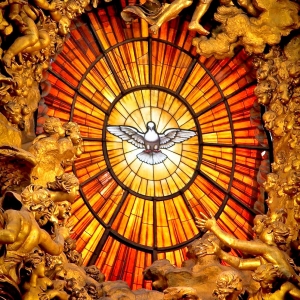
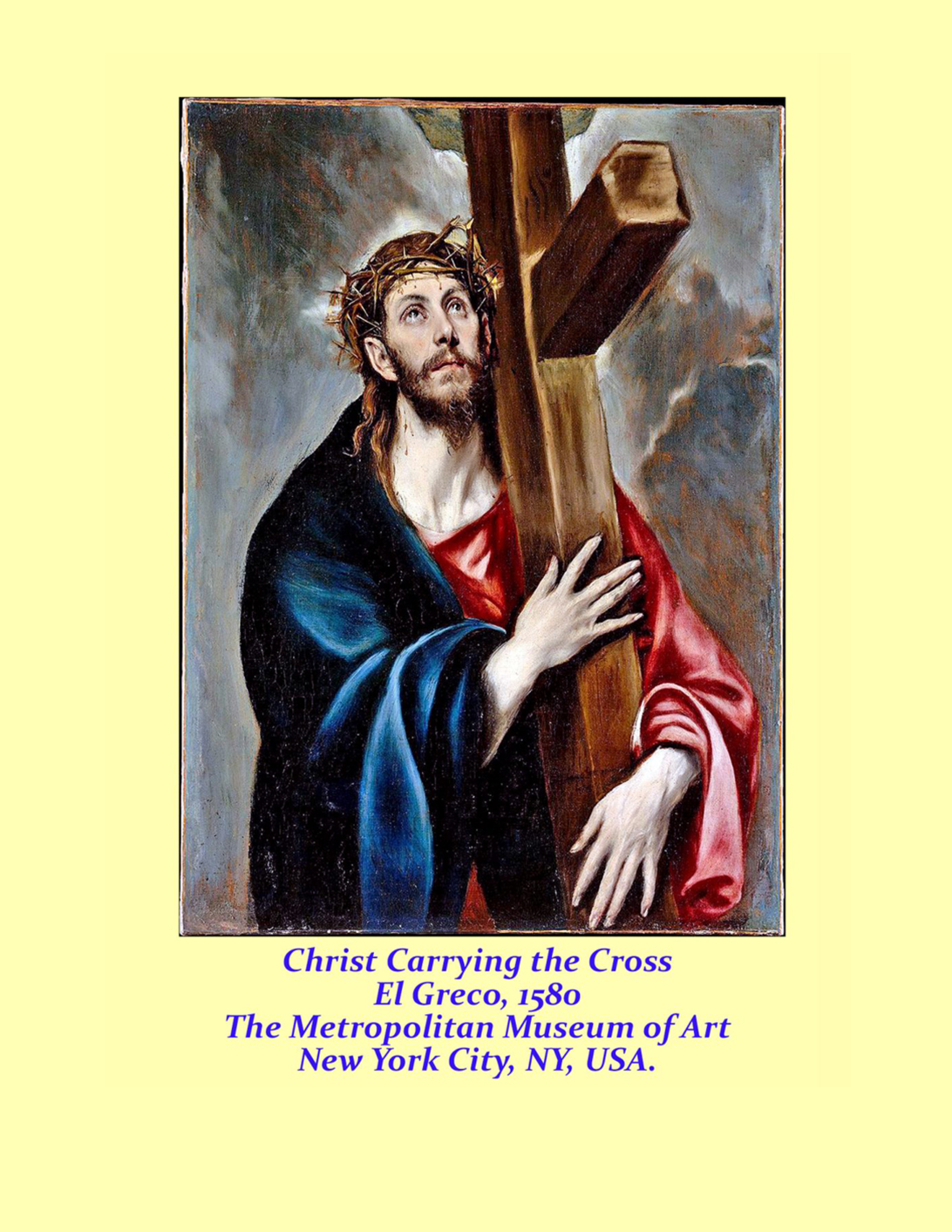
 The Last Supper, Cathedral of Notre-Dame de Paris, Paris, France.
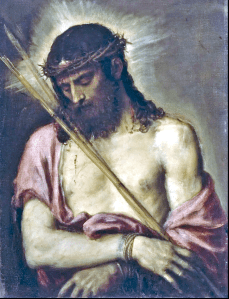




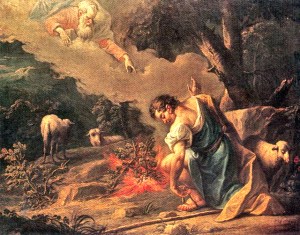



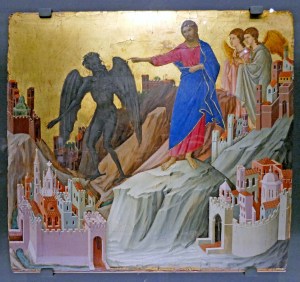




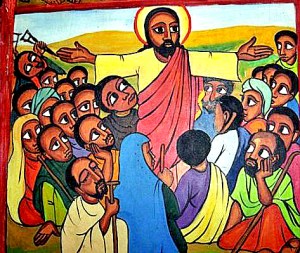





 Christ in the synagogue of Nazareth, Anonymous c.1350,


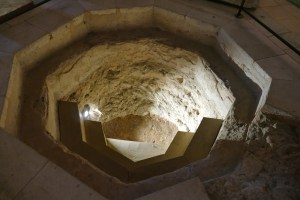


 Sunday Mass Readings

