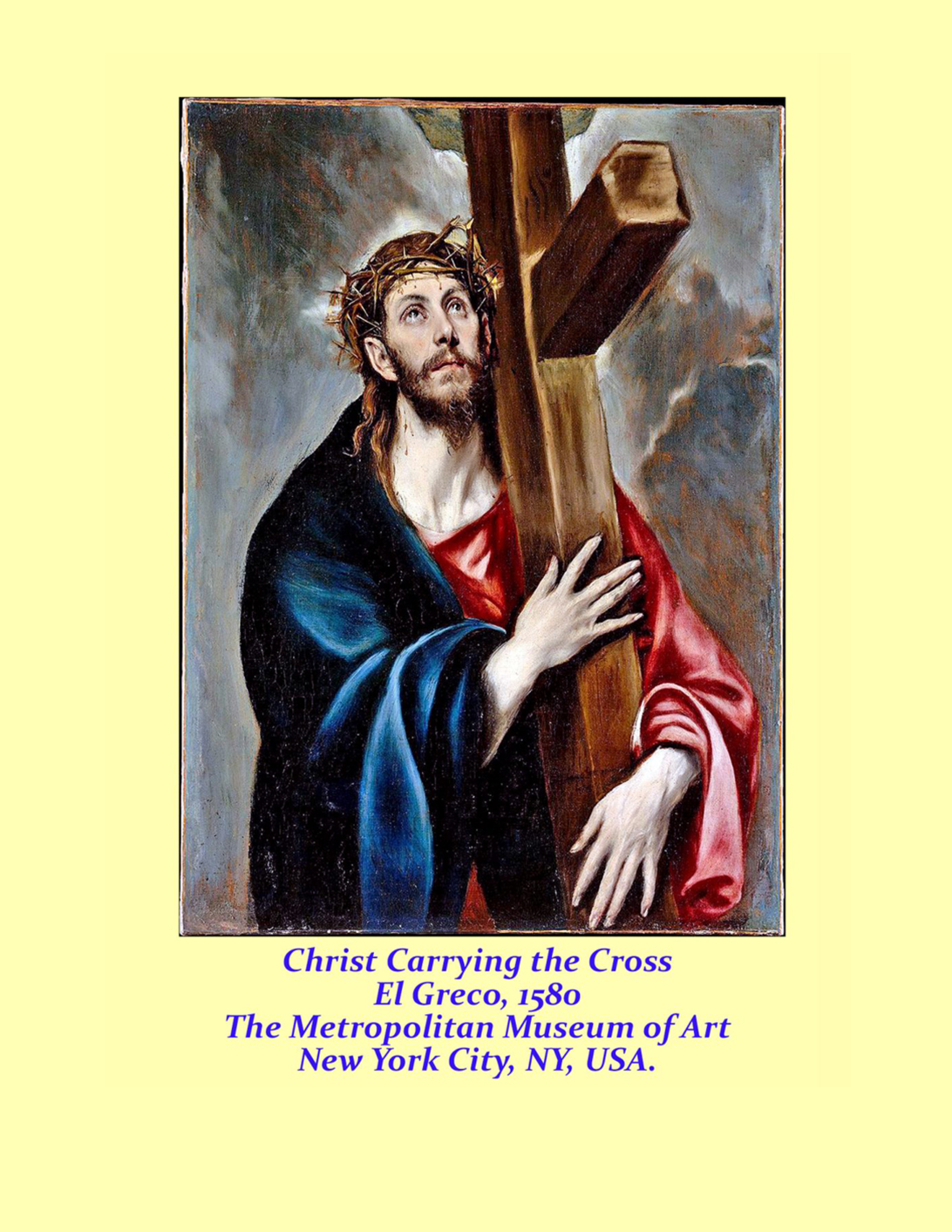
SUNDAY 17 AUGUST 2025: THE TWENTIETH SUNDAY IN ORDINARY TIME.

Todd L. Thomas Art Collections, Medford, OR, USA.

Click here to read today’s Sunday Mass Readings.

Click on words highlighted in red for further information.

In a time of major conflagrations throughout the world right now, Jesus’ statement is particularly ominous. Although he’s not talking about real fires that destroy everything in their path, he is clearly talking about destruction on some level! And so what exactly is the Prince of Peace saying? Today’s other readings are not comforting either. The first reading talks about the holy prophet Jeremiah being thrown down a deep, filthy cistern and being left to rot, and the second reading contains the ominous line, “you have not yet resisted to the point of shedding blood”. There is a clear warning we have all heard that when we meet together for any reason, that there are two subjects never to be discussed: religion and politics. It is as if Jesus was giving us that same warning from over the centuries, as it seems he means the same thing. Indeed, over the centuries down to this very day, people have fought and died over religious principles: Christians v. Christians, Christians v. non-Christians and non-Christians v. non_Christians. It seems to be never ending. Perhaps the worst example were the 16th and 17th century wars of religion in Europe precipitated by the Protestant Reformation. In other words, over the centuries, we can never say that we weren’t warned about potential conflicts over who believed what was true and unassailable. And Jesus himself was the first Christian to die for his belief, the victim of both jealousy and supposed betrayed hope, with everyone expecting a great military figure, the new David, and getting instead a man who forgave everyone! Today’s impassioned prediction of strife has come to be – and remains – a simple statement of truth. 

Fire, therefore, is a major theme today. Jeremiah warned his people of impending doom unless they changed their ways. He had an internal fire which drove him even to the point of self-sacrifice in order for God’s word to be heard. The Letter to the Hebrews talks of the internal strength, or fire, of the Lord to endure the degradation of the cross in order to fulfill his Father’s mission and achive the glory of heaven. And then there is the fiery image of the Sacred Heart, aflame with the Lord’s love for us, despite our weakness and failures. 
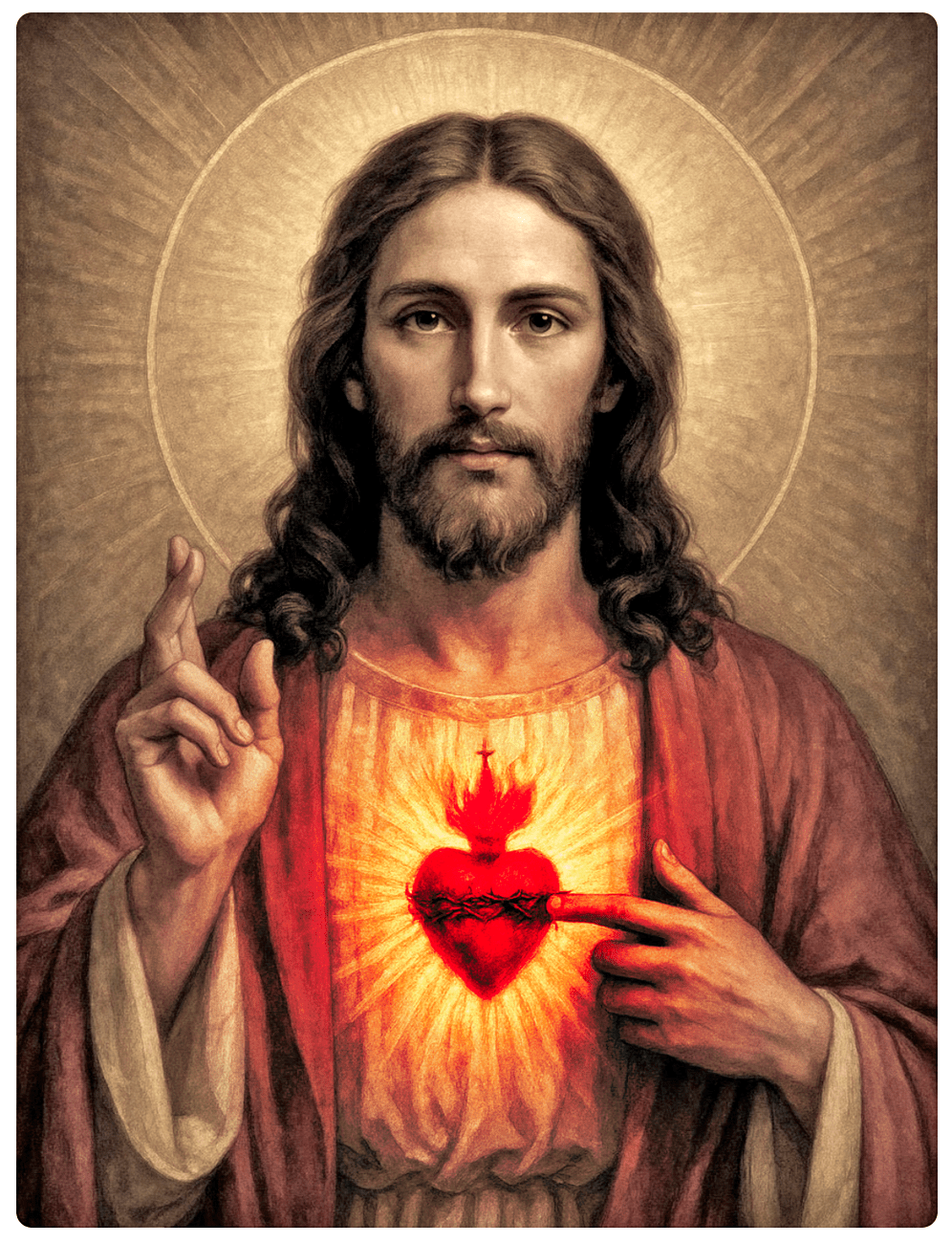
The Sacred Heart of Jesus, Faithful Soul Prints, Etsy.

Here is another vision of the undying fire of love Christ has for us through thick and thin, through trouble and strife, through good times and happiness. The trouble with everything I have said here is that Jesus himself did not follow this advice! He knew his message was inflammatory, yet still said it. He knew it would mean his death, yet he kept to it. If he had not, there would have been no message, no church, no salvation. So we, his faithful followers, should clearly not be shy when needed. There is no telling what a few careful words concerning our deepest beliefs when uttered in appropriate (or not) circumstances might mean to others. It could be we find ourselves in a group where souls are crying out for a gleam of hope, love, salvation which we may be able to fill. Time and again the Lord uttered words which he knew would question deeply held beliefs, such as the long-awaited Messiah being a man of military strength and conquest. He was the complete opposite of that image, and he died because of it. And he knew that would happen, hence his impassioned “I have come to set the earth on fire, and how I wish it were already blazing!” Yet he still maintained the image of a man of peace and forgiveness, true to his Father and utterly determined to keep to that message. 

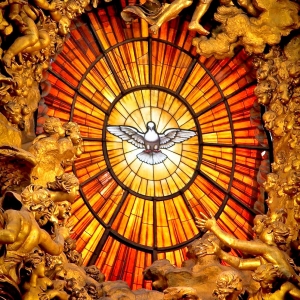
So, yes, discomfort today with the readings. A clarion call to uncomfortable truths,  surrounded these days not by images of conquering heroes, but by indifference, which is possibly worse. We have to be ready for rejection based on laughter, ridicule, scoffing and ignorance. And we should be ready with words that respond not with anger or fury, but with gentle correction and hope! Always remember we are not alone at such times. We have the fiery strength of the Holy Spirit, the fire of Pentecost within us on which to draw. We are never alone!

DreamsTime, Powerful Image of the Holy Spirit, Omer Sahin.


Friday 15 August 2025

Holyday of Obligation

On Friday 15th of August we celebrate the Assumption of the Blessed Virgin Mary body and soul into heaven. This feast was formalized into a dogma by Pope Pius XII in 1950, declaring it to be infallible truth and to be accepted by all Catholics. It recognizes the sanctity of the most holy woman who accepted God’s unique call to accept and receive the Son of God, cherish him and give him a foundation of love and early guidance which is clearly seen in his life and example. So our thanks and praise can be rightly offered to Mary on Friday. She gives each one of us the example of perfect motherhood and support from Jesus’ conception, birth childhood and throughout his mission, even to the cross.

Hail Mary, full of grace, the Lord is with thee!
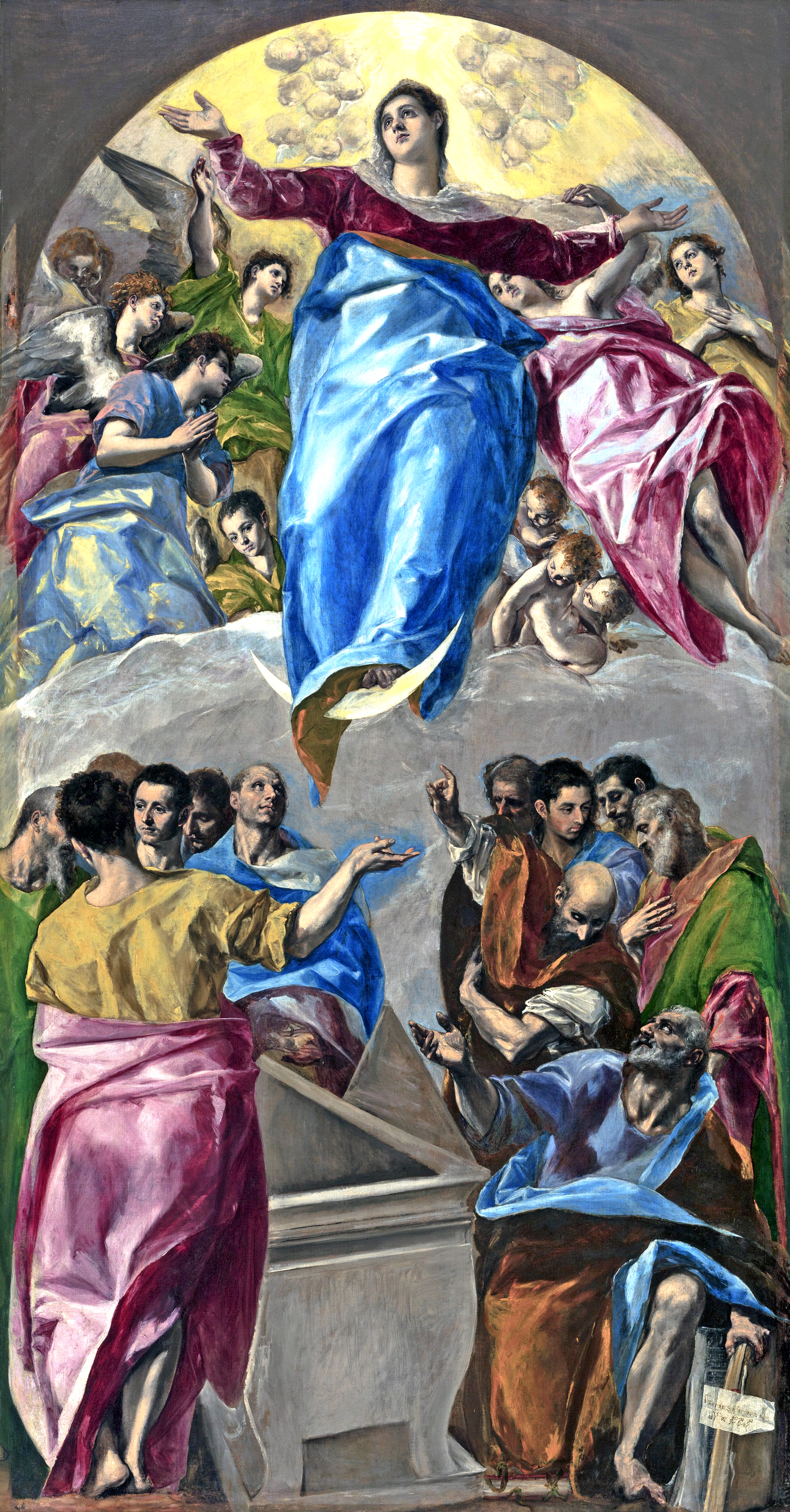
The Assumption of the Virgin, El Greco 1579, Art Institute of Chicago, IL, USA.


DO YOU KNOW SOMEONE OPEN TO A MESSAGE LIKE THIS? PLEASE FORWARD IT TO THEM. THANK YOU.

©SundayMassReadings.com

SUNDAY 10 AUGUST 2025: THE NINETEENTH SUNDAY IN ORDINARY TIME.

Instagram, Shine-in-Jesus, December 2020.

….light your lamps and be like servants who await their master’s return from a wedding, ready to open immediately when he comes and knocks.  Luke  12:35-36.

Click here to read today’s Sunday Mass Readings.

Click on words highlighted in red for further information.

Time and again Jesus calls us to be ready in every sense of the word for the arrival of the master. In fact there are at least eight times in the gospels that the Lord warns us! So at the very least we cannot ever say we weren’t warned! And today’s gospel is no exception, as seen in the quotation above. No dozing off, no naps, no distractions – we must be always on the watch! But this time there is a twist: “Blessed are those servants whom the master finds vigilant on his arrival. Amen, I say to you, he will gird himself, have the servants recline at table, and proceed to wait on them.” Here the servants are being rewarded for doing their duty – and by the master himself! That is how high an opinion the master has for his faithful servants! But note that: his faithful servants. So there is a reward for simply obeying the master, being always watchful for his return and being ready for the happy event. I wonder if the servants’ reaction was the same as Peter’s reaction when the Lord washed his feet! At first he point blank refused, until Jesus said that this was necessary to continue fellowship with him; only then did he relent. The lesson is very powerful however, as we are all called to servant-leadership. Many of us will quite easily reject that image, saying perhaps we are not leaders, not managing directors of anything, not leaders of any industry, not presidents or prime minsters of anywhere! So how then, one might imagine, can we expect the Lord to kow-tow to us? Well now, in imitation, even holding the door open for the person behind you is an act of subservience! We don’t have to do it – but we do it with respect and as a part of civilized behavior. Helping anyone in clear distress is a measure of our Christian identity, because the Lord expects it of us. Indeed, we are called to be on the lookout for any occasion in which we might be of assistance, and perhaps that is what the Lord is asking of us. Because when we see others then perhaps we are being called to see the Lord in them. In other words, perhaps this is the way to be always on the alert, as Jesus demanded. It might well be a difficult challenge with some of our acquaintance, of course, but as I tell many in the confessional, when confronted with a challenging situation where we might be tempted to tell someone to go to hell, as it were, just think this: this person who has offended you in some way might be doing the best he or she can do! It clearly isn’t what we would do – but it might be all that poor soul can do, and so who are we to criticize? It does not lessen the challenge of having to deal with difficult people, but if might help us in handling it. Read this story which might bring that possible situation to life, and make it clearer. 

In that way, with a positive frame of mind which we are determined to maintain even in the worst situations, we are always on the watch! We will be searching for the good in others, for the presence of God even in the unlikeliest of places, even in the hearts and minds of those we might think have neither! So if we actually search for such situations with always a positive frame of mind, we will be satisfying the Lord’s insistence that we be on the watch. Couldn’t that be the meaning of this line from the first reading: For in secret the holy children of the good were offering sacrifice and putting into effect with one accord the divine institution. And then there is the second reading, which talks of Abraham, living way beyond the normal years of child-bearing: “So it was that there came forth from one man, himself as good as dead, descendants as numerous as the stars in the sky and as countless as the sands on the seashore”. Flip that meaning into our own world, where we might be dead to saying something nice, positive and constructive, suddenly we are able to do exactly that? In that way we can create a lively atmosphere – an atmosphere full of life – where before there was maybe nothing, emptiness and negativity. So a good word, a small deed of generosity, an offer of assistance – anything positive, will mean we are on the watch, always and everywhere, just as we have been ordered to do by the Lord. Our lamps will be full of oil, lit, and breaking down the darkness that was there before. 

Hand holds a large old lamp in the dark, iStock by Getty Images.

©SundayMassReadings.com

SUNDAY 3 AUGUST 2025: THE EIGHTEENTH SUNDAY IN ORDINARY TIME.

The Man Who Hoards (L’homme qui thésaurise), James Tissot 1886-1894, Brooklyn Museum, New York City, USA.

Click here to read today’s Sunday Mass Readings.

[The rich man said to himself] “Now as for you, you have so many good things stored up for many years, rest, eat, drink, be merry!” But God said to him, “You fool, this night your life will be demanded of you…..”

Click on words highlighted in red for further information.

This Sunday’s readings seem to want to pull us into big-time reality. The very famous first line of the first reading seems to sum up what is to come: Vanity of vanities, says Qoheleth, vanity of vanities!  All things are vanity! When looking at a word you do not encounter every day – “vain” in this case – I find it almost always a good idea to return to the roots of the word. And behold, vain comes to us ultimately from the Latin word “vanus” which means “empty” in the sense of “without substance”. And there is the foundation of today’s readings. And to say all is vanity at least challenges us to come up with a counter argument, unless one agrees with it of course. I happen not to. I think Qoheleth might be wrong! Qoheleth, by the way, is a not the name of a person, but rather a profession. It means “preacher” or “teacher” or “collector of sayings”. So I think it can rightly be called an opinion rather than a statement of fact. After all, preachers can be wrong (!). But this is not to suggest that this saying is completely wrong; it might be right on target when dealing with certain individuals. Do you know someone whose life seems to be focused on money, on gathering as many material things as possible, having more of everything compared to others? I remember knowing a married couple years ago whose lives seemed to be totally fixated on possessions. In a word, it was creepy. Perhaps Qoheleth was right in such a case. “All things are vanity” might bring us closer to the truth of the matter. So what springs from that insight? Perhaps in each life, what is really important lies elsewhere, and not in “things”. That is certainly to be found in today’s gospel. Here a man in the crowd shouted to Jesus apparently about a dispute with his brother, perhaps after the death of a parent. He asked Jesus to intervene in a dispute over the inheritance, something that Jesus was not prepared to do! Instead Jesus took the opportunity to focus on something supremely wider, more important than possessions, hence the picture and quote above.

Ecclesiastes, New Life Presbytarian Church, Tifton, Georgia, USA.

Jesus points to the ultimate reality of life and death. Is our life directed to the ultimate or to the things that do not last? And he says clearly and without hesitation that one’s life does not consist of possessions. Yes we need essential “things” to keep us going, to ensure that we remain strong and healthy so we are able to praise God, and fulfill our destiny as children of God. But if we move up or down beyond that, we enter either the domaine of the saints or of the sinners! And it is so much easier to identify with the sinners, and become the materialistic individual we see constantly on the TV commercials, praised as “happy” and “contented” and “satisfied”, glowing smiles everywhere, because of what they have bought (and what we too might strongly desire but might be beyond our means). It would be much better to bewail our unhappiness over the starvation or war or evils being reported on TV daily alongside the commercials, and try to figure out how we can lessen the suffering we see there. And remember we are not being asked to embrace poverty unless it is our own decision. Some are called to that; the majority, not. But we certainly are called to lessen suffering as much as our means allow.

We need look no further than the city of those people to whom Paul wrote, Colossae. That used to be located on an important trade route in what is now Asia Minor in Turkey. There is almost nothing left of it as the trade route shifted. It is unexcavated and probably has sheep grazing where a once proud city stood. Quoheleth is certainly correct there! Certainly ruins must lie there, and Colossae is certainly dead, if not forgotten. However, the Colossians, if they heeded Paul, are singing right now in the halls of heaven, happy and fulfilled! As he said, “Think of what is above, not of what is on earth. For you have died, and your life is hidden with Christ in God”. And that just about sums it up.

Site of the City of Colossae, Turkey.

©SundayMassReadings.com

SUNDAY 27 JULY 2025: THE SEVENTEENTH SUNDAY IN ORDINARY TIME.

Catholic Carmelite Church of the Pater Noster (Our Father), Mount of Olives, Jerusalem 2018.

Jesus was praying in a certain place, and when he had finished, one of his disciples said to him, “Lord, teach us to pray just as John taught his disciples.” He said to them, “When you pray, say: Father, hallowed be your name, your kingdom come….”          Luke 11:1-2.

Click here to read today’s Sunday Mass Readings.

Click on words highlighted in red for further information. 

I confess to being surprised, not to say ashamed, when I came across the Church of the Pater Noster (Our Father in Latin) in Jerusalem during my journey to the Holy Land in 2018. Yet there it was, with the most famous prayer of all in 140 languages!  You can see seven of them in the photo above. Somehow I had missed this special place in my plans and came across it accidentally. It claims to be in the actual site where Jesus taught his followers the most well-known prayer of all. But note there are two occasions in the gospels where Jesus teaches this prayer, one in Galilee (Matthew 6:1-15) and this one in today’s gospel. Today’s is shorter than the one in Matthew (which is the one we use at Mass). Perhaps Jesus was making sure that his followers would remember this prayer to Our (and His) Father before he completed his mission and died in Jerusalem. He may have prompted one of his disciples to ask this question, and maybe they recalled it after the first few words were spoken. This church is located near the site of a fourth-century church built by the Emperor Constantine over a cave reputed to be the site where Jesus taught (or reinforced) this prayer. Today’s reading goes on to have Jesus say that when we ask God for a favor, we should be persistent. In a short parable, he talks of someone asking another for a favor, but he encounters resistance. However, through persistence, Jesus says, he succeeded in getting what he wanted. And then Jesus proclaims these immortal words:

Ask and you will receive;
seek and you will find;
knock and the door will be opened to you.
For everyone who asks, receives;
and the one who seeks, finds;
and to the one who knocks, the door will be opened.

Pretty big promises! And they speak of God’s eternal and boundless hospitality! Today there is even a giant industry solidly based on that concept. We are always told in the next breath that the answer we get from God might not be the one we hope for. And if we ask for something which would not be to our good or the good of others, then one cannot expect God to answer, at least not in the way we anticipate! But given all that, then we should hope for God’s goodness to materialize in one way or another, in the same way as a father takes care of his child. 

The other two readings are challenging. One talks of the approaching doom of the cities of Sodom and Gomorrah, and the other of the mercy of God, taking pity on those who were not born within the confines of the Hebrew people, but who are now welcome into the new people of God. As the two cities in the first reading were, according to Scripture, destroyed for their sins, it seems there were not even ten people within them worth saving! And here we are on tricky ground. Sodom has given its name to a specific situation, and you can read the legal definition of that here. Scholars today generally prefer to read the sin of Sodom as inhospitality, which, in the context of the Book of Genesis, does make sense. Just a few verses prior in the Book of Genesis, Abraham insisted on his three visitors being received well, offered food and refreshment, and was generally a wonderful example to us of what hospitality is all about (see last Sunday’s reflection of this event by the terebinth of Mamre). If you think of the traditional accusation against the two cities, it is really a challenge to think of them as both being completely gay! Another way of thinking through this passage is to remember that the two angels, the two visitors that are the source of all the trouble, do not actually have sexual characteristics at all! These two appear as human, but are not. Is it perhaps their superhuman characteristics that were the source of their attraction to everyone, which of course does not excuse the inhospitality they received. The whole thing is still  very controversial even after all these centuries! I guess it is up to each one of us to decide what this passage is all about, and we’ll leave it at that.

Then there is the second reading. The idea of hospitality can be seen here too. Paul seems to be talking to people who were once pagans, not converts from Judaism. They were born into a world where they were “dead in transgressions” against God’s law of life and faith, but are now “brought to life along with him”. That reminded me of the earliest baptisms, and the earliest baptismal fonts. The were big and deep. One went down at least three steps until deep in water, then up again three steps on the other side. The baptized person had died to the old life, and risen into the new! It was highly symbolic and made a great deal of sense. Our Baptist brothers and sisters still receive this grace, “total immersion”, in almost the same way. 

The Baptistry of St. John the Baptist, 2017, Poitiers, France.

Here is such a baptistry in Poitiers, France, to the south-west of Paris, dating from the 4th century, the oldest church building in France and possibly one of the oldest Christian buildings anywhere! It might originally have been connected the local river Clain to ensure that the water was fresh, carrying away the old sins and giving rebirth to a new Christian. And it was on this spot that a new person would have been received into the flock of God’s children and promised an eternity of joy in God’s love. 

So today’s readings do seem to have the theme of hospitality as a golden thread. The word itself comes originally from the Latin word “hospes”. Interestingly, that word means both the one offering hospitality (the “host”) and the one receiving it. It is also the root of the words hotel, hostel, and hospice. All that came to English through French, which came from Latin. And note the German for hospitality is Gastfreundschaft “gast” meaning guest, and “freund” meaning friend, both of them readily understandable in English, and easily carrying the same meaning (“schaft” is the state, or result, when combining the two other words). And remember when Jesus sent out his disciples to teach the Word, if they encountered inhospitality, they were to “shake the dust from their feet”. That is somewhat more irenic than bringing down disaster and destruction upon them! But when it works, there is nothing like it. A warm welcome, a helping hand, an encouraging smile, a loving embrace, a pat on the back, these and a thousand other marks of friendship, love and human assistance are what make life worthwhile, and they are what makes God happy and what makes us happy! So help us, Lord, to be bringers of peace and happiness to all we meet, so that your love will shine through us and will make of us your true disciples, and perhaps invite others to the same.

“True Hospitality for Good”, the flagship philanthropic program for IHG Hotels.

©SundayMassReadings.com
SUNDAY 20 JULY 2025: THE SIXTEENTH SUNDAY IN ORDINARY TIME.

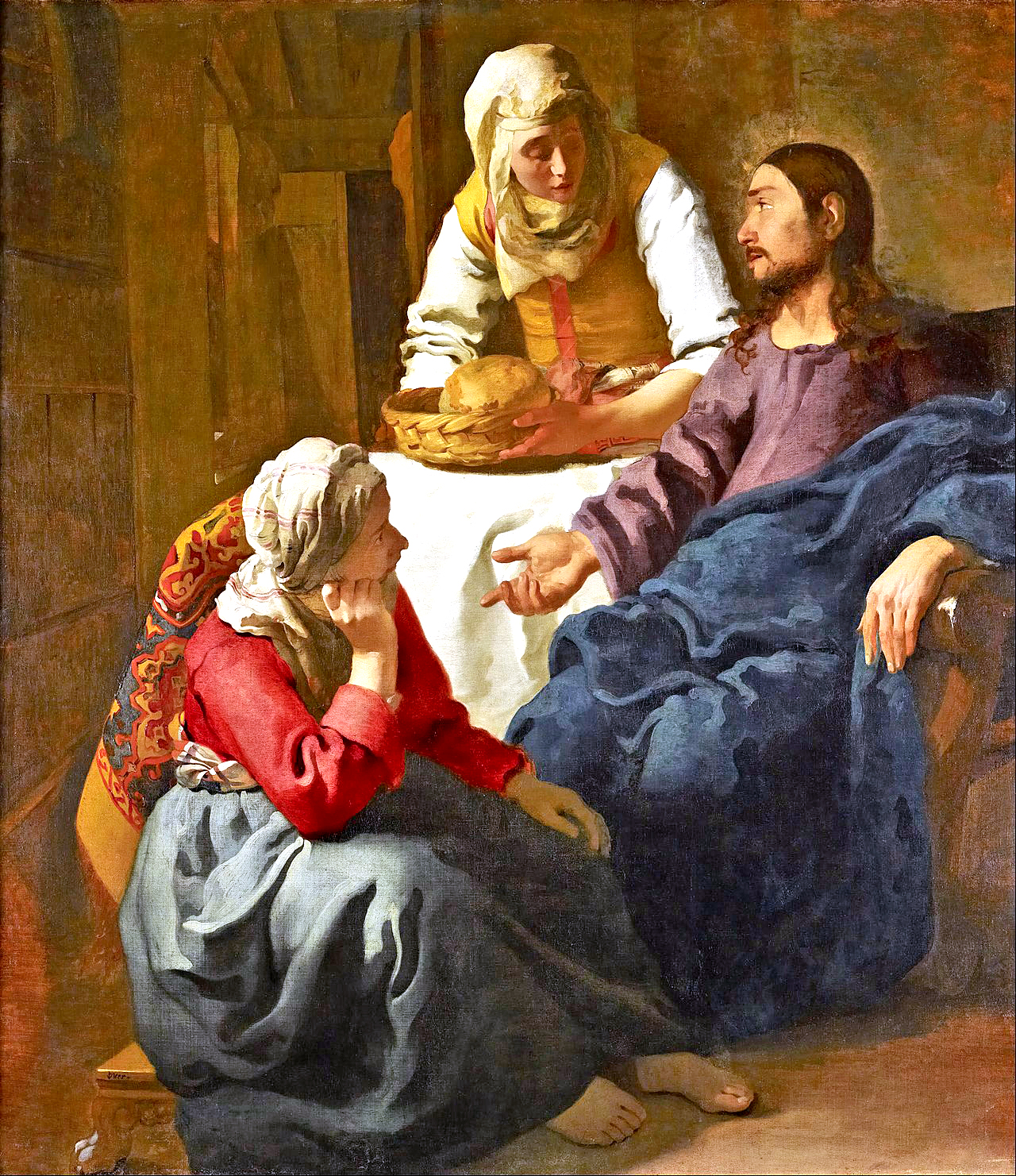
Christ in the Home of Martha and Mary, Johannes Vermeer 1655, Scottish National Gallery, Edinburgh, UK.

Click here to read today’s Sunday Mass Readings.

The Lord said to [Martha] in reply, “Martha, Martha, you are anxious and worried about many things. There is need of only one thing. Mary has chosen the better part and it will not be taken from her.”     Luke 10:41.

Click on words highlighted in red for further information.

There are elements in each of this Sunday’s readings that may be taken as indications of a much broader meaning, in addition to understanding what the original intention was. That mysterious “terebinth of Mamre” in the first reading, for example. What is a terebinth? Turns out that it’s a a small tree or large shrub, very sturdy, growing where most others cannot, such as in dry, rocky, inhospitable terrane, as there is around Mamre, a small settlement in the semi-desert south of Jerusalem. It is in the same family as the cashew. The word turpentine originated with it, but the modern paint-thinning  liquid “turps” now comes from the resin of the pine tree. The terebinth has medicinal properties in addition to an edible fruit and its wood is good enough to be shaped into tools. An all around winner! Then, also in the first reading, there is an example of the well-known hospitality of the Levant, as Abraham and Sarah open their table to three total strangers. What was incredible about them is their prediction that the childless Sarah, then about 90 years old, would bear a son! Sarah overhead that and began laughing, but God rebuked her… Read all about it here, as unhappily it is not included in today’s reading. But Sarah argued with God – and even told God a fib (probably like many of us too)!

Then Paul, in the second reading, reminded me of a childhood exhortation that you rarely hear today. He clearly had plenty of health problems, “I rejoice in my sufferings for your sake” he says. He seems to liken his sufferings to the pains associated with the growing Christian community, hence to be accepted as they are useful. For those of my age, doesn’t that sound like “offer your pain up for the souls in Purgatory”? In other words it is a positive remedy for what could well become a very negative suffering experience. And finally, in the gospel, Jesus is staying with friends Martha and Mary, where poor Martha has taken on herself all the chores of dealing with a guest, rushing around and complaining about her lot. Mary on the other hand simply sits at the feet of the Lord listening to him. Where would each one of us want to be in that situation? No mention of their brother Lazarus in this passage, which presumably took place in Bethany, just outside Jerusalem. 

Terebinth Tree, Mohand Azouze, Flickr.

So now, what were the promised points about today’s readings mentioned at the beginning of this reflection? The first passage begins, “the Lord appeared to Abraham”, but when he looked up, he saw three men, not one. Although the next chapter talks of two angels together, there is no explanation in this 18th chapter as to who they all were. Some theologians posit that this may have been a first inkling of the Trinity, reinforced by the use of the plural in Genesis 1:26:  “Then God said, “Let us make mankind in our image, in our likeness“. It’s a pretty weak argument, but quite interesting. In the second reading Paul makes much of the Gentile readers he is addressing. Remember the huge distinction the Jewish people make between themselves and us Gentiles. The Council of Jerusalem, mentioned in the reflection of the Sixth Sunday in Ordinary Time, last 25th May, was necessary because of the crisis following the admission of Gentiles into the new Jewish/Christian, movement. Clearly Paul is at ease with that, expressing his desire that all Gentiles fully understand the meaning of the Messiah among us and that we must submit to him. And finally, the domestic fuss between Martha and Mary. Note what each is doing, and then compare that to the reality of the priesthood and the diaconate. Priesthood involves spreading the Word of God as received from Scripture, and the diaconate means service (deacon: “δεακονος deakonos” is the Greek word for servant). So Mary is doing what a priest would do, listen and absorb the Word of God, whereas Martha is being the deacon, the servant. In the present thinking about the possibility of women becoming ordained deacons, this passage almost certainly must have come under intense study. 

Therefore each reading today may point, in one way or another, to a wider reality or possibility beyond the immediate confines of the scene presented. The first reading might represent the Holy Trinity suggested centuries before the revelation in the New Testament and be seen as a preparation of that revelation. The second reading can be seen as a prayer for the universal acceptance of Christ’s message of salvation, and the gospel as a possible example of a veiled message of universal acceptance into the ordained ministry of the church! Pretty controversial in many ways, not to say inflammatory, but intriguing or at least interesting. It is very human to be challenged and having to defend one’s position, and some clarity is a possible result. We should always be ready to defend what we consider to be right and just, and still be open to listening to and judging fairly someone else’s point of view. We don’t often get a set of three Sunday readings which prompt reflection and some challenge, but today’s do seem to offer that. We should never be afraid of prayerful thought and challenge even for our deepest beliefs. The result might be even greater strength. And isn’t there something in that for us all? Don’t we, sometimes, demonstrate a greater, holier more Christian self in certain moments? Perhaps that could be a call for some reflection, on how each of us can be a truer, better child of God. We surely have moments which point to that. Then why not deepen such moments, and become ever better disciples of the Lord?

Icon of the Hospitality of Abraham, Holy Monastery of the Dormition of the Theotokos, Mount Penteli, Greece. [Theotokos is Greek for “God-bearer” or Mother of God; ΦΙΛΟΞΕΝΙΑ, Philoxenia, is Greek for hospitality]

©SundayMassReadings.com

SUNDAY 13 JULY 2025: THE FIFTEENTH SUNDAY IN ORDINARY TIME.

The Good Samaritan, John Adam Houston, Royal Scottish Academy of Art & Architecture, Edinburgh, UK.

Click here to read today’s Sunday Mass Readings.

[Jesus asked] Which of these three, in your opinion, was neighbor to the robbers’ victim?” He answered, “The one who treated him with mercy.” Jesus said to him, “Go and do likewise.”     Luke 10:36-37.

Click on words highlighted in red for further information.

Possibly the most famous parable in all the gospels, the Good Samaritan is an iconic example of Jesus’ teaching, clear, direct, and utterly convincing. To our ears, the message is totally clear and readily understood. Not so the first audience who heard it: very far from our understanding in fact. The biblical scholars call it the “Sitz im leben”, a German expression (as many early 20th century critical scholars of the Bible were German), meaning an attempt to set the passage in its original time and place. It seeks to recreate the understanding of a certain story or saying as it would have been heard and understood the first time it was proclaimed. And the part which would have stood out with greatest force on that original occasion would not have been ...they stripped and beat him and went off leaving him half-dead but would have been the word Samaritan. That would have been the part which brought those who first heard the story to full attention. It would have been an “Uh oh!” moment to them. They would probably have expected the Samaritan to finish the poor man off, give him a final kick and take what was left of his belongings! Instead, of course, the opposite was the result, the Samaritan going way beyond what might be expected, even to the extent of paying for the care of this wounded, despairing, unknown (and probably Jewish) man. So what was Jesus doing? The Samaritans were the people who lived in Samaria, the area of the Holy Land at that time just north of Jerusalem, and south of Galilee where Jesus grew up. They were Jewish too, but….

The parallel which occurs to me is the way Catholics and Protestants viewed each other when I was growing up in the 1940s. It was not pretty. All Protestants were going to hell if you were Catholic, and vice versa. This never sat well with me as my dear mother was Anglican, that is, Protestant (Episcopalian in the USA). There was no way she would end up in hell! But that perception was everywhere at that time. I even had to get permission from the priest in confession for permission to go to my cousin’s marriage in an Anglican church (the answer was yes, but I bet it was grudging). Well, transfer that way of thinking to 2000 years ago and to the Jews and Samaritans. They basically hated each other. The Samaritans even had their own holy hill (compare that to Mount Zion in Jerusalem), and their own temple on it. There was a whole history of distrust and conflict which has no place here, but, if you wish, you can find it here. They even played pretty horrible tricks on each other, just like scams do on us today. (There is still a small Samaritan community in the Holy Land). So when Jesus had the Samaritan discovering the man beaten up and left to die, completely ignored, rejected, by the much worthier priest and Levite (who would have been a servant in the Temple in Jerusalem, the holiest place on earth for the Jews), they expected even worse from the Samaritan. But no, they did not get that. And note at the end of the story when Jesus asks who was neighbor to the man – what would you say automatically? Now look at what the scholar of the law, the one whose question sparked the parable, said in answer to that question. Look at my caption above. Who was neighbor to the man….? Did you answer that way? The man could not even bring himself to say the word “Samaritan”!

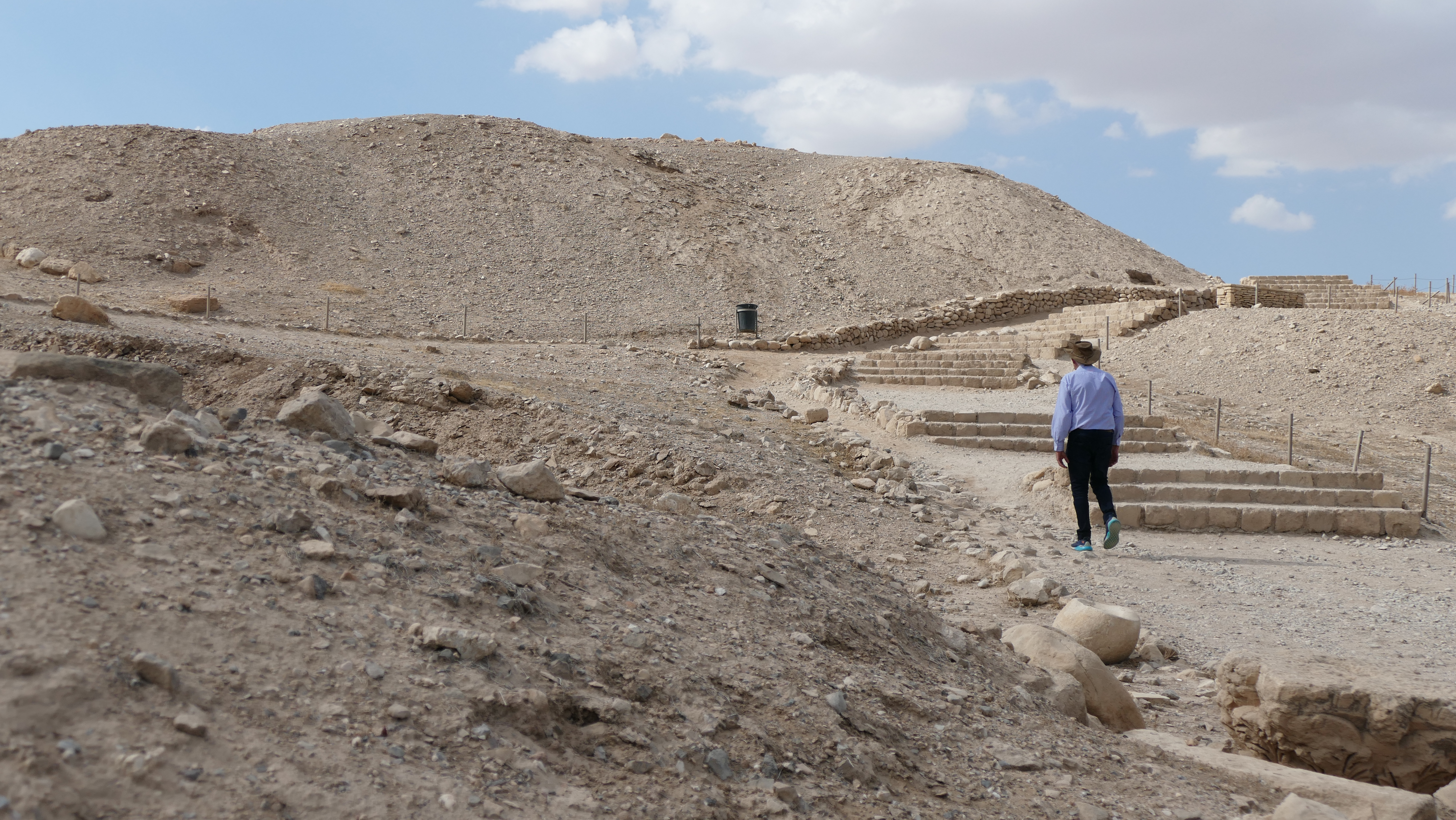
There are other telling things about this parable. The traveler was on his way from Jerusalem to Jericho. Now did you know this: many scholars believe Jericho is one of, possibly the, oldest human settlements in the world, over 9000 years old! So it could be said that it represents mankind in its source and longevity. Then there is Jerusalem, now sacred to the three great monotheistic religions in the world. So if one would ask which is the holiest city in the world, it could possibly be Jerusalem, the city of God! Additionally, Jericho is about 800 feet below sea level, whereas Jerusalem is about 2500 feet above sea level. In other words, metaphorically, the traveler was going in the wrong direction! And it is a bleak landscape there. I took this picture near Jericho in 2018:

Excavations in Jericho, Palestine Authority, 2018.

And consequently it is an uphill trek to get to the City of God, but much easier to get to the city of (fallen) humanity. So this simple story is multifaceted, with each angle having its own story to tell. But ultimately, it is the Lord who is the Samaritan, and each one of us fallen and barely able to ask for help. Yet we need it so badly. But today at least we Christians of whatever tradition enjoy a much more healthy relationship with each other. We acknowledge that we all believe in fundamental truths, that Jesus is the Lord of all, who is always ready to help us when we ask for it. That love is the power of God, into which we are all invited. So, based on that, we can transform ourselves into that Good Samaritan, able to help whoever needs help. For our help comes from the ultimate Good Samaritan, always there and always ready. As we should also be. But that is no easy matter. The example set in this parable calls us to help on many levels, including financial, and are we ready to do that? For many of us today, that would be the acid test – the money in our pocket. But, of course, our Samaritan went way beyond that level of generosity. When Jesus was asked to deny his identity as God’s Son, and his title, Messiah – the Anointed of God – he declared this was who he truly was, and  as a result was martyred for our benefit – so that we would believe in his mission and example! He died defending this so that we would believe in him. Our Samaritan loved us so much that he was not prepared to save himself by denying who and what he was, and what his vocation was, instead offering to save each and every one of us. So we have the ultimate example here of what each of us is called to be. Not to ignore the suffering around us, but to do what we can to minimize it. That would be a great step for us to become the Good Samaritan! And one final exercise: If you have a pet irrational dislike of some nationality or race or skin color or indeed anything which another person has been born with and has no control over, substitute that for the Samaritan and give yourself an “Uh oh” moment to make this parable come really alive!

The Good Samaritan: A Children’s Catechism, Fr. Michael Shanbour, Ancient Faith Store.

©SundayMassReadings.com

SUNDAY 6 JULY 2025: THE FOURTEENTH SUNDAY IN ORDINARY TIME.

Rejoice with Jerusalem and be glad because of her, all you who love her; exult, exult with her, all you who were mourning over her! Oh, that you may suck fully of the milk of her comfort, that you may nurse with delight at her abundant breasts!    Isaiah 60:10-11.

Click here to read today’s Sunday Mass Readings.

Click on words highlighted in red for further information.

The quotation above is possibly one of the earthiest passages in all Scripture! On another level, I haven’t put a second picture above today, because my lead picture “Virgin and Child Enthroned”, I think tells it all. I have found over the years that it is very difficult to find a Virgin and Child picture where both look happy! But wandering through the lovely National Museum in Gdansk (Dantzig), Poland, in March of this year, I saw that statue carved in wood and took a picture of it. Although dating from the 14th century, it looks very human and up to date. The child looks goofy (which seems perfectly natural to me) playing with a ball, in the lap of his happy mother, and both look like normal people, not dazzlingly beautiful, not agonized, not anticipating the worst, but simply content and normal. Quite clearly a happy couple. And I think that speaks to today’s readings. Isaiah seems to be talking about such a couple as shown here, and each of us can imagine ourselves as the happy child, being dangled and jiggled around in the same perfect union of the Christ Child and Our Lady, our protective mother also (and remember we are all called to be Christ to the world). Our Blessed Mother must have had moments like that! Then in the second reading Paul talks of “a new creation. Peace and mercy be to all who follow this rule and to the Israel of God”, again talking of a happy time, and then the gospel describes that “the seventy-two returned rejoicing, and said, “Lord, even the demons are subject to us because of your name”. Put them together and we are in a world of fulfillment and peace, which, of course, should always be the case.

“Every Child Needs to be Happy…..”, Cathy Yeulet, Psychology Today, June 2016.

All of which talks of a happy life, and how to achieve it. Hopefully we all began with a mother who was perfect, bringing us up with the expression we see on the Virgin’s and the children’s faces above. If not, then to the Virgin we go and request a loving, maternal and guiding hand, even if we are, like me, in our 80s. It’s never too late, though luckily for me I had a mother who was exceptional, despite extreme financial challenges after the war. Then the rejoicing of the 72 in today’s gospel should be reflected in our own life’s work, identifying, developing and utilizing the gifts God gave to each one of us in the service of others. I recall when I was still a Religious Studies teacher, each year I would ask my students in Junior year (it was a Catholic girls’ high school in Brooklyn, New York) to interview their parents and their parents’ friends about their life work. They had to ask if they were happy and fulfilled in that (most were) and then ask why. Overwhelmingly the answer was because, in one way or another, they said my job helps other people. It was hardly ever because “I make the best money there”. In fact, I vividly recall one student who had interviewed her uncle, the wealthiest member of the family; he worked on Wall Street. She asked “Are you happy in your work?” “No”, he said. “It takes all my energy to get up on a Monday morning and get into the city” She was astonished, didn’t have a clue. I had cautioned students to be very careful if you got a response like this. It would mean you are dealing with someone in pain. Be gentle. So when she managed to ask what the reason was, the answer was “I have wanted all my life to be a chef, but when this banking offer was made, everyone said I’d be an idiot if I didn’t take it. So I did.” Now, of course, for him, there was no question of turning back. A chef with a family makes very little in comparison to a Wall Street tycoon! Then came the agonizing last line in her essay: “I now know why, when we have a family cookout, my uncle is there, with his chef’s hat on, cooking and serving, the happiest I ever see him”. 

I did all this hoping to let them trust that God calls us to the happiest life, with full utilization of our gifts in some general field of activity. We should recognize that, accept it and respond with hope and trust, and try hard not to let money be our one and only guide.

And then there is Paul’s reading today, briefly talking about “a new creation”. In the context of these readings, I think we can say that this is a reference to the new life which awaits us at the final call. He says that if we have lived with the example of the Lord before us at all times, then when called from this life we can expect that the “new creation” will be really all we had hoped for. And so, let it be. 

“True Moment of Happiness”, iStock by Getty Images.

©SundayMassReadings.com

SUNDAY 29 JUNE 2025: SOLEMNITY OF SAINTS PETER AND PAUL, APOSTLES.

The Liberation of Saint Peter, Raphael, Stanza di Eliodoro 2025, Vatican Museums, Vatican City State. 

Click here to read today’s Sunday Mass Readings.

[The angel of the Lord]  tapped Peter on the side and awakened him, saying, “Get up quickly.” The chains fell from his wrists. The angel said to him, “Put on your belt and your sandals.” He did so. Then he said to him, “Put on your cloak and follow me.” So he followed him out……       Acts of the Apostle 22:7-8.

Click on words highlighted in red for further information.

Let us begin this special day with a reminder that Saints Peter and Paul are the patron saints of Rome, and as such have an extra-special significance to Catholics everywhere. Both are martyrs to the faith, both executed for being Christian. They were among the small sect of Christians whom Emperor Nero blamed for the great fire of Rome in AD64, although some historians are of the opinion that Emperor himself deliberately set fire to the city in order to create a giant palace for himself. By tradition, Peter considered himself unworthy of the death endured by Jesus, and was crucified head to the ground. Paul, on the other hand, was a Roman citizen and hence had the right to be executed by beheading rather than crucifixion. But both must have made a deep impression with the local company of Christians, at least those who survived the persecution, to be so remembered. St. Peter, by tradition, was buried close to where he was crucified, the Circus of Nero. This eventually became the site of St. Peter’s Basilica in the Vatican, and in 1968 it was claimed that the bones of the saint had been found immediately under the high altar of the basilica, three levels down, in an ancient pagan cemetery, the Vatican Necropolis. Similarly, it was claimed by Pope Benedict XVI in 2007 that the bones of St. Paul had been identified in the Basilica of St. Paul-Outside-the-Walls in Rome. I mention all this just to state, as far as it is historically possible, that Peter and Paul are linked to the city of Rome as strongly as it is possible to be. Both the Catholic and the Orthodox Churches place great importance on relics. They bring us closer to the heroes of our faith, and concentrate our thoughts and prayers in ways which are singularly powerful. 

Peter, of course, is claimed as the first pope, the apostle to whom Jesus gave the keys of the Kingdom of Heaven, the reason why they are today the principal charge on the Vatican’s coat-of-arms:

Coat-of-Arms of the Vatican City State.

Jesus replied, “Blessed are you, Simon son of Jonah, for this was not revealed to you by flesh and blood, but by my Father in heaven. And I tell you that you are Peter, and on this rock I will build my church, and the gates of Hades will not overcome it. I will give you the keys of the kingdom of heaven; whatever you bind on earth will be bound in heaven, and whatever you loose on earth will be loosed in heaven.”  Matthew 16:17-19.

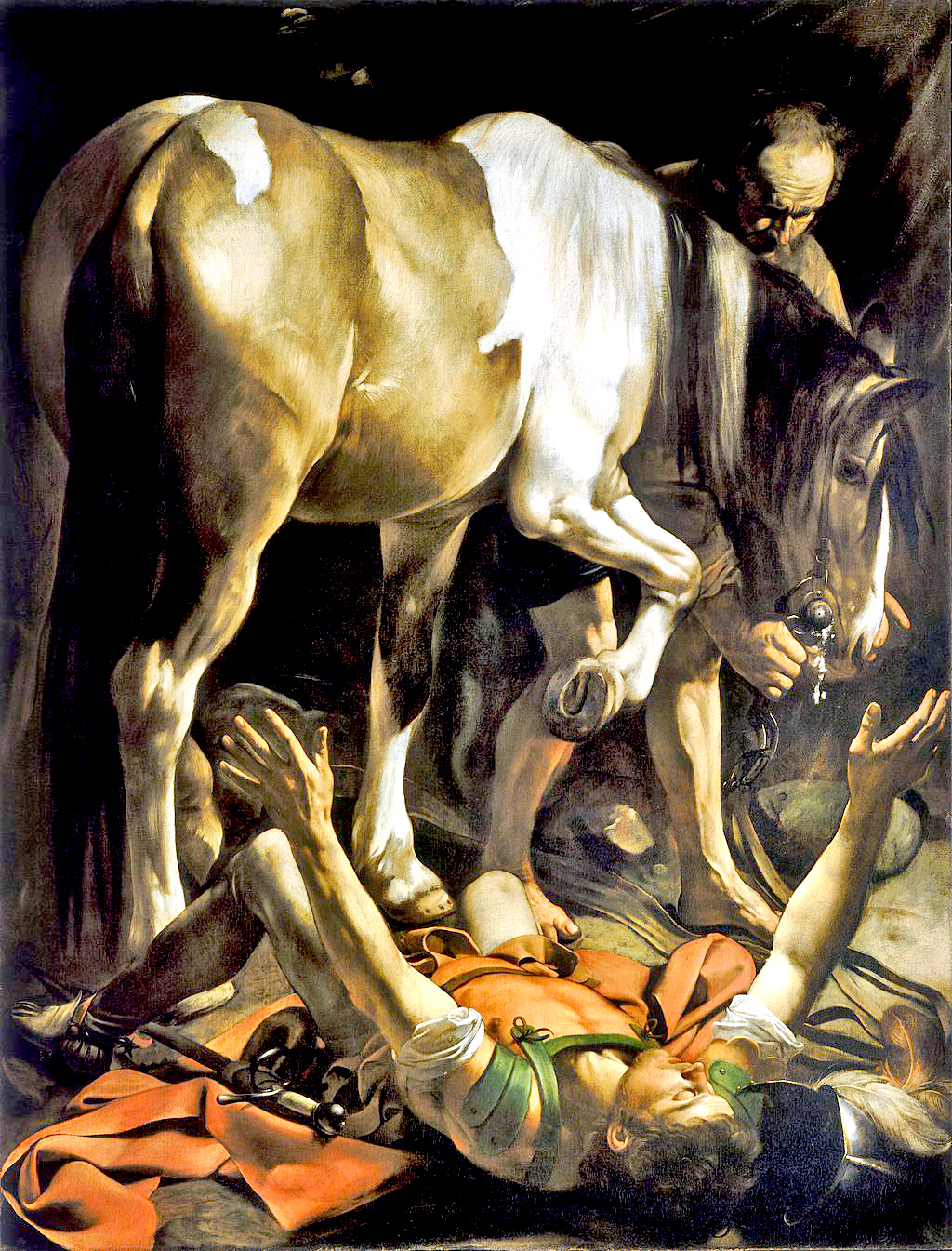
Paul, on the other hand, started his association with the Christians as one out to destroy them. Christians had become troublesome to the Jewish authorities in Jerusalem, and Saul (his original name) was given the authority to destroy these trouble-makers. And this he did. Not only did he witness and approve of the death by stoning of the first Christian martyr, St. Stephen, Acts 7:54-8:2. but experienced one of the most dramatic conversions ever, thrown from his horse on the road to Damascus to inflict as severe a persecution on the Christians there as he had brought to the Christians in Jerusalem. 

The Conversion on the Way to Damascus, Caravaggio 1601, Santa Maria del Popolo, Rome, Italy.

Not surprisingly this altered Saul/Paul’s perception of the new faith, and he eventually became its greatest teacher and guide. In this dramatic encounter with the Lord, he heard the Lord’s voice asking “Saul, why do you persecute me?”. That stayed with him evermore, possibly giving him the idea that we are all the body of Christ, here and now. How else could he have been persecuting “me” when the Lord had been executed? And from this dramatic event, one of the greatest figures in the Church entered the ranks of the followers of The Way. On the other hand, Peter is remembered because he was the first pope, but one who had denied all knowledge of the Lord when it counted the most, as Jesus was being interrogated by the high priest. But Jesus had clearly forgiven him, asking him three times, “Do you love me?”. Paul, whose symbol is a sword (Peter, of course, always holds his keys to the Kingdom), is symbolic of the word being mightier than the sword. Perhaps his most beautiful passage is this, which he wrote to the Christians in Philippi:

Have this mind among yourselves, which is yours in Christ Jesus, who, though he was in the form of God, did not count equality with God a thing to be grasped, but emptied himself, by taking the form of a servant, being born in the likeness of men. And being found in human form, he humbled himself by becoming obedient to the point of death, even death on a cross. Therefore God has highly exalted him and bestowed on him the name that is above every name, so that at the name of Jesus every knee should bow, in heaven and on earth and under the earth, and every tongue confess that Jesus Christ is Lord, to the glory of God the Father.

Saints Peter and Paul, Peruvian wood relief.

So today we commemorate the two most important figures in the early church without whom it would be difficult to imagine what the church would be like without them – if even there were a church! Peter was chosen personally by Jesus, commemorated in the gospel of 9th February 2025. Paul, on the other hand, was “converted”, if that is the correct word, by direct intervention from on high. I presume this was in response to the danger to the very early church that Saul/Paul represented. He regretted his determined attempt to destroy Christ’s following for the rest of his life, but by his work we know that he planted the seeds which took sturdy root, and we are here today to bear witness to that. Most of us have not undergone such a dramatic conversion moment as Paul did, but in God’s own way, each of us reads these words either to confirm our belief, or assist us in the search for meaning in this life, pointing the way to a life guided by light and faith, the service of others, and supported by a divine love – which is actually commemorated this very week, namely…….


FRIDAY 27 JUNE 2025: Solemnity of Most Sacred Heart of Jesus:

Saint Margaret Mary Alacoque, Deviant Art.

Click here to read today’s Sacred Heart Readings

God proves his love for us in that while we were still sinners Christ died for us. Romans 5:8

Perhaps there is no greater devotion celebrating Jesus’ love for us humans than that of the Sacred Heart. Such a devotion has existed for centuries, inspired by that terrible moment on the cross when a soldier plunged a spear into the side of the Anointed of God, from which flowed blood and water. Our modern understanding of the ineffable love of God as shown in the Sacred Heart comes from the visions and revelations to St. Margaret Mary Alacoque, a member of the Order of the Visitation of Mary. Despite many trials and challenges, she eventually convinced her order and the many clerics who questioned her, that Jesus had, indeed, appeared to her to promote this special devotion of his love of us. Indeed the first Mass I celebrated was devoted to the Sacred Heart. This is a love which never fails, one which is everlasting, despite the indifference or even hostility thrown at it. It remains constant in hope and faith, welcoming us when we at last we see the light and respond in appropriate ways which echo its divine source. It is love we can trust never to reject us, always to forgive us and hoping to nurture us into an eternity of happiness. One of the two founders  of the order, St. Francis de Sales said: “What is the special spirit of the Visitation? I have always judged it to be a spirit of deep humility before God and of great gentleness towards our neighbor.” And that echoes the love as demonstrated by Jesus’ Sacred Heart, now and always.

The Sacred Heart of Jesus, Punta Gorda Catholic Church, Florida, USA.

©SundayMassReadings.com
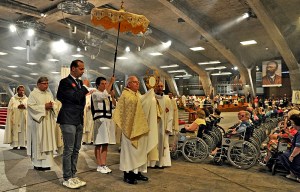
SUNDAY 22 JUNE 2025: The Solemnity of the Most Holy Body and Blood of Christ: CORPUS CHRISTI.

Blessed Sacrament Procession, Lourdes, France, 2013.

Click here to read today’s Sunday Mass Readings.

I received from the Lord what I also handed on to you, that the Lord Jesus, on the night he was handed over, took bread, and, after he had given thanks, broke it and said, “This is my body that is for you. Do this in remembrance of me.” In the same way also the cup, after supper, saying, “This cup is the new covenant in my blood. Do this, as often as you drink it, in remembrance of me.”          1 Corinthians 23-25.

Click on words highlighted in red for further information.

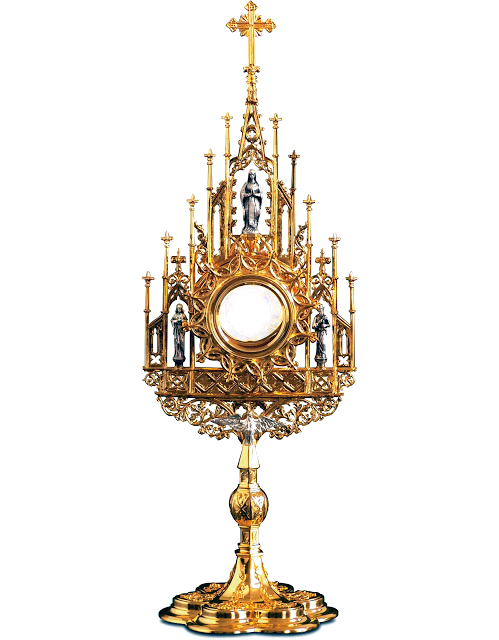
Central to the Catholic understanding of the sacred is the Holy Sacrifice of the Mass. For any priest, his greatest privilege is to celebrate the Mass. For any bishop the greatest privilege is to celebrate the Mass. For any pope, the greatest privilege is to celebrate the Mass. The priest is simply following Christ’s command, or mandate, “Do this in memory of me”. Catholics become that rarest of creatures, a fundamentalist, when it comes to the words of institution, “this is my body; this is my blood”. Catholics accept those words as literally true; the simple bread and wine become the Body and Blood of Jesus the Christ (the Anointed) of God. That is why the consecrated bread and wine are treated with the utmost respect, why they are venerated, why they are kneeled to, and so on. Baptists, Pentecostals and other non-denominational churches do not accept this understanding. For them the bread and wine are symbolic of Christ, not Christ himself in those traditions. Yes, symbols can be very powerful: look at national flags, for example. They are powerful enough for people to die for them! But are they that which they represent? Is the flag of the United states actually the United States? Clearly no. But is the consecrated Body and Blood of Christ really the Body and Blood of Christ? Yes, answer Catholics and Orthodox. That is the manner in which Jesus promised to be with us until the end of time! So Catholics are fundamentalist concerning this most important commemoration of Jesus, and the so-called fundamentalists are not! And all this when Scripture clearly states that Jesus said, “This is my body”, and “This is my blood”, and for us to “Do this in memory of me”. And today is the great feast commemorating that Last Supper event when Jesus becomes present to us even today, as he promised. And the picture above shows a priest carrying the consecrated bread in a monstrance past the many sick people at Lourdes, which typically is the time, rare but not unknown, when a curing miracle might well happen. (The monstrance is a special vessel built just to house the consecrated bread; the much more common word “demonstrate” comes from the same root, to show or make known). And if you would like to know about the latest miracle claimed as such in Lourdes, look here, or if you prefer, take a look at my favorite miracle from Lourdes, dating from the 1920s, but only just now, 100 years later, declared to be such. It concerned John Traynor, a Catholic from Liverpool. He had been so grievously wounded in the First World War that he was granted a 100% pension by the government (a very rare privilege) as, in the  opinion of his doctors, he was incurable. But he was an honest man and declared that he had indeed been cured while in Lourdes. The government disbelieved him, as no-one had ever recovered from such wounds; he received his pension right up to his death in 1943!

So today’s feast celebrates the most intimate union of each one of us and God. We actually take the Lord into ourselves with the full intention of being as far as we can, Christ to the world. In all we do, in all we speak and in all we think, we are Christ to the world. It is what we are called to and it is the Lord’s expectation of each of us. With his help, each one of us can do this, for we are not alone: the Lord stands with us.

Gothic French Monstrance, Abbott Church Supplies.

There is a prayer called “St. Patrick’s Breastplate” which in a way reflects today’s feast. It makes it real as we respond to the presence within us of Christ’s goodness and strength. It reflects our openness to God, and the strength we get, each of us, from that conviction. Here is a beautiful visual/audio version, or, if you prefer, the prayer itself below. It sings to our trust, our hope and our deepest belief in God, the blessed consequence of today’s celebration:

I bind unto my­self to­day
The strong name of the Tri­ni­ty,
By in­vo­ca­tion of the same
The Three in One and One in Three.

I bind this, today, to me for­ev­er
By pow­er of faith, Christ’s in­car­na­tion;
His bap­tism in Jor­dan riv­er,
His death on cross for my sal­va­tion;
His burst­ing from the spic­èd tomb,
His riding up the heav­en­ly way,
His com­ing at the day of doom
I bind un­to my­self to­day.

I bind un­to myself the pow­er
Of the great love of cher­ub­im;
The sweet Well Done” in judg­ment hour,
The serv­ice of the se­ra­phim,
Confessors’ faith, apos­tles’ word,
The pa­tri­archs’ pray­ers, the pro­phets’ scrolls,
All good deeds done un­to the Lord
And pu­ri­ty of virg­in souls.

I bind un­to my­self to­day
The vir­tues of the star-lit heav­en,
The glo­ri­ous sun’s life-giv­ing ray,
The white­ness of the moon at ev­en,
The flash­ing of the lightn­ing free,
The whir­ling wind’s tem­pes­tu­ous shocks,
The sta­ble earth, the deep salt sea
Around the old eter­nal rocks.

Christ be with me, Christ with­in me,
Christ be­hind me, Christ be­fore me,
Christ be­side me, Christ to win me,
Christ to com­fort and re­store me.
Christ be­neath me, Christ above me,
Christ in qui­et, Christ in dan­ger,
Christ in hearts of all that love me,
Christ in mouth of friend and strang­er.

I bind un­to my­self the name,
The strong name of the Tri­ni­ty,
By in­vo­ca­tion of the same,
The Three in One and One in Three.
By whom all na­ture hath cre­ation,
Eternal Fa­ther, Spir­it, Word:
Praise to the Lord of my sal­va­tion,
Salvation is of Christ the Lord. 

Corpus Christi Procession, Nigeria 2015, Oluchi’s World.

©SundayMassReadings.com