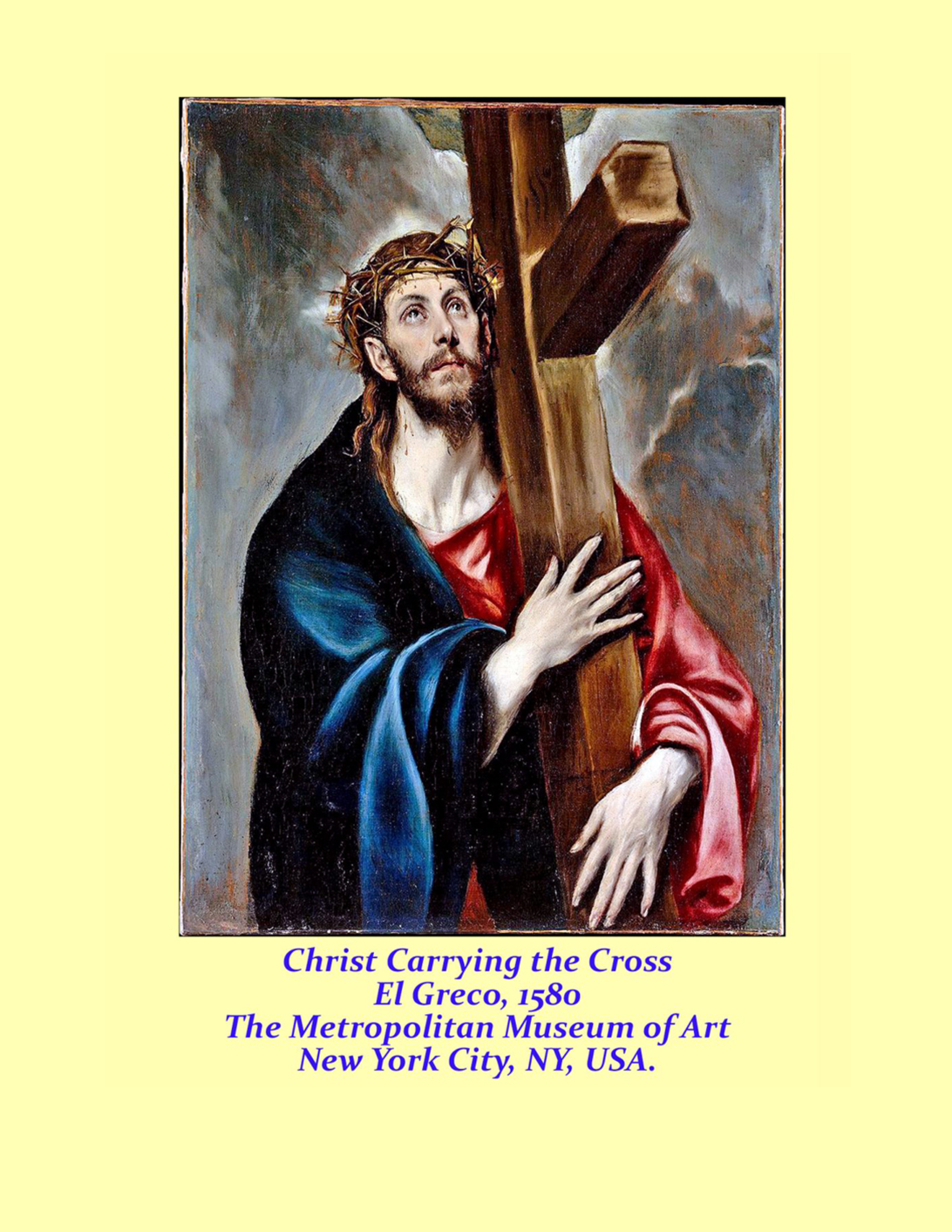

The Woman Caught in Adultery, Sunflower Seeds, SND Blogs.
“Teacher, this woman was caught in the very act of committing adultery. Now in the law, Moses commanded us to stone such women. So what do you say?” They said this to test him, so that they could have some charge to bring against him. Jesus bent down and began to write on the ground with his finger. John 8:5-8.
Click here to read today’s Sunday Mass Readings.
Click on words highlighted in red for further information.
Our Lord, Jesus as we call him, Y’shua bar Josef as his friends would have called him, was a very clever man. He was perceptive, could read people accurately and know when they were friendly and when they were out to get him. In today’s scene, they are definitely out for his blood. Someone had discovered a woman in a compromising situation which clearly demonstrated that she was committing adultery. The Jewish law on that point is pretty clear: “If a man commits adultery with the wife of an Israelite, both he and the woman shall be put to death” (Leviticus 20:10). In fact, any adultery was punishable by death. (And, by the way, where was the man caught in the very act in this scenario?). So those who had any dislike of the Lord thought they had found their ultimate weapon. If he agreed that the law said that, and the woman should be put to death, they would retort that here was the man who preached forgiveness even concerning the hated Romans! Guilty of duplicity, Orwellian doublethink! If, on the other hand, he said she should be forgiven, then he would be be trashing the law of Moses and be guilty of blasphemy! Damned if he did; damned if he didn’t! So what did the Lord do? Knelt down and wrote in the dust something not recorded in Scripture, unfortunately. It is the only occasion in the gospels that Jesus wrote anything! However, his enemies persisted: Answer! Answer! And he did: “Let the one among you who is without sin be the first to throw a stone at her”. See the picture above. Not going against the Law, but placing an impossible condition on it. People in those days lived in fairly small communities. There were no gigantic cities back then. Jerusalem was estimated to be about 80,000 strong at that time. So probably those who disliked Jesus would certainly know each other, probably churchy types, strict adherents of the Law. They would also know each other, their histories and habits. Anyone who picked up a stone would have invited all sorts of memories and lapses to be remembered and giggled over, so it was not advisable to even begin…. They drifted away, leaving the terrified woman alone. Note she did not admit her sin and ask forgiveness, but Jesus forgave her anyway but told her not to sin again. Adultery remained a sin, and still does. But those who admit it, know it is wrong and resolve to amend their ways and seek forgiveness in the sacrament of Reconciliation, are forgiven. No stoning necessary, just personal reform and determination to change. Whether the injured partner forgives is another thing altogether, but that is a different matter.
The other two readings today talk of new beginnings, Ezekiel talking of God placing the divine spirit in the people to make them ready to settle once more on their land. This concerns the Babylonian exile which was to end with the arrival of the Persian king Cyrus the Great who defeated the Babylonians and issued a decree permitting the Jewish exiles to return to Jerusalem and rebuild their Temple. Many did, but probably more remained as they had become very successful in Babylon. But one change has been noted by scholars studying this period which is significant. Prior to the exile, the Jewish people were so-called monolateralists. That means that other gods and goddesses were recognized and respected in Jewish households. After the exile, monotheism dominated and all other beliefs were absolutely rejected. In a sense, therefore, the people of God had undergone a change and were now, as it were made perfect. Ezekiel’s prophecy had come to pass.
A similar transformation is captured in the second reading. “Those who are in the flesh cannot please God” it says. It continues, “But if Christ is in you, although the body is dead because of sin, the spirit is alive because of righteousness”. And the consequence of this is clearly stated: “…the one who raised Christ from the dead will give life to your mortal bodies also, through his Spirit dwelling in you”. And now, if we return to the dramatic story in today’s gospel, the woman who was almost stoned to death now confronts a life-changing moment; will she or won’t she change? And here we all are, approaching the end of Lent, which invites us to change for the better. We may not have the luxury, as it were, of a dramatic moment where we face possible futures in that same way. But we are all invited to consider such. Will we attempt even a little change for the better or not? God is calling us to do exactly that, and only each one of us can answer that call.
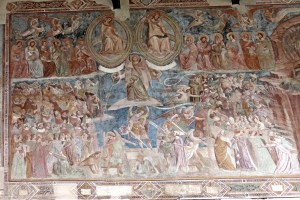
Heaven and Hell, Camposanto Monumentale di Pisa 13th century, Pisa Cathedral, Italy.
IF YOU KNOW SOMEONE WHO WOULD LIKE THIS REFLECTION, PLEASE FORWARD IT TO THEM. THANK YOU.
Reflections on next Sunday’s Mass Readings will be posted on Wednesday.
Please send your reactions to: RogerJohn@aol.com
© SundayMassReadings.com
Discover more from Sunday Mass Readings
Subscribe to get the latest posts sent to your email.
 Sunday Mass Readings