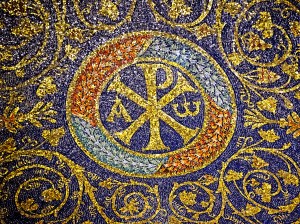
Chi-Rho Alpha-Omega Symbol, Mausoleum of Galla Placidia AD450, Ravenna, Italy.
Click here to read today’s Sunday Mass Readings.
“I am the Alpha and the Omega”, says the Lord God, “the one who is and who was and who is to come, the almighty.” Revelation, 1:8.
Click on words highlighted in red for further information.
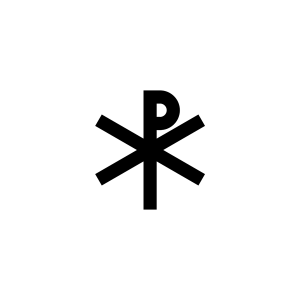
Quick lesson about Greek. Alpha “A” and Omega “Ω” (or lower case ω) are the first and last letters of the Greek alphabet. We get our word alphabet from alpha (α) and beta (β) the first two letters of the Greek alphabet. Omega is equivalent of a long O in English as in the exclamation “Oh!” (Greek has a separate letter for the short O, omicron “o” as in “on”). I know all this from the compulsory four years of studying ancient Greek in high school in England. Agony. So here God is claiming to be the beginning and the end of everything. Also note that St. John is the traditional author of the Book of Revelation as well as the Gospel of St. John, which begins at the beginning of time “In the beginning was the Word”, and takes us through to the end of all things in Revelation. The chi-rho in the picture above are also two other Greek letters, the first two letters of Christ or “Anointed” in Greek, ΧΡΙΣΤΟΣ (CHRISTOS), the X being the letter “ch” pronounced as in the Scottish word “loch” and the letter rho, P, being the letter R in Greek:
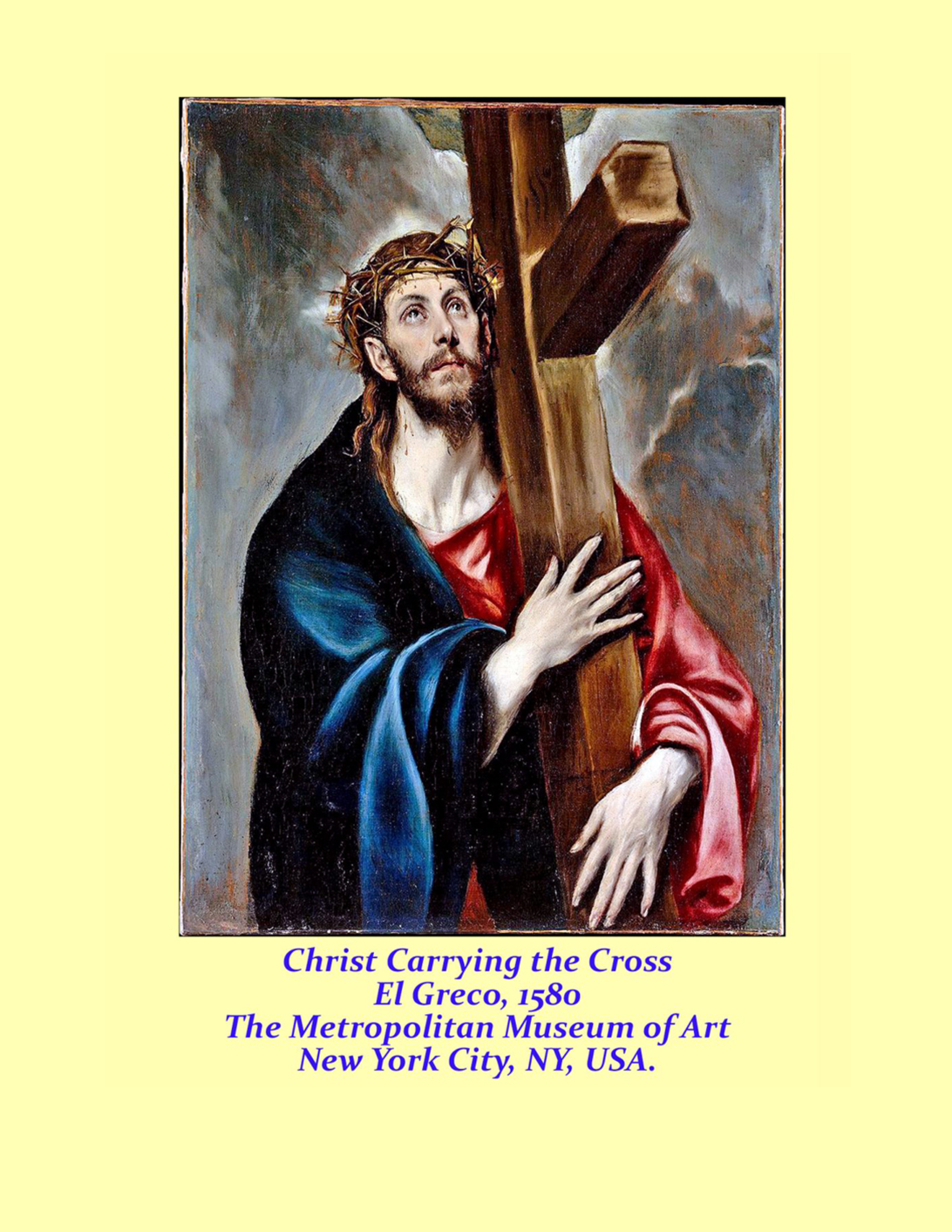
 All of which is appropriate for the ending of the church year, Advent beginning next Sunday. We end this Sunday looking back, and next Sunday, a new year, looking forward. In today’s gospel, Jesus stood before the Roman governor of Judaea, Pontius Pilate. If he had claimed he was a king with the normal meaning he would have been guilty of treason, a capital offense. But Jesus said to him “My kingdom is not of this world”, so not a crime, and therefore Pilate’s reluctance to condemn him. He probably thought Jesus was a little crazy and totally harmless. But this Jesus was telling the truth, something which was beyond the capacity of the Roman governor or, indeed, the wit of the enraged crowd calling for his blood. Having welcomed him as the long-awaited Messiah a week of so previously, there had been no call to arms, no uprising, no re-establishment of the kingdom of David – nothing. This then, in their eyes, was no Messiah but an imposter who had tricked the entire Jewish population of Jerusalem, and who now called for his death. His crown was not to be of gold but of thorns, his throne not a magnificent seat of power but the wood of the cross. Such was to be the coronation of the King of Kings. The crowd had totally missed the truth of the Scriptures by substituting their own image of the all-conquering military Messiah, not God’s.
In 1925 when Pope Pius XI instituted this feast of Christ the King in his encyclical Quas primas (“In the first”), he almost certainly had in mind the rise of communism in Russia, the collapse of ancient kingdoms after World War One and the beginning of the rise of dictators in Europe. In other words, he established a feast day which celebrated true kingship, one of mercy, forgiveness and love, things lacking in most other power structures. In his own words: “Christ as our Redeemer purchased the Church at the price of his own blood; as priest he offered himself, and continues to offer himself as a victim for our sins. Is it not evident, then, that his kingly dignity partakes in a manner of both these offices?” So this King is beyond all other kings, demonstrating a love for his subjects like no other king. In other words, this is a king in whom we can place total trust, one who will lead us to a future of eternal happiness despite any and all obstacles, if we follow him. It should also be noted that many other Christian churches have adopted this feast day. Pope Pius directed that it be celebrated on the last Sunday of October, but Pope St. Paul VI directed that it be placed as the last Sunday of the liturgical year. He declared that the “the eschatological importance of this Sunday is made clearer”, meaning that it directs our thoughts to the end time, when all will be judged. So, in looking back over the last year, did we follow this king of eternal love? And looking forward, are we determined to continue following him throughout the difficulties and challenges that undoubtedly await us? Because it is in him we can put our trust and hope and not be deceived. Amen.
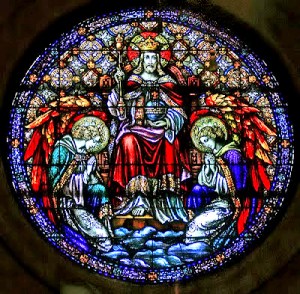
Christ the King, Basilica of St. Mary, Minneapolis, MN, USA.
IF YOU FEEL MOVED TO SHARE THIS REFLECTION WITH ANOTHER, PLEASE DO SO. THANK YOU.
Reflections on next Sunday’s Mass Readings will be posted on Wednesday.
Please send your reactions to: RogerJohn@aol.com
© SundayMassReadings.com
Discover more from Sunday Mass Readings
Subscribe to get the latest posts sent to your email.
 Sunday Mass Readings