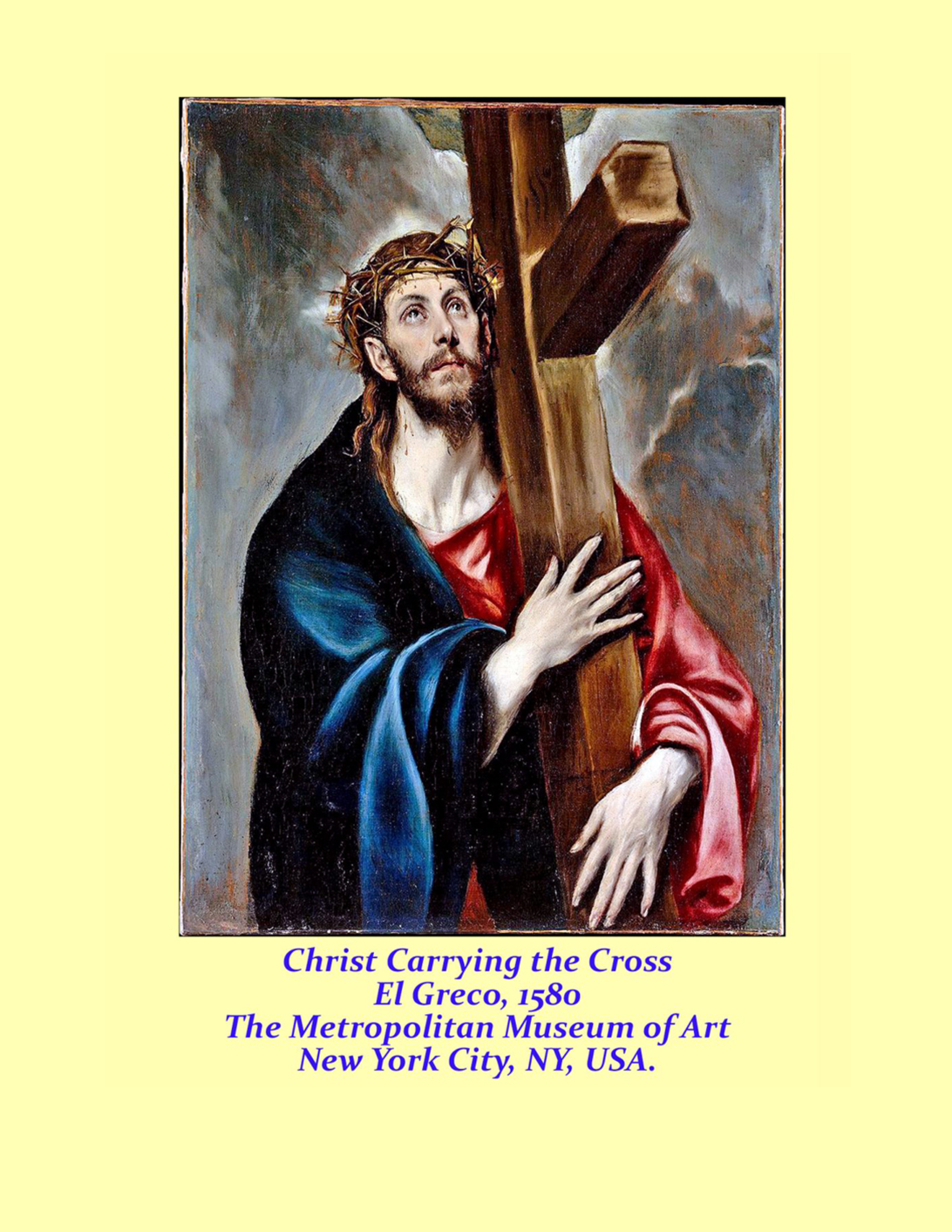

The Healing of the Blind Bartimaeus, Workshop of Fernando Gallego c.1484, University of Arizona Museum of Art, Tucson, Arizona, USA.
Jesus said… “What do you want me to do for you?” The blind man replied to him, “Master, I want to see.” Mark 10:51.
Click here to read today’s Sunday Mass Readings.
Click on words highlighted in red for further information.
It is usually fairly easy to read all sorts of symbolism into the gospel stories, usually indicating Jesus’ extraordinary powers and the presence of God he demonstrated. Today’s gospel is no exception. Firstly, the passage begins with the fact that Jesus and his friends were leaving the city of Jericho and, it turned out, were headed for Jerusalem where he would be greeted as the new Messiah, the new King David. There is symbolism in that short statement. Jericho is widely considered to be one of the oldest human settlements in the world; some would say the oldest. It is also 900 feet below sea level. So it could be said to be the city symbolizing humanity in all its fragility and weakness when compared to Jerusalem, their destination. If any city in the world which could claim to the City of God, it is Jerusalem, holy to the three Abrahamic faiths. It is also 3,800 feet above sea level, much nearer to God, if you will, than Jericho. (compare that to Jesus’ parable of the Good Samaritan, where the traveller was going down in the opposite direction, towards Jericho…). Secondly, blind Bartimaeus called Jesus “Son of David”. That was the first time in Mark’s gospel anyone had so named him. It was code for Messiah, as the Messiah was widely believed to be the one who was going to restore the kingdom of David and rid the country of the pagan unclean and hated Romans. And the spectacular cures and powers demonstrated by Jesus certainly gave credence to that belief. It was the reason he was greeted so on entering Jerusalem (in the following verses in Mark’s gospel). And it was at that moment, setting off for Jerusalem, that the blind beggar yelled at the top of his voice to Jesus to notice him. Which he did, despite being told to be quiet, probably in vulgar terms. But he persisted, and Jesus heard him. Thirdly, the cure of the blind man, who would have been widely known in that small community for years, would be taken as the conclusive proof of his identity as the promised Messiah (and note, in John’s gospel, the equivalent miracle was the raising of Lazarus from the dead, Jesus’ most spectacular “sign” or proof, of his identity). Today’s first reading from Jeremiah, speaks of the Lord gathering the blind and the lame, once in tears but now amid praise and glory, which marked Jesus’ final journey to Jerusalem. Not only that, but Jesus was the new high priest, chosen by God, to lead everyone into the new Jerusalem.
There are a few more symbolic notes to this story of the blind man being cured. His determination to have Jesus hear him is seen in his two loud cries for help, making sure he would be heard. Isn’t that a lesson for us all? It says, don’t be afraid to ask for anything which is truly life-affirming, and look carefully for the divine response. Then the gospel says the blind man “threw aside his cloak”, presumably the only possession he had, as he fully expected and believed he was to begin on a new, sighted, life where begging was no more. Finally, this miracle named the blind man, which was unusual. Recipients of Jesus’ miraculous powers are rarely named; but this man was identified, Bartimaeus. It is thought that he probably entered Jesus’ circle of friends to become one of the very first Christians, a life of gratitude for what he had received from God.
Finally, bearing in mind all of the above, remember that such life impediments as blindness were, in those days, considered to be God’s punishment on the sinful. Bartimaeus, with God’s help, overcame this with his conviction that Jesus was the Son of David, and presumably set out with Jesus’ followers in the correct way, from Jericho to Jerusalem (the symbolism as stated above), up from misery, trapped in a terrible handicap in Jericho, to the freedom and triumph of entering God’s city of Jerusalem and life eternal. So no matter what handicaps each of us may have which distance us from God, a simple, silent, cry for help, louder if necessary, will bring us into God’s fold, to be guided to the New Jerusalem and eternal happiness. Miraculous healings still do take place today, but they are extremely rare and we really should not expect them, even though we can and do pray for them fervently. So we should look elsewhere, searching for God’s response to our requests. It may be spectacular, but much more likely to be more like an interior peace and acceptance, carefully guided by the hand of God. After all, we are all headed in the same direction no matter what, and the more ready we are to accept the inevitable, the readier we will be to meet the Lord of all. And perhaps our best response might be ευχαριστώ, eucharisto, the modern Greek for “thanks”, and the source of our word Eucharist. A life of gratitude, after all, acknowledges all God has given to us, and will give even more: ευχαριστώ.
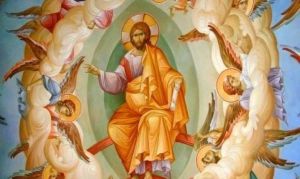
Σέ ευχαριστώ Κύριε, Se eucharisto Kurie, Thank You Lord,
St. Gabriel Antiochian Orthodox Church, Lafeyette, Louisiana, USA.
IF YOU FIND THIS REFLECTION RINGING TRUE, PLEASE SHARE IT WITH OTHERS. THANK YOU.
Reflections on next Sunday’s Mass Readings will be posted on Wednesday.
Please send your reactions to: RogerJohn@aol.com
© SundayMassReadings.com
Discover more from Sunday Mass Readings
Subscribe to get the latest posts sent to your email.
 Sunday Mass Readings