
The Brazen Serpent, van Dyck 1620, Museo del Prado, Madrid, Spain.
Click here to read today’s Sunday Mass Readings.
For God so loved the world that he gave his only Son…. John 3:16.
Click on words highlighted in red for further information.
Those 13 words quoted above state simply and profoundly how much God loves us, his sinful, willful children. For some reason beyond our imagination, our knowledge or our sinful state, the creator of the universe accords us the greatest treasure imaginable. For unto us a child is born, unto us a son is given, as Isaiah states. Where humanity is capable of unbelievable evil, horrifying violence and endless ingratitude, God still has faith in us. Today’s Old Testament reading shows the consequence of sinfulness. Despite prophets being sent to the people to warn them advise them, direct them towards God, it was all in vain. The consequence was the near obliteration of Jerusalem, the Temple of God destroyed, and the all-precious Ark of the Covenant, with the stone tablets of the Law within, vanished forever. And the leaders of the people were led off into exile in a distant, pagan, land without hope, at that time, of ever returning to their Promised Land. It was unmitigated disaster on every level. And all because of lack of trust in God, and accepting pagan gods into Jewish households. There is even archeological evidence of pagan gods and goddesses in Jewish households before the Babylonian exile to explain divine anger. So it is amazing that through all this, God remained faithful even if all seemed lost. When the Jews were allowed to return to Jerusalem by the Persian king Cyrus, today’s first reading, they had learned their lesson. There was for them, after all that, One God. Because God so loved the world…. And this suggests a moment of rejoicing on this middle Sunday of Lent, “Rejoice Sunday” as it is known in Latin. Even the vestments of Mass may be in a joyful rose color.
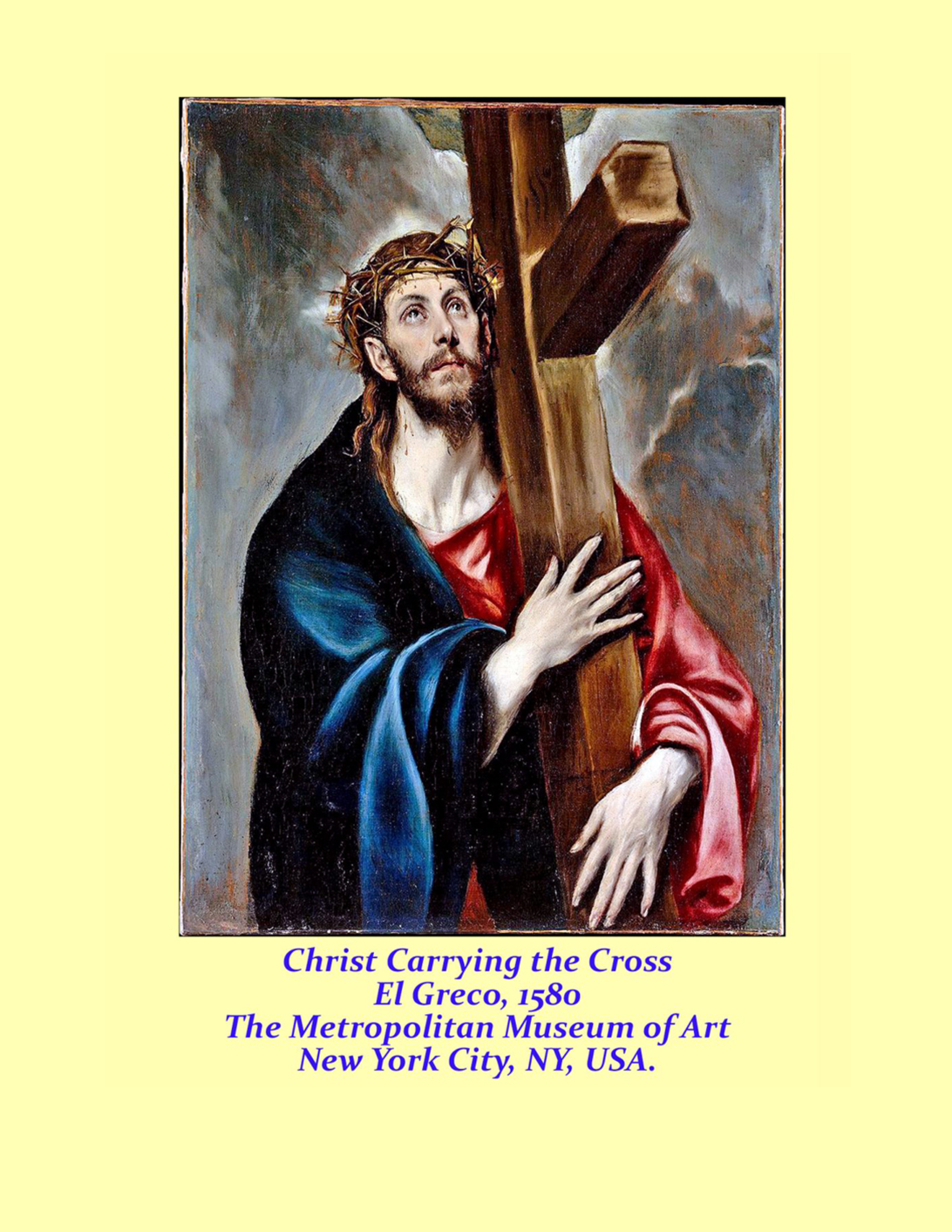
Then there is the strange story of the bronze serpent in the wilderness, the focus of today’s gospel. Because of the unfaithfulness of God’s people as they wandered through the wilderness for 40 years, and the grumbling that ensued (see last week’s reflection on grumbling), a plague of poisonous snakes struck the people, with the expected consequence. The only recourse was to appeal to God for help. This came with God’s instruction to make a snake of bronze (or a “fiery serpent”), erect it on a pole and those bitten by the snakes could look upon it and survive (Numbers 21). And that is what happened. Jesus says that he, too, will be lifted up, just like that bronze snake, so that those who gaze upon him will be saved. This image is not easy to understand. but perhaps there is one way to approach it. The ancient Hebrews were bitten by poisonous snakes, and they would die unless they were fortunate enough to have lived long enough to look upon the brazen snake lifted up in their midst. One author, Dr. John Barnett, likens this scriptural snake bite to the poison of sin with which we have all been infected. The only certain way to deal with that poison is Christ, and him on the cross dying for unbreakable love of us, so that “everyone who believes in (me) may have eternal life” (today’s gospel). And the cross is the proof. That unspeakable agonizing death Jesus was prepared to suffer was to prove his love. All he had to do to avoid it was to deny his identity and his vocation, to deny he was the Son of God and the Messiah, sent to save us all from the poison of sin and death. That he refused to do, and the result was the cross. He took all our sin on his shoulders that we might live in eternal happiness. That was the meaning of his death. That was what he was prepared to do for each of our sakes. Amazing: a depth of love without end; compassion beyond all measure; generosity unparalleled. And all we have to to do is look upon his sacrifice, accept it into ourselves and become a true child of God. We can see all this by looking at Christ on the cross – with its full meaning. This season of Lent is the perfect time to ponder all that and accept and act on the consequences.

Was Christ’s death a sacrifice? Cross Examined.org
PLEASE FORWARD THIS REFLECTION TO THOSE YOU THINK WOULD APPRECIATE IT.
THANK YOU.
Reflections on next Sunday’s Mass Readings will be posted on Wednesday.
Please send your reactions to: RogerJohn@aol.com
© SundayMassReadings.com
Discover more from Sunday Mass Readings
Subscribe to get the latest posts sent to your email.
 Sunday Mass Readings