Diocese of Memphis, Ash Wednesday.
Click here to read today’s Sunday Mass Readings.
[Jesus said] “where two or three are gathered together in my name, there am I in the midst of them.” Matthew 18:20.
Click on words highlighted in red for further information.
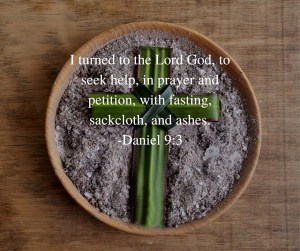
Years ago, in my youth, there was a very clear preference for going to confession rather than going to communion. There were always long lines on Saturdays for confession, and communion on Sunday saw very few people receiving. Those were also the days when communicants each had a prayer said over them by the priest: “Corpus Domini nostri Jesu Christi custodiat animam tuam in vitam aeternam. Amen.” (The Body of our Lord Jesus Christ preserve your soul for everlasting life. Amen.) as they received the consecrated host. Today all this is reversed, with, it seems, everyone receiving communion at Mass (though now without the prayer) and very few going to the sacrament of Reconciliation. Today’s readings are all about those times when we should go to confession. There is not one of us without sin; I imagine that even the temptation to think we have never sinned is a sin! Remember the parable of the Pharisee and the Publican (Luke 18:9-14) for instance. Pride going before the fall and all that… Jesus spells out the stages of dealing with a sinner, with attempts to convince the person to repent, culminating in excommunication if this does not happen (to be treated as a Gentile or tax collector, as Jesus says should be the worst punishment, is, in effect, to be excommunicated, as you would be shunned by the community. Note also the extreme difference between the Lord’s ultimate punishment and the typical punishment meted out in Leviticus or Deuteronomy, where “stoned to death” is more often than not the required result of wrong-doing; for example, Deuteronomy 21:18-21). Indeed, the early days of the sacrament of Reconciliation closely parallels Jesus’ teaching. The culminating punishment for someone guilty of a terrible public sin but who begs forgiveness would be to sit in sackcloth and ashes at the church entrance for a period of weeks, begging forgiveness of those who entered. Eventually that person would be allowed to stand at the back for the beginning of Mass, but leave before the Liturgy of the Eucharist. Eventually, the community having noted this behavior, would be asked by the bishop if that person was now worthy to be forgiven and readmitted to the community. Private confession became the norm several centuries later.
So this gospel is a very tricky, not to say challenging, teaching. It comes immediately after Jesus saying that any shepherd, missing one sheep, would at once go looking for the stray (which no actual shepherd would ever do, risking the remaining 99 to danger – but that is the point, as the shepherd is Jesus, and each one of us is the straying sheep…). So Jesus tells us how to handle that sinning sheep. Remember that any sin a Christian commits sullies the whole church; look at the clerical abuse scandal and the immense damage that has inflicted on the church, the vast majority of whose members are innocent of such a grievous sin.
So it is appropriate that Jesus gives us an outline on procedure here, beginning with confrontation between the offender and the offended, an approach which is never easy. But it is a first step to righting a wrong. It is also worth noting that the worst punishment Jesus mentions is excommunication, expulsion from the community. No capital punishment here! But the final thought from today’s gospel is that Jesus is always ready to come to us whenever two or three of us gather in his name, the opposite of excommunication. In other words we are never alone. Even if we stand alone and admit our guilt before the Lord, the God of Love will surely respond positively. So if we ask for clarity in rooting out what should not be in our hearts and inviting God’s cleansing, red hot love in its place, we are ready to begin anew, determined never to hurt God and ourselves ever again. The stunning image on the Shroud of Turin once more provides a record of the suffering the Lord endured, taking the sins of the world on his whole body that we might live a life of grace. Adding the sacramental grace of Reconciliation makes that resolution all the stronger, and we become a true child of God once more.

Catholics Striving for Holiness, the Sacrament of Penance and Reconciliation.
PLEASE FORWARD THIS WEBPAGE TO THOSE YOU THINK WOULD APPRECIATE IT.
THANK YOU.
Reflections on next Sunday’s Mass Readings will be posted on Wednesday.
Please send your reflections to: RogerJohn@aol.com
© SundayMassReadings.com
Discover more from Sunday Mass Readings
Subscribe to get the latest posts sent to your email.
 Sunday Mass Readings